Why EVERYONE should sprinkle SOME rotation into their training (even if they are NOT training for a rotational sport)
Most training programs focus on straight-line movements, but real life rarely works that way. Rotation plays a key role in how we move, stabilize, and generate force, yet it’s often overlooked in training. This blog explores why adding small amounts of rotational work can improve movement quality, joint health, and long-term performance.
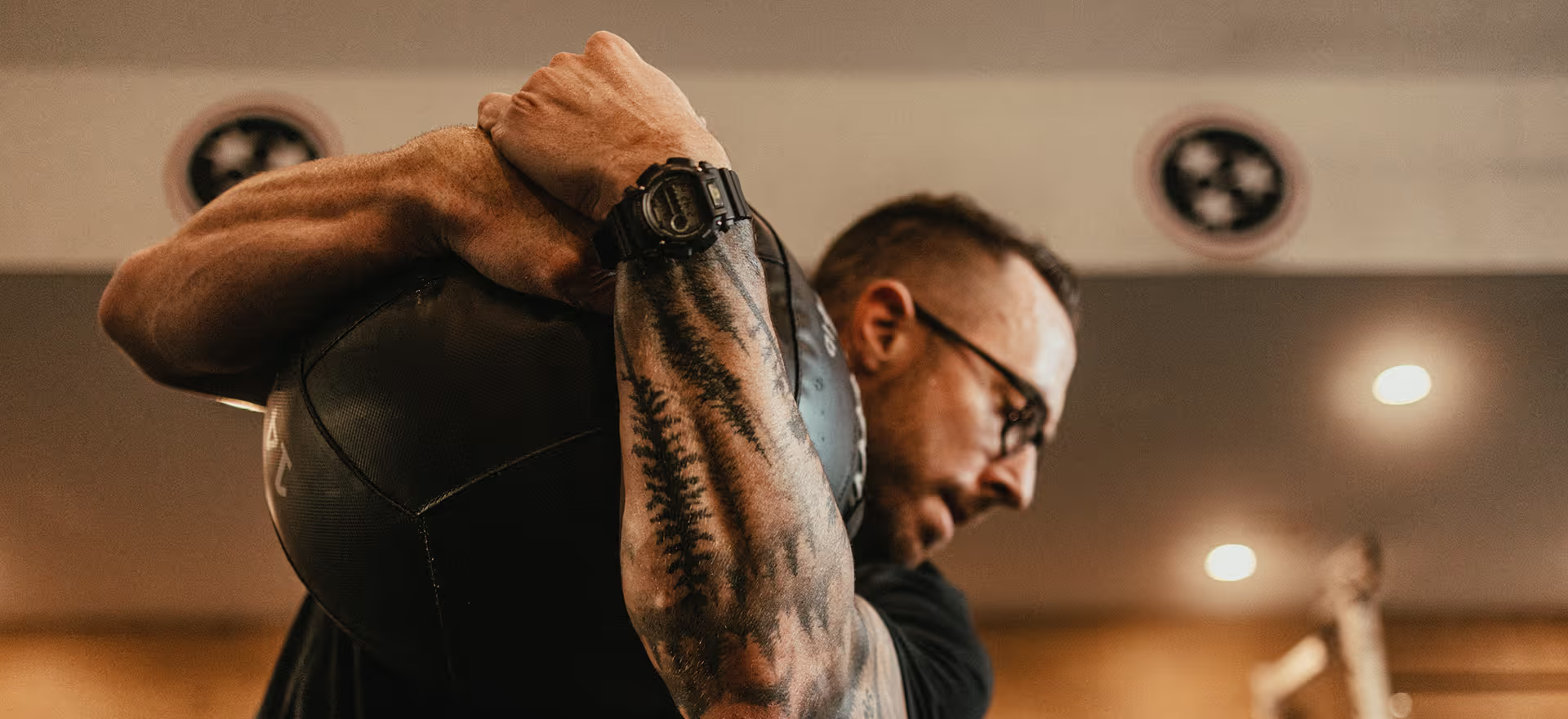
Let’s be honest, most training programs follow a straight line. Squats go up and down. Deadlifts hinge forward and back. Push-ups and presses move straight ahead. These movements are foundational, and they should be. However, there’s a missing piece in many programs that shows up later as clear imbalances, instabilities, stiffness, nagging pain, or plateaued performance.
Even if you’re not training for a rotational sport like golf, baseball, or tennis, sprinkling rotational exercises into your routine can dramatically improve how your body moves, feels, and performs on a day-to-day basis…both in and out of the gym.
The body was built to rotate
We can all agree that human movement isn’t linear in real life.
We twist to reach the back seat of the car. We rotate when walking, running, and throwing. We turn, pivot, and change direction every day. Rarely do our day-to-day movements and tasks require straight-line movement.
The spine, hips, and rib cage are designed to share rotational load…not avoid it. When training ignores rotation completely, the body doesn’t lose the need for it; it just loses the capacity to do it efficiently and effectively.
Rotation builds a more resilient core
Core training is often reduced to planks, crunches and sit-ups. While these do build core strength and endurance, they don’t fully prepare the core for real-world demands. Nor do they attack all the core muscles required to be the most balanced and stable athlete we can be.
When performing rotational exercises, we need to be doing the following:
- Train the core to transfer force, not just resist movement
- Improve coordination between the hips, torso, and shoulders
- Teach the body how to decelerate rotation through anti-rotational focused movement, a key factor in injury prevention
Examples of rotational core exercises:
- Half-kneeling cable chop
- Tall-kneeling Pallof press with rotation
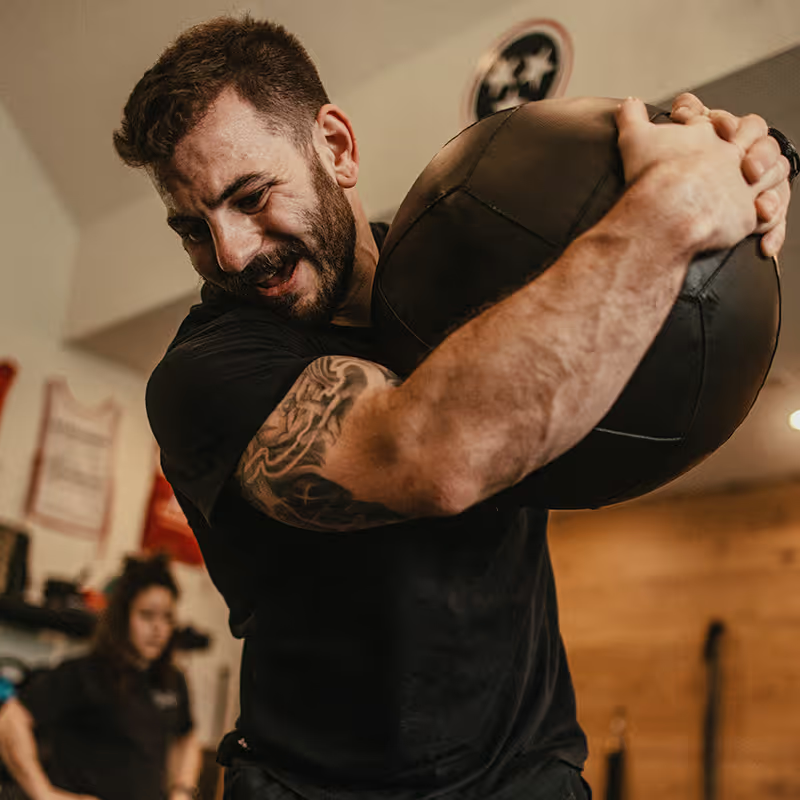
- Seated medicine ball rotational throw (light load)
- Dead bug with banded cross-body tension
These movements challenge the core to transfer force between the lower and upper body while maintaining control through the hips and spine.
A strong core isn’t just about staying still; it also includes controlling motion.
Rotational training improves joint health
When rotation is ignored, the body tends to find it elsewhere. The body tends to start to overcompensate in other areas.
- Excessive rotation through the lower back
- Stiff hips that force movement into the knees
- Locked-up thoracic spines that overload the shoulders
Light to moderately loaded controlled rotational movements benefit the body in many different ways. Some of those ways include the following:
- Restore normal movement options
- Improve joint nutrition through varied motion
- Reduce wear and tear caused by repetitive, single-plane training
Think of rotation as joint maintenance, not just performance training.
Joint-friendly rotational options:
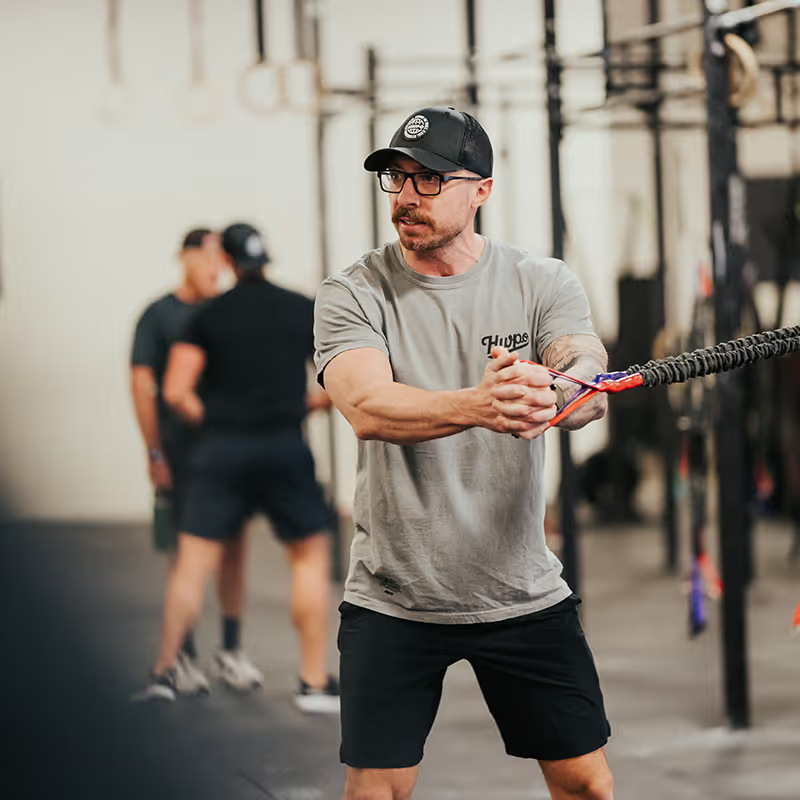
- Standing cable rotations at chest height
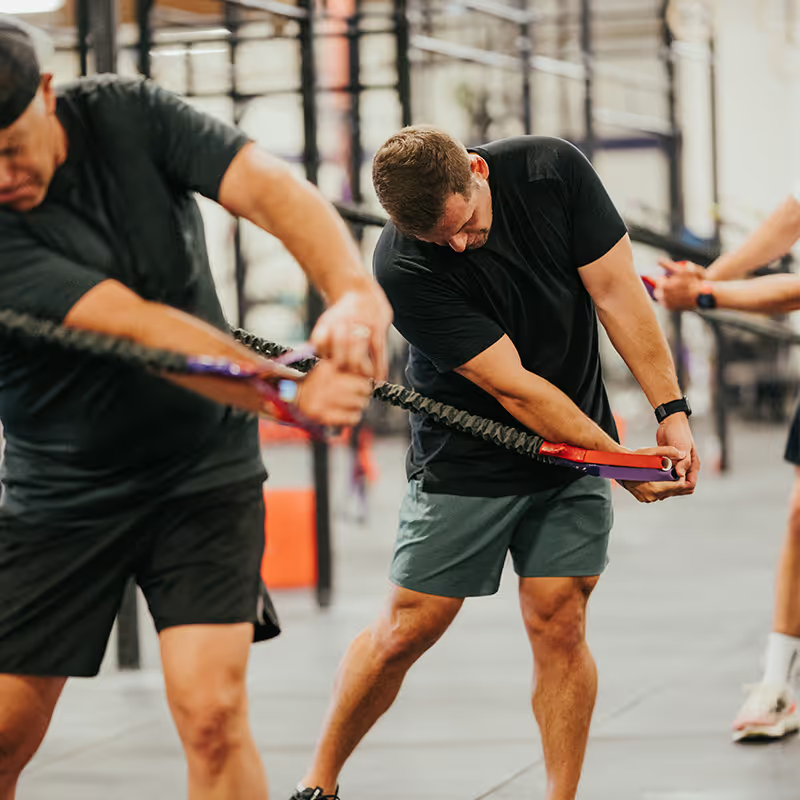
- Split-stance banded rotations
- Quadruped thoracic rotation with reach
- Side-lying open books
These movements introduce controlled rotation, helping restore range of motion and reduce compensations without placing unnecessary stress on the joints.
You don’t need heavy loads to get the benefit
This is where many typically get it wrong.
Rotational training doesn’t need to be heavy, explosive, or exhausting to be effective. In fact, most people benefit from:
- Low to moderate load
- Controlled tempo
- Intentional range of motion
As with foundational strength training, once technique and movement quality are mastered, the individual should begin adding load to their rotation. The goal is quality movement, not max effort. A little goes a long way.
How to load rotational work appropriately:
- Cable or band resistance that allows full control
- Medicine balls under 10 lbs for most athletes
- Tempo-focused reps (2–3 seconds per phase)
- Sets kept well short of fatigue
If rotation turns rushed or sloppy, the load is too heavy for the intended goal.
Rotation enhances performance in everyday lifts
Even “non-rotational” lifts benefit from rotational capacity.
Better rotation can lead to:
- Improved squat depth through better hip and spine mechanics
- Stronger deadlifts via improved trunk stiffness and control
- More efficient pressing with better rib cage and shoulder positioning
When the body rotates well, it resists unwanted rotation more effectively under load, making traditional lifts stronger and safer.
How to sprinkle rotation into your training
You don’t need to overhaul your program with rotation, but instead begin sprinkling it in.
- Add 1–2 rotational exercises to your warm-up
- Superset a rotational movement with a main lift
- Use rotation on lighter or recovery days
- Focus on slow, controlled reps rather than intensity
Think of rotation as seasoning, not the main course.
Practical ways to add this into a session:
- Warm-up: 2 sets of half-kneeling cable rotations
- Superset: Split-stance band rotation between squat sets
- Recovery day: Controlled rotational core circuit
- Accessory work: Pallof press variations between lifts
The goal isn’t to add fatigue — it’s to improve movement options and control.
The takeaway
Rotational training isn’t just for rotational sport athletes.
It’s for:
- Healthier joints
- A more capable, functional, effective core
- Better movement for longevity in training and in life
- A body that feels strong, not fragile
By sprinkling small doses of rotation into your training, you’re not chasing complexity; you’re restoring balance.
And balance is what keeps training sustainable for the long haul.
Train for real-world movement
HWPO programs are built to develop strength that carries over beyond the barbell. With intentional movement, balanced programming, and long-term progression in mind, you can train in a way that supports performance now and durability for the years ahead.