Move More, Sit Less.
Modern life makes it far too easy to sit still for long stretches. Even if you train regularly, long hours at a desk can work against the progress you make in the gym. That’s why finding simple, repeatable ways to move more throughout your day matters.
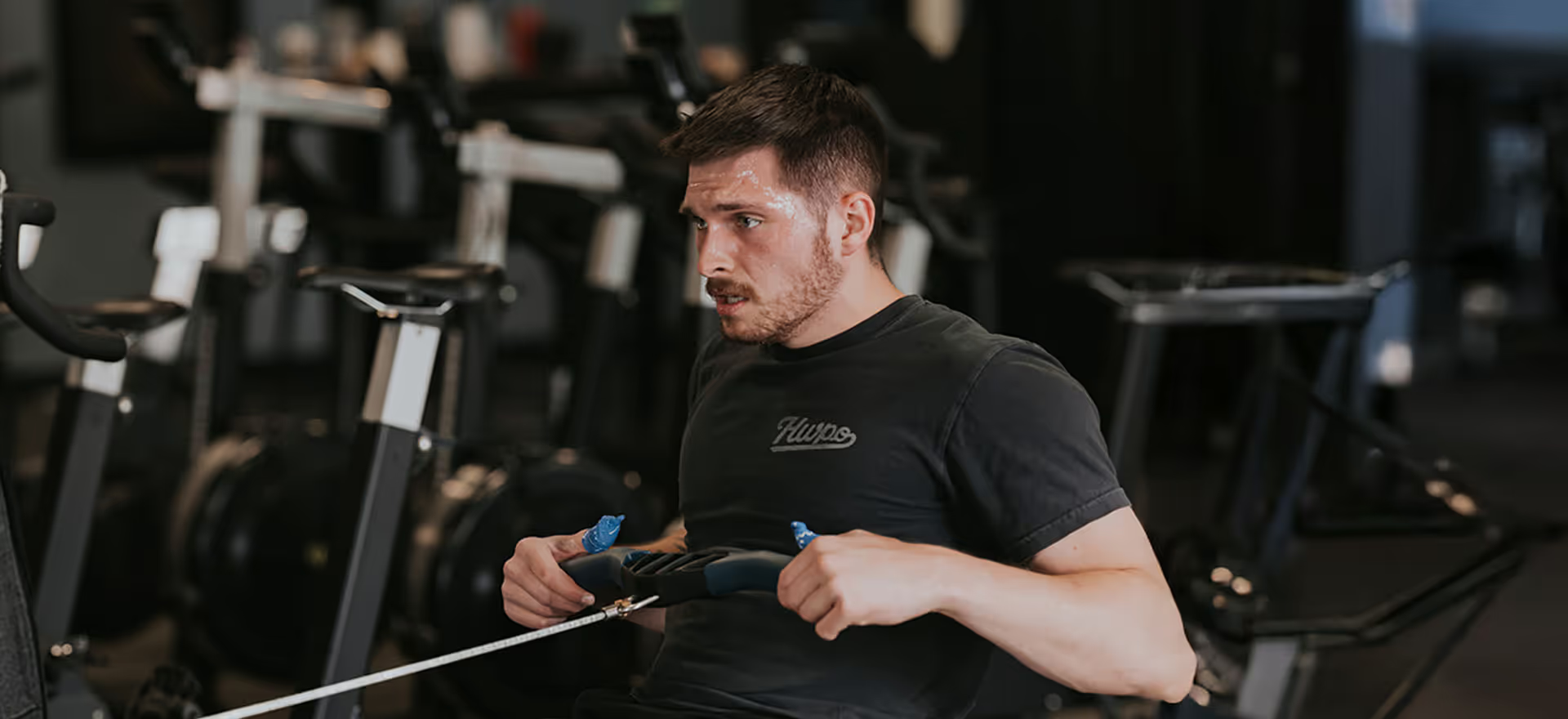
We live increasingly stagnant lives, and if you are reading this, you are likely committed to living a healthy, active life. Because our jobs often require us to sit more and move less, it is up to us to combat the effects of prolonged sitting.
When we sit, fewer muscles are active. Active muscles burn calories, which helps regulate hormonal balance and keep our blood sugar in check, along with a whole cascade of benefits that are outside the scope of this blog. Even if you are an active person who works an inactive job, you are being negatively affected by the “active couch potato” effect. This effect means that sedentary behavior is, to some degree, negating the benefits of your exercise routine.
What we need is to find a way to negate that sedentary behavior, so when we do exercise, it brings us past baseline and into the desired training response. Here are a few simple ways to move more and sit less:
Train in the AM
Though this won’t work for everyone, if you can work out in the morning, you are setting yourself up for a significantly more active and healthy day. The main reason for this is that all exercise has an effect called EPOC, excess post-exercise oxygen consumption, which means your body is at an elevated calorie-burning state after you exercise.
The higher the intensity of exercise, the longer this effect remains and the more calories you burn throughout your day. If you exercise in the morning, your body will continue to burn more calories throughout the day than it would otherwise. Even if you can’t move your entire workout to the morning, doing a tabata of burpees (8 Sets of 20 seconds on, 10 seconds off) to get the heart rate up will help give you some of this response. When muscles are reactivated during the day with the following tips, you are maximizing your exercise to burn calories with minimal additional effort.
Bodyweight Movement
Next up, let’s set daily movement goals. Try doing 100 lunges, broken up throughout your day. This can be 20 while you brush your teeth, 10 each time you get out of your office chair, 20 when you get home from work, and 10 before bed. If you do this every day with different bodyweight movements, you have suddenly added 4-6 minutes of movement into your day. It seems small, but spread that across your year, and you will have completed thousands of push-ups, sit-ups, squats, burpees, and lunges. This should be a small enough change that you can still do whatever your regular exercise routine is, while adding a few minutes of movement throughout your day.
Short Walks
Take 5 minutes whenever you get the chance to get up and walk around. This applies to leisure time and work. If you have a 30-minute lunch break and two 15-minute breaks a day, could you spend 5 minutes walking at each break?
If you are on the phone with a coworker, checking your email, or watching a training video, could you do it without sitting still? Even standing and walking in place will help. When you get home, go walk to the end of the street and back. After dinner, go take a quick walk. Finish an episode of TV, 5-minute walk break before episode 2. Find the small places to walk throughout your day. You’ll be amazed at how much you can clear your mind and refocus on work with just a 5-minute walk break.
Floor Time
Never underestimate the power of floor time. A hill I am willing to die on is that adults don’t spend nearly enough time playing. If you are watching TV at night to unwind. Invest in a cheap yoga mat and watch from the floor. While you are down there, you might as well stretch, foam-roll, play with the kids or the dog, or do a few sit-ups. Hell, when I work from home, I sit on a foam roller and work from my coffee table for this exact reason.
You are way more likely to move around and change positions on the not-so-comfy ground than your perfectly ergonomic office chair or cosy couch. All of this contributes to a state of passivity and activity. In exercise science, we call this NEAT, non-exercise activity thermogenesis. The movement you do when you bounce your leg, rock side to side in your chair, or just get restless and move, all add up to about 15% of the calories you burn throughout your day.
On the couch, you are significantly more likely to sit still and scroll or watch TV, but on the floor, you’ll change positions more frequently to find the next comfortable position, and this movement adds up.
You don’t need to quit your job to be more active. You just need to have a plan to move more and sit less. Give one of these a try for a week and see if you feel better. You might be surprised how a 5-minute walk or a few push-ups can refocus a foggy brain. Give each of these tips a try, and eventually aim to do your regular workout earlier in the day, take 2-3 5-minute walks, do 100 reps of a bodyweight exercise, and spend 1 episode of TV on the ground. But don’t make all these changes at once; try one thing, then another, then mix and match.
Find the rhythm that works for you and know that anything is better than nothing here. Go MOVE!


Ready to build consistency that lasts?
If you are looking for support in building a more consistent training routine, HWPO has programs for every level and every schedule. Whether you want strength, conditioning, or a simple way to stay active, you can train with a community that shows up and puts in the work. For complete flexibility, ALL ACCESS gives you every HWPO program in one place so you can train how you want, when you want.