What Most Athletes Get Wrong About Pacing
Pacing is one of the most misunderstood skills in CrossFit®. Not because athletes won’t WORK HARD, but because they don’t always understand how to apply their effort. Good pacing isn’t about holding back. It’s about managing energy so intensity SHOWS UP when it matters most, allowing you to stay controlled early and finish strong.
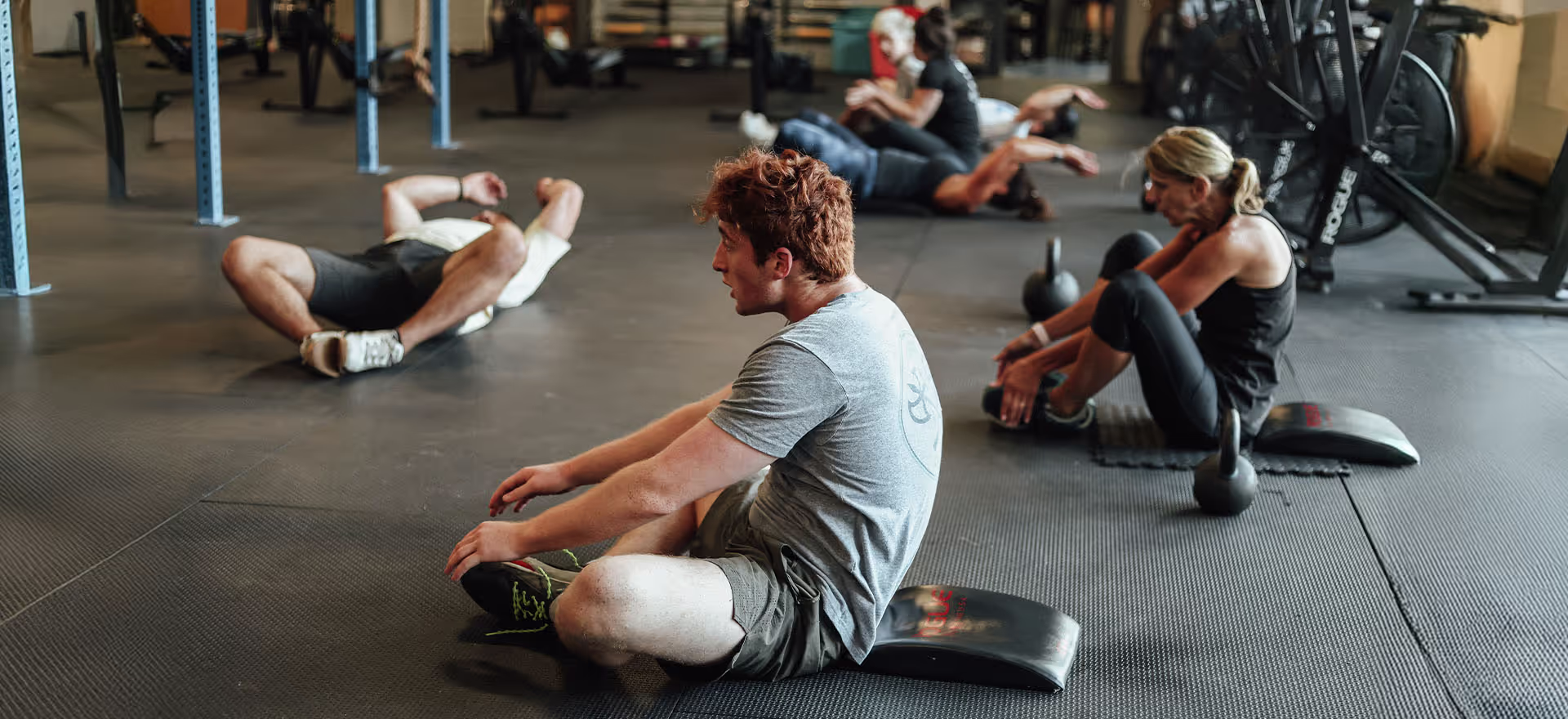
If there’s one thing I see athletes struggle with more than almost anything else, it’s pacing.
Not because they don’t WORK HARD — most athletes are more than willing to suffer — but because they misunderstand how and when to apply their effort.
Pacing isn’t about holding back. It’s about managing your energy so intensity SHOWS UP when it matters most.
And more often than not, better pacing starts with being willing to go a little slower than your ego wants to at the beginning.
Breathing, rhythm, and control
One of the most overlooked parts of pacing is breathing.
When you move and breathe in rhythm, your body starts to expect the flow of oxygen. That predictability can put athletes into a calmer, more controlled state — sometimes even a flow state — instead of constantly reacting to fatigue.
Once breathing becomes rushed or chaotic, everything else follows:
Heart rate spikes early, movements lose efficiency, transitions slow down, and recovery takes longer than it should.
Good pacing often starts with staying composed early and letting your breathing guide your effort instead of fighting it.
Breaking work up is a skill
Pacing doesn’t mean doing less work. It means organizing work intelligently.
Large sets — especially in gymnastics or barbell cycling — are often where athletes get into trouble. They choose what they can do instead of what they can sustain.
Breaking work up early, even when it feels unnecessary, allows for shorter rest periods, Better movement quality and more consistent output over time.
The exact strategy will vary from athlete to athlete, but the goal is the same: stay in control early so you can keep pushing later.
A practical example of smart pacing
A great, real-world example of this showed up in the 20.3 Open workout.
On paper, the deadlift bars were very manageable for elite athletes. Many chose to go unbroken early, especially at the lighter weight. Annie Thorisdottir took a different approach — and it’s worth noting that Annie has openly said that deadlifts are her favorite lift (mine too).
In other words, this wasn’t a capacity issue.
At the 155-lb bar, she broke the work intentionally:
- 21 reps: 16–5
- 15 reps: 8–7
- 9 reps: 5–4
When the bar increased to 205 lbs, her strategy became even more deliberate:
- 21 reps: 7–7–7
- 15 reps: 6–5–4
- 9 reps: 5–4
What stood out wasn’t just the breakdown — it was how little rest she took between those breaks.
By choosing control over ego early, Annie stayed composed, kept her breathing under control, and was able to move quickly and efficiently through the other parts of the workout. While others accumulated fatigue and slowed down later, she maintained rhythm and execution.
That approach ultimately led her to win the workout, worldwide. Not because she lacked strength — but because she understood how to apply it intelligently.
Why pacing was once misunderstood
There was a time when pacing was misunderstood.
Not because it was wrong, but because the conversation wasn’t ready for it.
The goal has always been to get as much work done in the least amount of time. That only happens if you maximize the use of your available energy.
You can’t do that by going out hot and hoping to hang on.
You do it by controlling effort, managing intensity, and making decisions that allow you to keep working when others are forced to slow down.
Intervals, pacing, and energy management were once questioned. Now, they’re standard. That’s progress.
Why CrossFit® makes pacing hard — and valuable
CrossFit® is constantly varied, which means sometimes you will pace a workout wrong.
That’s part of the process.
The goal isn’t to be perfect every time — the goal is to collect data:
- What happened when you started too fast?
- When did breathing break down?
- How did pacing affect your ability to finish strong?
This is clearly evident in high-volume gymnastics movements like toes-to-bar.
An athlete might see three rounds of 30 toes-to-bar and choose repeatable sets — for example, breaking the work into consistent chunks like 8–8–7–7 each round. Another athlete might take a different approach and intentionally build their sets over time — starting with 6–6–6–6–6, then 8–8–7–7, and finishing with 10–10–10.
Knowing where fatigue will show up — and planning for it — is a skill.
Sometimes that strategy works. Sometimes it doesn’t.
But every attempt adds information. Training is where you learn this.
The more intentionally you practice pacing — in intervals, longer workouts, and mixed-modal pieces — the better you become at finding your rhythm. You start to understand how breathing, grip, and fatigue interact, and how small decisions early can have a big impact later.
And the more data you collect, the better your decisions get.
Better pacing builds better fitness
Pacing isn’t just about one workout.
When athletes pace well, recovery improves, movement quality stays higher, training becomes more repeatable, and progress becomes more sustainable.
Going all-out every session might feel productive, but it rarely builds fitness you can rely on long-term.
Smart pacing allows intensity to show up consistently — not occasionally.
Final thought
Progress doesn’t always arrive loudly.
Sometimes it arrives early — in controlled breathing, steady movement, and the confidence to wait before you push.
The athletes who pace best aren’t the ones who avoid discomfort.

Find the program that fits how you train
HWPO offers programs designed for different goals, schedules, and training styles. Explore the full lineup and choose the program that best fits how you want to train and perform.