Beyond The Big Three
Strength is often defined by the numbers we can measure — the barbell lifts we track, compare, and chase. But real strength goes beyond perfect positions and symmetrical setups. It lives in the messy, uneven, real-world places where your body has to stabilise, adapt, and hold control under load. This blog explores why accessory work is far more than a finisher.
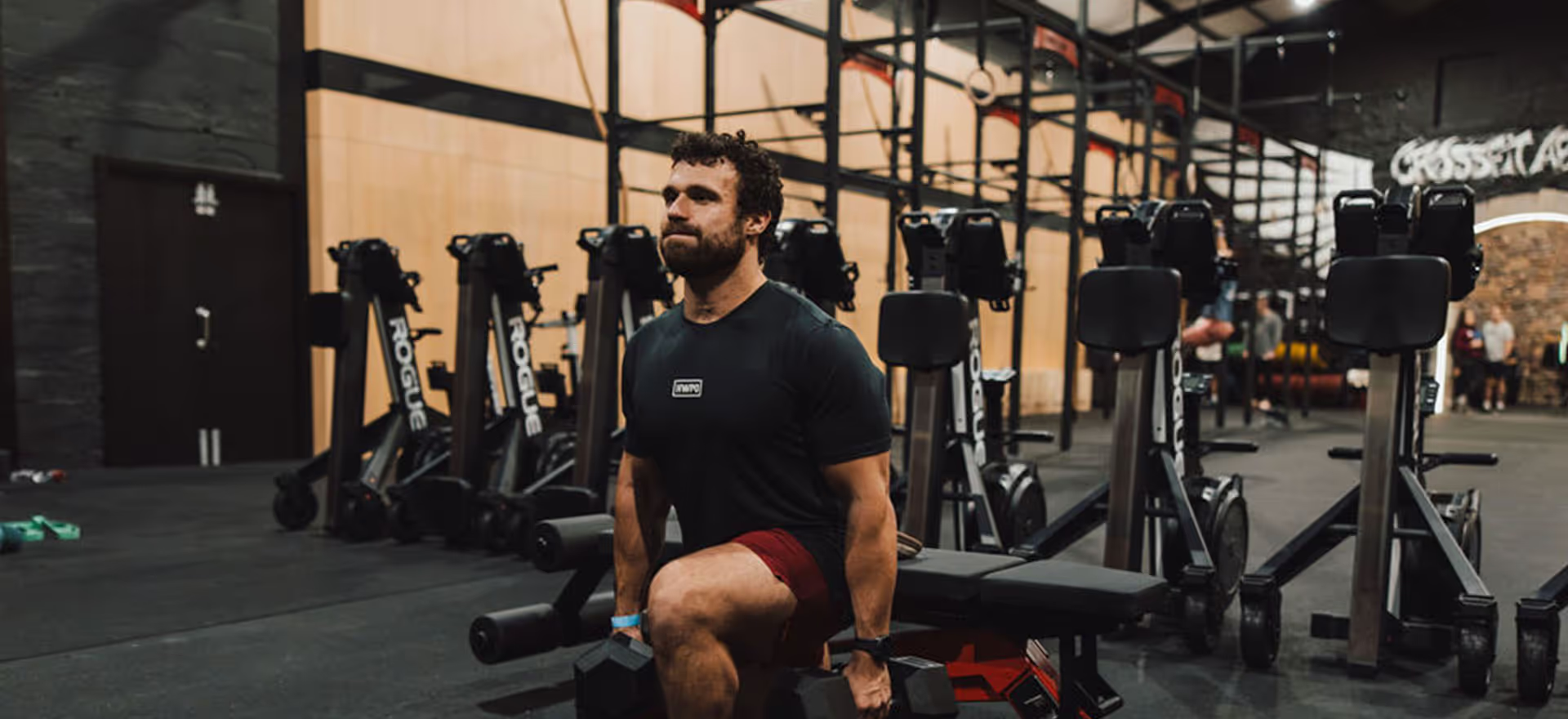
Strength isn’t limited to the conventional lifts we track; it’s the capacity to generate force and control across a number of positions.
Rethink what strength really is
Most people think of strength as what you can lift in a perfect setup — both feet down, even balance, straight lines. Bench, squat, deadlift. They’re the standard for a reason. They build the most muscle, move the most load, and teach discipline. They’re the foundation. But they’re not the only way to get strong.
Accessory movements are often treated as an afterthought, background noise — something to fill the hour after the “real work.” That’s a mistake. Because when you start progressing those movements with the same intent as the big lifts, you uncover a different kind of strength — one that actually carries over into more of life.
The Bulgarian split squat: strength in imbalance
Take the Bulgarian split squat.
It’s easy to treat it like a burnout exercise. Three sets of ten with 30-pound dumbbells, and you’re done. But that movement can be heavy. You can load it with serious weight and build strength in ways that the bilateral squat doesn’t — balance, hip stability, tension through asymmetry.
The single-leg Romanian deadlift: control under rotation
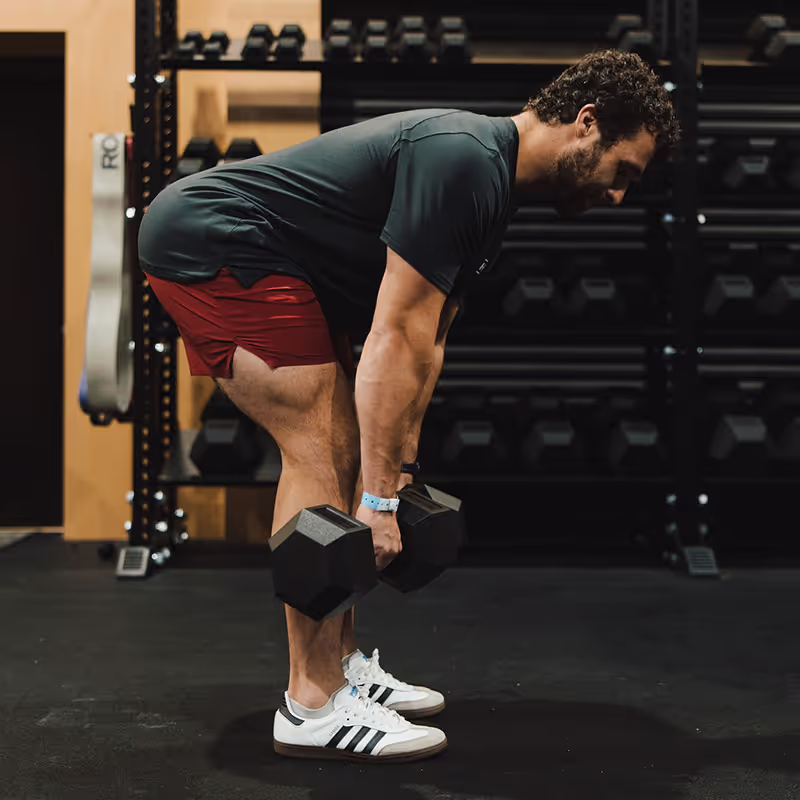
The same goes for the single-leg Romanian deadlift.
It teaches you to hold a position under rotation and to coordinate the chain from your foot through your hip to your back. Most people stop at 20 or 30 pounds, wobbling through reps. But I’ve seen athletes build to holding 70s, 80s, even 100s (not to mention what can be done with a barbell) with clean positions, stable feet, and control.
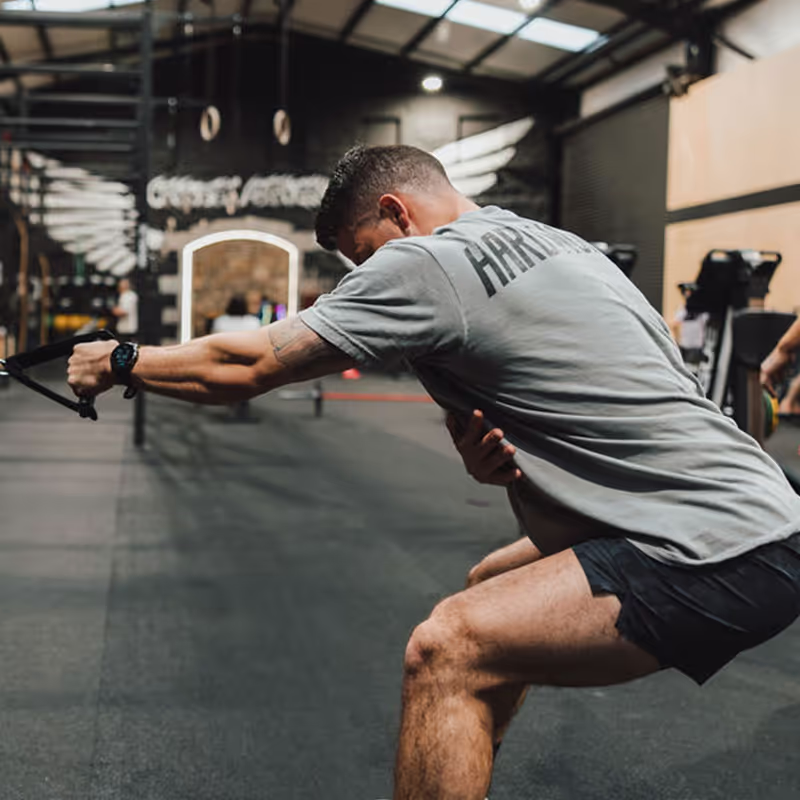
Those lifts matter because they load the body in ways the big three can’t. You’re training control. You’re building strength in “abnormal” positions — the kind you actually find yourself in when you run, change direction, or lift something in the real world.
The barbell lifts are organized and predictable. That’s their value. They let you measure, progress, and refine. But life isn’t symmetrical. Sport isn’t symmetrical. And not all of your training should be, either.
Get strong in the spaces between
I’m not calling to replace the classics. It’s to expand your definition of what real strength means. You can — and should — chase your big numbers. Keep squatting, benching, and deadlifting heavy. But start treating your accessories like they matter. Track them. Progress them. Ask yourself: how heavy can I go while still keeping perfect balance? How much control can I maintain under load?
Because when your split squat doubles, your back squat will move better. When your single-leg RDL stabilizes, your hinge will feel tighter. And when your smaller movements get stronger, your system as a whole becomes harder to break.
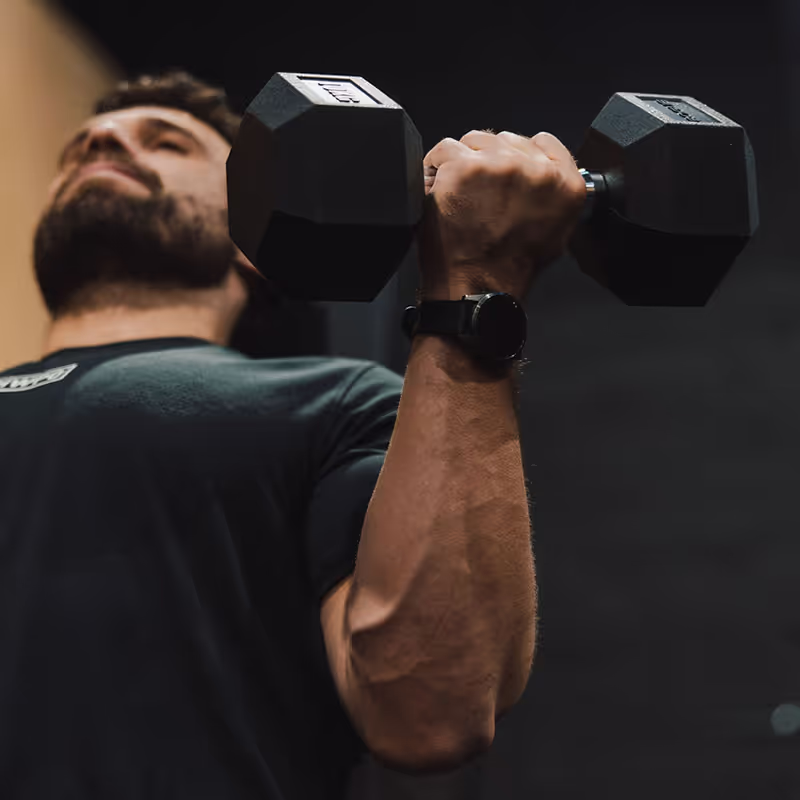
Any position can be loaded safely if you approach it intelligently. You don’t need to chase perfect symmetry forever. You need to get strong in the spaces between — the messy, one-sided, awkward places that reveal where your strength actually lives. Push those movements and treat them like main lifts for a while. You’ll be surprised how much they give back.
Build strength that SHOWS UP everywhere
If you want a program built to make you stronger, HWPO STRONG delivers four focused strength days each week with progressive cycles and accessories that build power, control, and long-term durability. Train with structure, chase bigger numbers, and SHOW UP with a community committed to getting STRONGER.