Building Skills In CrossFit
Most CrossFit athletes have experienced it. A movement feels fine on its own, but the moment it shows up in a workout, everything falls apart. Improving skills isn’t about repeating them under fatigue and hoping they click. It’s about understanding what’s limiting you, developing the movement in a controlled setting, and then progressing it in a way that actually translates to performance.
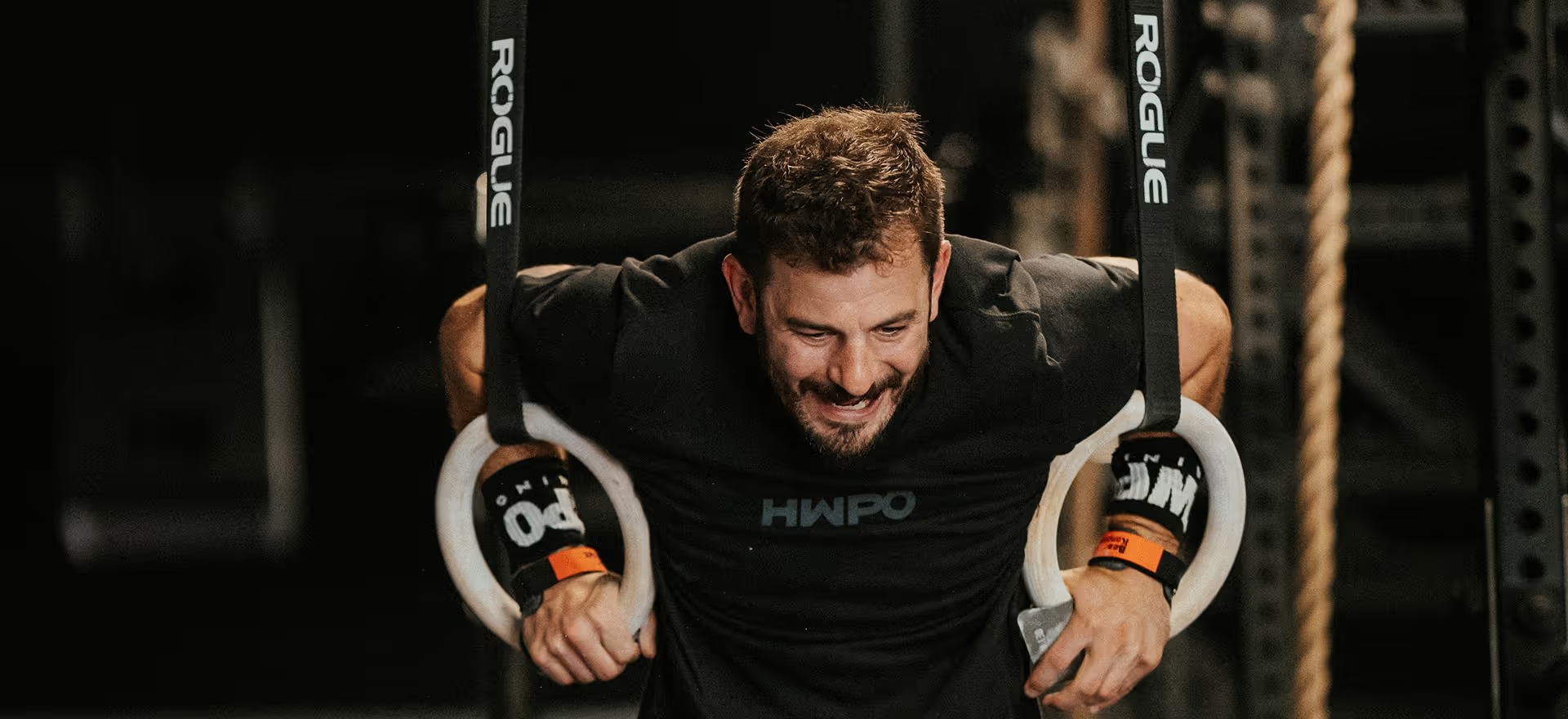
Within CrossFit, there are many movements that athletes eventually recognize as skills. Muscle-ups, handstand walking, double-unders, Olympic lifts, and many other movements all fall into this category. For many athletes, these movements can be frustrating, especially when they appear in workouts where fatigue is already present, and the expectation is to move quickly.
Why skills break down under fatigue
When this happens, the instinct of many is often to simply keep attacking the skill inside metcons and hope that repeated exposure eventually leads to improvement. While exposure has some value, this approach can often slow the learning process. To be most efficacious, skills should generally be built before being tested in workouts.
In most cases, the first step in building a skill is identifying what is actually limiting it for you. Sometimes the limitation is technical. For example, an athlete may have the strength to perform a muscle-up but struggle with the timing of the transition. A handstand walk may break down because the athlete does not yet understand how to distribute their weight through their hands and shoulders. In Olympic lifts, the coordination aspect of bar path and timing often becomes the biggest barrier to maximizing capacity.
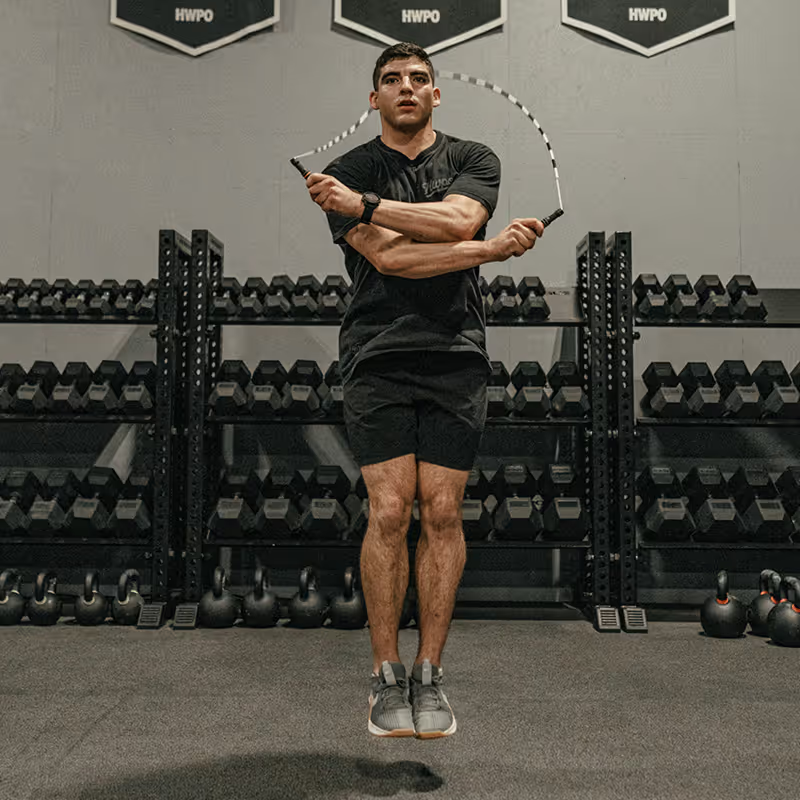
Other times, the limitation on a skill is more related to an athlete’s personal threshold. An athlete might understand the movement conceptually but lack the strength, mobility, or stamina needed to express it. A double-under may be limited by the endurance to jump or flick the wrists for a prolonged period over longer sets. A snatch may be limited by overhead stability or pulling strength.
Understanding what is actually limiting the movement helps determine where improvement should begin.
Build the skill before testing it
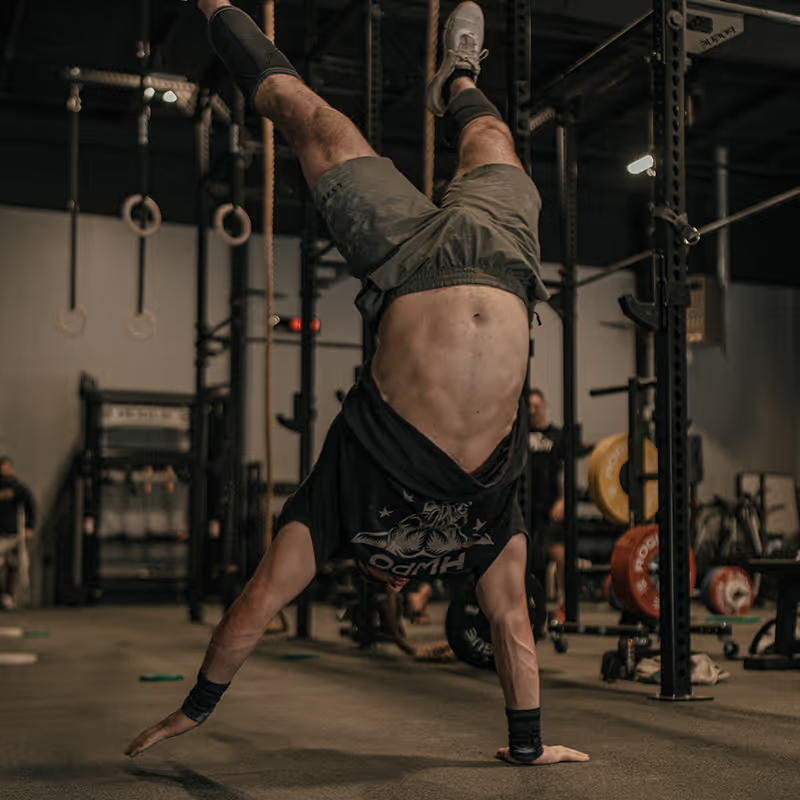
Once the primary limitation(s) are identified and addressed, the next step is developing conceptual understanding and practicing the movement in a controlled setting. Skill development tends to be most effective when the heart rate is relatively low, allowing an athlete to focus on body awareness, positioning, and timing. Practicing handstand walking across an open gym floor, drilling double-unders in small sets with long rests, or refining bar paths with lighter loads are examples of how this can look.
During this stage, the focus should not be on intensity or fatigue. The focus should be on understanding the movement and learning what correct execution feels like.
As consistency begins to improve, the next priority becomes accumulating quality repetitions…and, a lot of them. Skill development requires repetition, and the quality of these repetitions matters equally to the total number performed, if not more. Each correct rep reinforces the movement pattern, helping the athlete develop consistency and confidence in the skill. Rushing through sloppy reps tends to reinforce poor habits that will hold you back, rather than the correct ones. The more quality reps an athlete can accumulate, the sooner a skill can go from being a conscious, quality effort to an unconscious, quality effort.
Progress skills from practice to performance
Once the movement can be performed consistently in a controlled environment, the skill can begin to be introduced under slightly more demanding conditions.
One useful way to progress this is to add an elevated heart rate without significantly interfering with the skill itself. For example, pairing a handstand walk with a bike erg interval can raise the heart rate while keeping the primary fatigue in the legs instead of the shoulders, leaving the shoulders a little fresher to focus on stabilizing for the handstand walk. The athlete begins to experience the skill under mild fatigue, but the fatigue does not directly disrupt the movement pattern being trained.
As comfort grows, the next step can involve adding elements that introduce more interference. For instance, pairing a handstand walk with a ski erg may begin to challenge the shoulders more directly. The athlete must now maintain positioning and balance while managing fatigue in the same muscle groups used for the skill. Eventually, the skill can be layered into combinations that more closely resemble the demands of workouts. This might include pairing handstand walking with overhead barbell work or other movements that challenge stability and stamina in similar ways. At this stage, the athlete is learning to maintain the skill under increasingly demanding conditions of higher interference.
Ideally, interference is gradually layered into the skill development process, creating a clear, targeted path from isolated practice to metcons at full intensity. Approaching skill development in this way often leads to much more consistent progress. Missed reps decrease, confidence increases, and the movement becomes something an athlete can rely on, rather than something they hope will go well on a given day.
Make skills reliable, not hopeful
CrossFit will always challenge athletes to perform skills under fatigue, and this challenge is part of what makes the sport unique and rewarding. However, the athletes who tend to improve the fastest are usually those who take time to build the skill deliberately before expecting it to hold up in demanding workouts.
When skills are developed step by step — starting with understanding the movement, reinforcing quality repetitions, and gradually increasing the demands placed on the skill — they often become far more reliable tools in training and assets in competition. Over time, movements that once felt like obstacles can become strengths, simply because they were given the attention and structure needed to improve.
Build skills that actually hold up in workouts
It’s one thing to hit a movement in isolation. It’s another to rely on it when fatigue sets in. HWPO FLAGSHIP is built to develop both. Through structured programming, you’ll build strength, refine skills, and learn how to apply them under real workout conditions. Follow a proven approach, train with intent, and turn your weaknesses into strengths that SHOW UP when it matters most.