CrossFit To Endurance: The Pros And Cons
Shifting your training focus can change more than just your workouts; it can reshape how progress feels, how your body responds, and what you enjoy about training. After years of CrossFit, moving into endurance-focused training has highlighted both the benefits and the trade-offs of a more specialised approach.
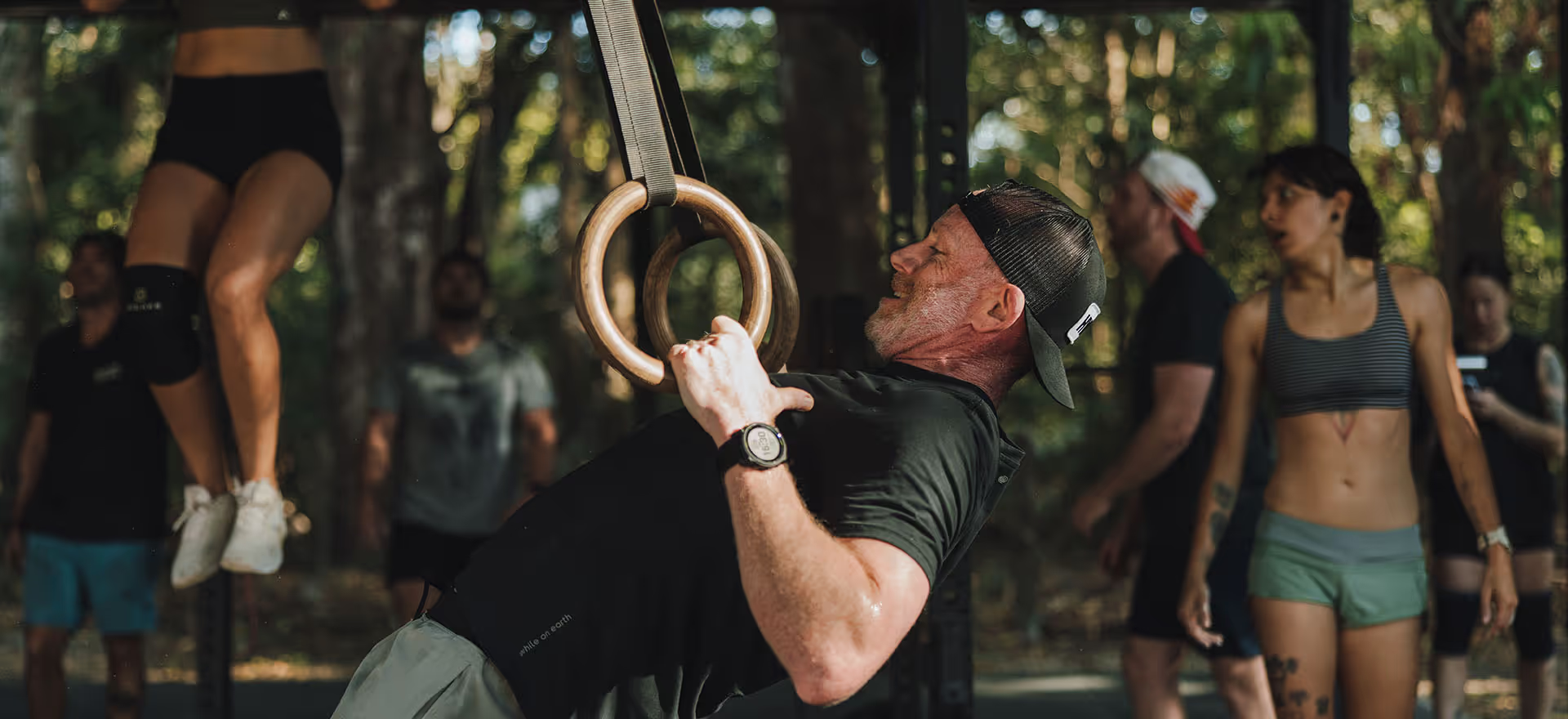
For the last 15 years, my training has been built around CrossFit®.
Strength work, gymnastics, mixed-modal conditioning, and constantly varied workouts have always been the focus. Endurance training was something I did alongside it, but it was never the main priority.
This year that changed.
For the first time in over a decade, I’ve shifted my training away from being CrossFit-focused and towards endurance performance. The goal now is training for a Marathon and a Half Ironman, which means most of my weekly training revolves around running and cycling, with some supporting strength sessions in the gym.
The change has been interesting. Some parts of it have been really refreshing, while others have made me realise just how different endurance training is from CrossFit.
Here are some of the biggest pros and cons I’ve noticed so far.
The Pros Of Switching To Endurance Training
A few positives showed up early, especially in how progress and structure felt day to day.
Progress Feels Quicker
One of the biggest differences I’ve noticed is how quickly progress feels like it’s happening.
When training for CrossFit performance, you’re trying to improve across a huge range of movements. Strength, Olympic lifting, gymnastics, conditioning - there can easily be hundreds of different exercises involved.
Progress still happens, but it tends to be spread across everything.
With endurance training, my focus is mainly on two things: running and cycling. Because the movement patterns are so specific and repeated so often, improvements feel much more noticeable week to week.
In some ways, it feels like beginner gains all over again.
A big part of this is that the supporting strength work I’m doing in the gym is reinforcing those movement patterns rather than competing with them.
Training Becomes Very Specific
Another thing I’ve enjoyed is how clear the training goal is.
When you’re preparing for something like a marathon or a Half Ironman, you know the event distance well in advance. You also know the course and the demands of the race.
Because of that, training can be very specific.
There’s less “just in case” training and more focus on preparing directly for what the event actually requires.
Less Time Needed for Warm Ups
Something I didn’t expect was how much less time I spend warming up compared to when CrossFit and weightlifting were my main focus.
Heavy lifting and technical movements usually require a lot of prep work before you can really get into the session.
With running and cycling, it’s much simpler. A lot of the activation work can be done earlier in the day while I’m at my desk, which means that when I actually start training, I can spend more time just moving.
When you’re trying to fit training into a busy day, that makes a big difference.
Long Sessions Bring a Different Sense of Achievement
Finishing a 21km run brings a very different type of satisfaction compared to finishing a long gym session.
There’s something about covering that distance under your own effort that feels really rewarding.
Both styles of training bring a sense of accomplishment, but endurance training definitely has its own version of that.
The Cons of Moving Away From CrossFit
Alongside the positives, a few challenges have become more noticeable over time.
Less Variety Means More Fatigue From New Movements
One thing I’ve noticed after about six months of focusing mainly on running and cycling is how quickly fatigue sets in when I do something outside those patterns.
When CrossFit was my main training style, I was exposed to a wide range of movements all the time. As a result, the body remained pretty adaptable.
Now that most of my training involves the same movement patterns, introducing something new can lead to more soreness and fatigue than before.
Running Volume Can Become Repetitive
Training for a marathon means running somewhere between 30–50km per week.
That volume is necessary for the event, but it also means you may end up running the same routes quite often. To add to that, I live on the top of a 1km hill!! So you can get an understanding of what my running sessions are like.
Endurance training is simple, which is one of its strengths, but that simplicity can sometimes make it feel repetitive.
Small Injuries Can Disrupt Training More
Another challenge is that endurance training relies heavily on specific movements.
If a small injury stops you from running or cycling, it can have a bigger impact on your training than it might in CrossFit.
For example, a calf issue that prevents you from running significantly reduces the specificity of marathon preparation.
In CrossFit, there are so many other movements available that you can usually work around injuries more easily.
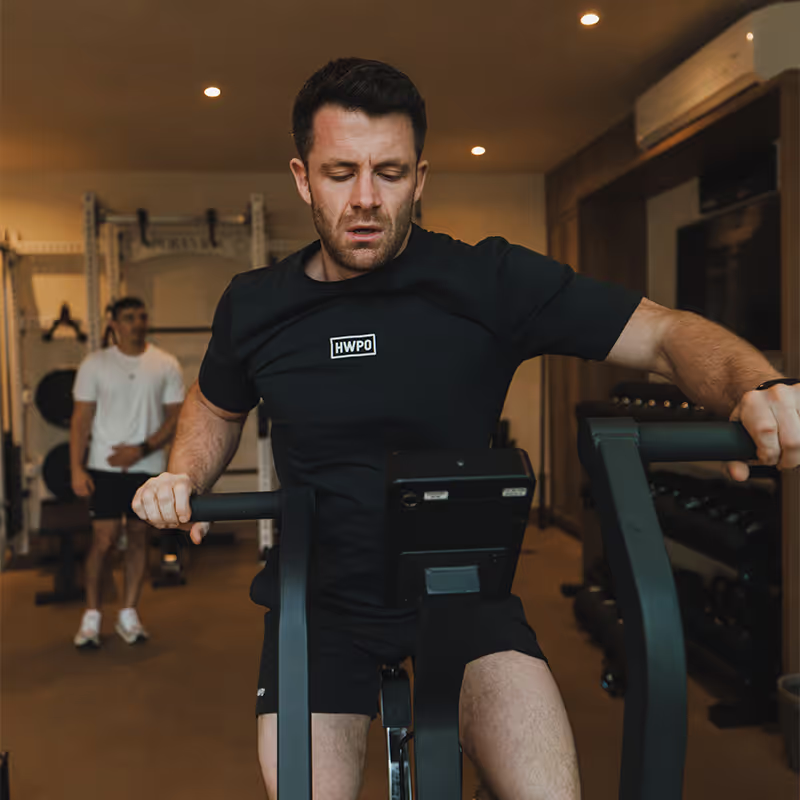
I got a Calf injury a few months ago, and my sole training focused on cycling and some upper-body strength. I didn’t love that. It was also winter time, so the cycling was stationary on a watt bike every day.
Less Social Interaction
Most of my endurance sessions are done on my own.
I don’t mind solo training while I’m actually moving, but I do miss the social side of training in a CrossFit gym.
The conversations before and after a session, the shared experience of the workout… those things are a big part of what makes CrossFit environments more enjoyable.
I Miss Heavy Lifting
One thing I’ve definitely noticed is the lack of heavy strength work.
High-load lifting stimulates the nervous system in a way that endurance training doesn’t quite replicate. There’s a certain adrenaline that comes with a heavy lift that I do miss.
It’s a different stimulus entirely.
Final Thoughts
Right now, I don’t think I have a clear opinion on which training style I prefer.
For me, the underlying principle of training has always been the same. I’ve always needed a goal to work towards, and I tend to get really invested in the process of making progress toward it. Whether that was CrossFit competitions in the past or endurance events now, the motivation comes from seeing improvements week to week.
In many ways, switching to endurance training has reminded me of the first few years of my CrossFit career. Everything felt new, and progress came quickly, which made every session feel exciting.
At the same time, I’m not sure I could train this way for 15 years, as I did with CrossFit. I don’t yet feel that same connection to the training style that would keep me completely bought in for that long.
We’ll see.
Find the training that fits your goal
Whether you’re focused on strength, conditioning, endurance, or a mix of everything, HWPO offers programs designed to meet you where you are. Explore the full range and choose the one that aligns with your current goal and how you want to train.