How To Get Your First Muscle-up
The ring muscle-up is a milestone skill that exposes gaps in strength, control, and technique. It is not something athletes stumble into, it is built through structured progressions, dedicated strength work, and precise coaching. This guide breaks down how to develop a strict, repeatable ring muscle-up that holds up under fatigue.
.avif)
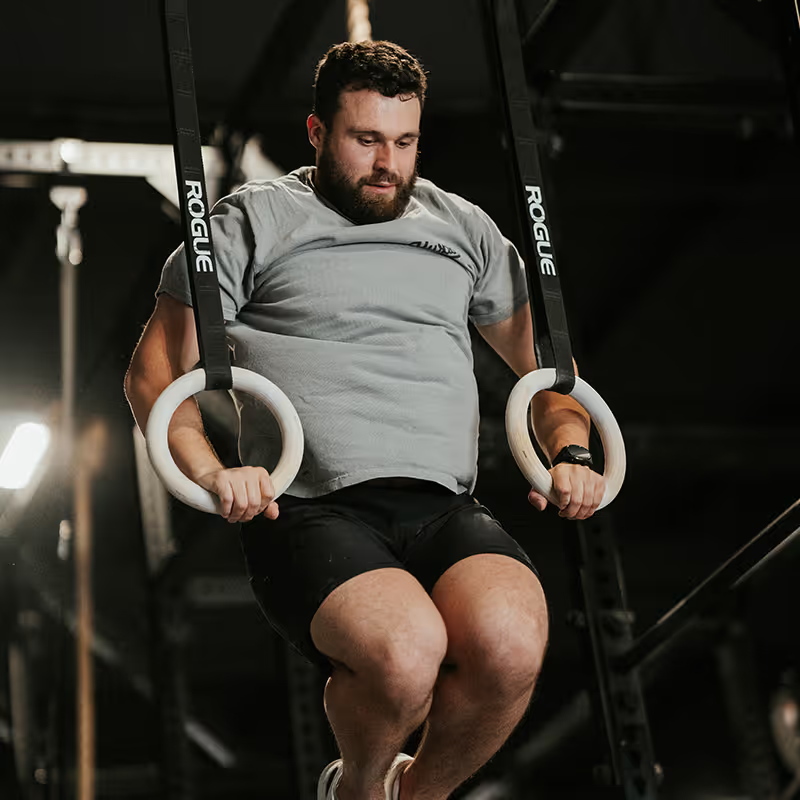
The Ring Muscle-Up is one of the biggest milestones in a CrossFitter’s journey—not because it’s flashy, but because it exposes every gap you have in strength, control, and positional awareness. You don’t accidentally get a ring muscle-up. You build it.
It’s not just a “new skill.” For most people, it requires a structured progression, dedicated strength work, and extremely precise technique. Today, we’re breaking down exactly how to do that. By the end, you’ll know where you stand and have a plan that develops not only your first ring muscle-up but the foundation for consistent, repeatable success—even under fatigue.
Strict vs. Kipping: Why strength comes first
Like most gymnastics movements, the Ring Muscle-Up has a strict version and a kipping version. And understandably, most people want to skip straight to kip. It looks smoother, faster, and “more CrossFit®.”
But here’s the truth:
If you build the strict version first, your kipping muscle-ups will be more consistent, safer, and far more repeatable when you’re tired.
The strict ring muscle-up teaches the strength, timing, and positional control that the kipping movement depends on. It also demands mastery of the false grip, which is non-negotiable for the strict variation and optional but extremely helpful for the kipping version.
The three phases of a ring muscle-up
Every ring muscle-up—strict or kipping—has three parts:
- Pull
- Transition
- Push
To perform the full movement, you must be able to pull high enough, control your body through the transition, and press into a stable support position on the rings.
That means before you even think about “doing a muscle-up,” you need to honestly assess your prerequisites.
Can you do these? Your pre-MU checklist
Ask yourself:
- Can I hold a false grip securely?
- Can I perform a strict chin-up that travels higher than chin-over-bar?
- Can I perform a strict ring dip?
- Can I hold the top of a strict chin-up for 5 seconds?
- Can I hold a stable support position on the rings?
If the answer is no to any of these, your plan starts there. If the answer is yes, you’re ready to begin the strict ring muscle-up progression.
Your first strict muscle-up
Everything below is built on the exact steps I used to prepare for competition—structured strength first, technique second.
Part 1 — Strength work
The biggest mistake athletes make is trying to learn technique before they’re strong enough to hold positions. Strength comes first. Always.
A. Isometric Strength
False Grip Holds
- 3–6 sets of 0:05–0:20
- Begin in a ring-row angle if needed; progress to vertical dead-hangs.
Support Holds
- 3–6 sets of 0:05–0:20 Bottom of Dip Hold
- 3–6 sets of 0:05–0:20 Top of Ring Support Hold
These positions form your foundation. Spend 1–2 weeks here before adding harder work.
B. Concentric strength
Strict False Grip Ring Rows / Chin-Ups
- 3–6 sets of 1–5 reps
Strict Ring Dips
- 3–6 sets of 1–5 reps
This is the base of the pyramid. When these positions are strong, your technique sessions will actually be productive.
Part 2 — Technical work
Ring Muscle-Up Pull-Downs (Band-Assisted)
3–6 x 1–3 reps
These must be slow, controlled, and demonstrative of all three MU phases:
- Pull
- Transition
- Dip
If the band is too heavy, you’ll engrain poor movement patterns. Choose assistance that allows perfect mechanics—not momentum.
Technical breakdown: the transition
- Pull rings to shoulder height, arms parallel
- Pause
- Lean shoulders forward, rotate elbows from in front → behind
- Wrists turn over as you land in a controlled bottom-of-dip position
- Arms continue pulling while the torso pivots forward through the transition
This is the heart of the strict muscle-up—control, not speed.
Film your technical sessions.
If you’re training alone, video feedback is non-negotiable. Compare against demo videos or find a coach to look at your patterns.
How to organize your training week
Below is a clean example of how strength and technique sessions flow together.
| Weeks 1–2 (Foundation Phase) |
|---|
| Session 1 — Strength (Pull) |
|
3 Sets 5 Sets |
| Session 2 — Technique |
|
5 Sets 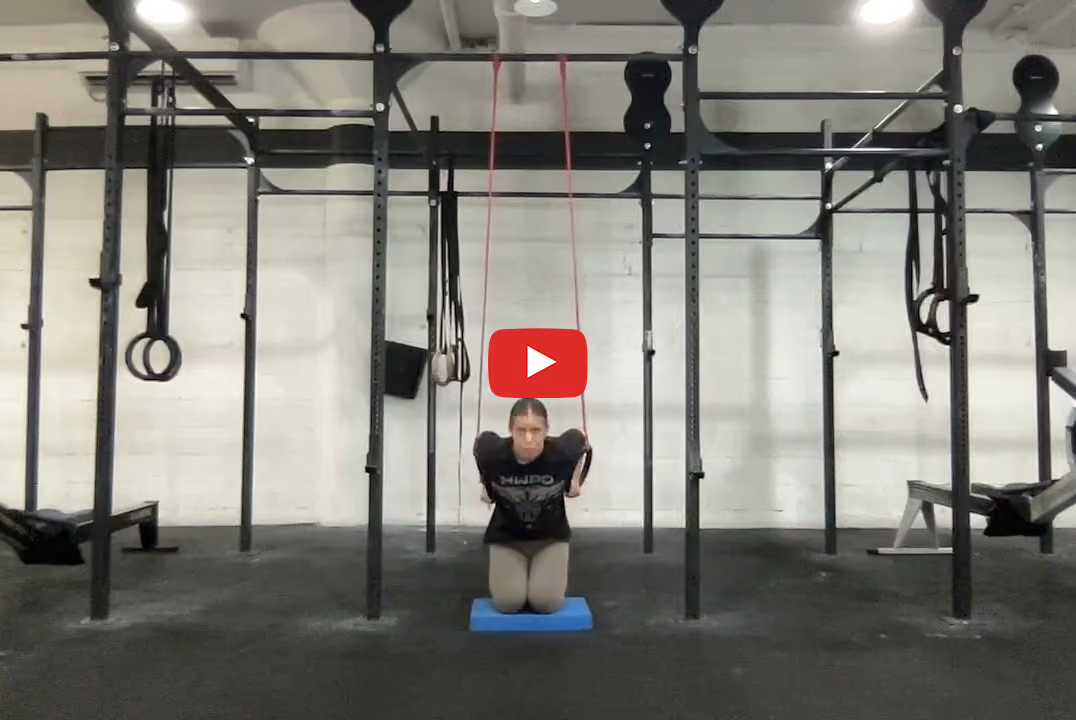
If the image does not load,
watch it on YouTube
.
Hold each phase for 2 seconds:
|
| Session 3 — Strength (Push) |
|
3–5 Sets 3–5 Sets |
Spend 2–4 weeks here before advancing.
| Weeks 3–6 |
|---|
| Session 1 — Strength (Pull) |
|
3–5 Sets 3 Sets |
| Session 2 — Technique |
|
Band-Assisted Strict Muscle-Ups 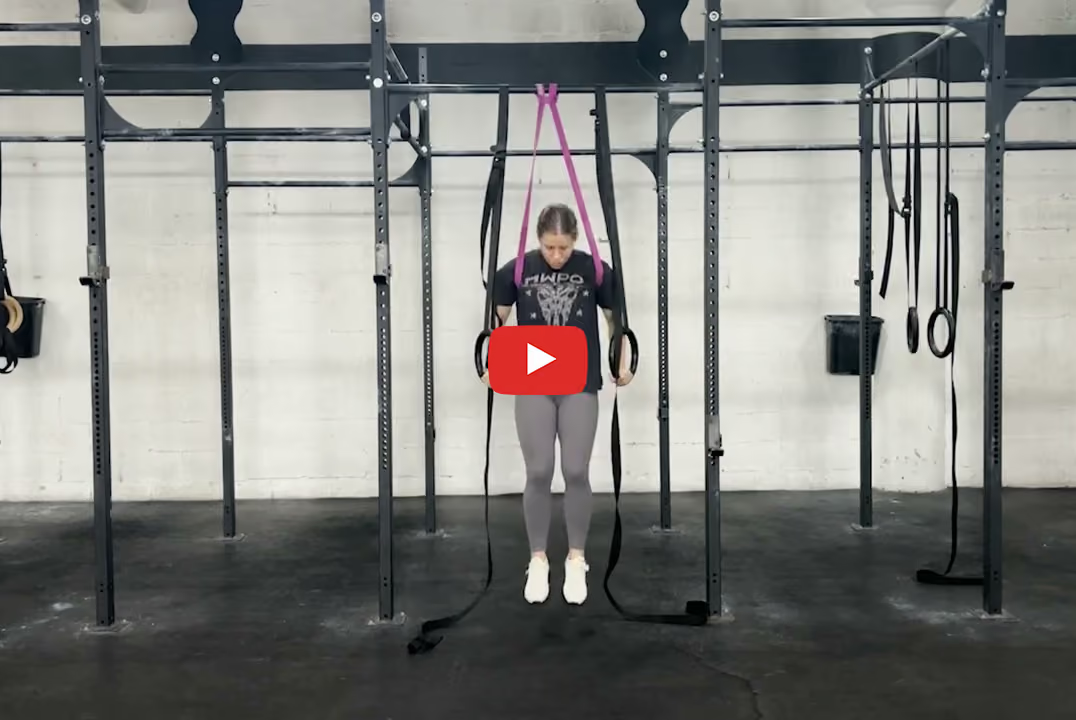
If the image does not load,
watch it on YouTube
.
Ring Muscle-Up Negatives 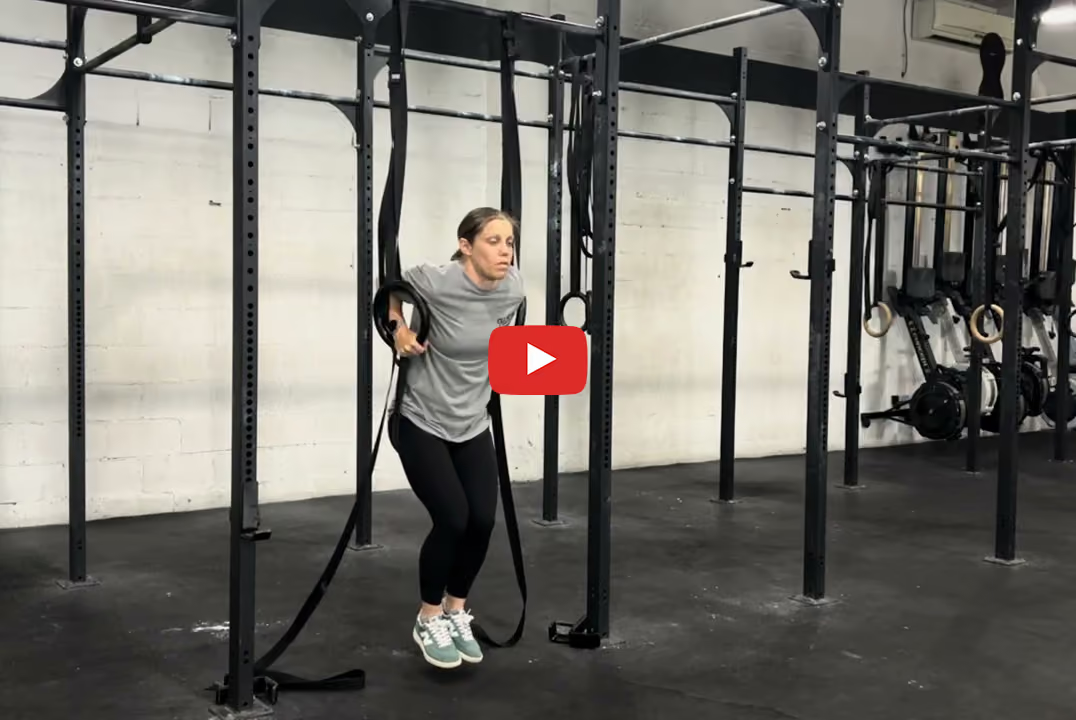
If the image does not load,
watch it on YouTube
.
|
| Session 3 — Strength (Push) |
|
3–5 Sets |
When to attempt your first strict muscle-up
After 2–3 weeks of the progression phase, most athletes have sufficient positional strength, false-grip ability, and transition awareness to attempt their first strict ring muscle-up.
And yes—the process feels slower than what you see on social media. But the payoff is huge:
- Better movement quality
- Faster progress when learning to kip
- Higher volume tolerance
- Less shoulder irritation
- More consistent reps under fatigue
This is how you build not just a ring muscle-up—but a repeatable, dependable one.
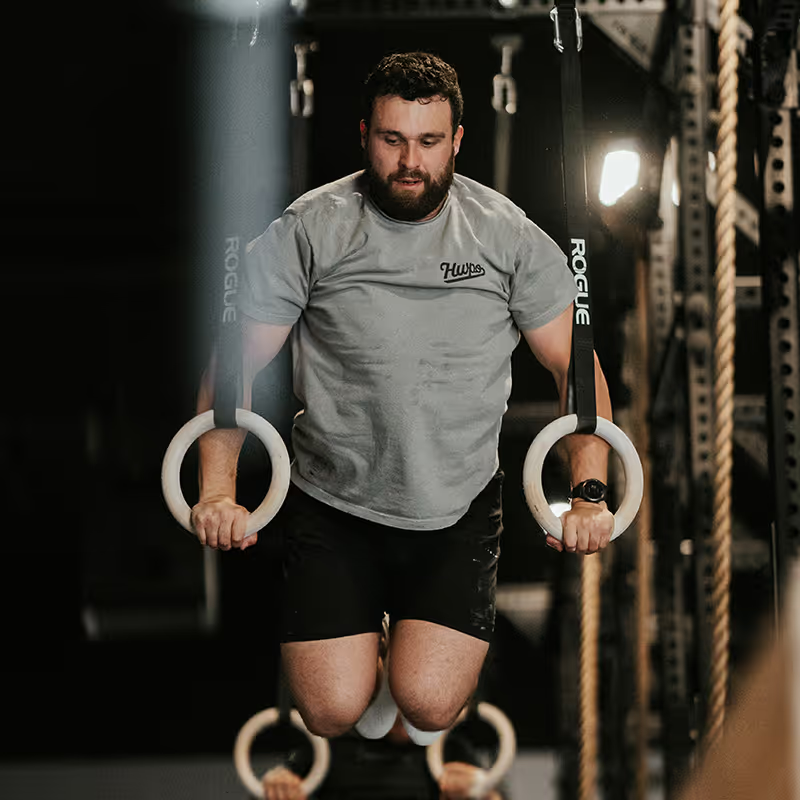

Bring structured gymnastics progressions to your gym.
HWPO AFFILIATE provides gyms and coaches with structured class programming led by Head Coach Michele. With clear progressions and a strength-first approach, it helps athletes build skills consistently while giving coaches the structure they need to deliver results.