Strength Athlete Vs Endurance Athletes: How Training Should Differ
Strength and endurance athletes require different training approaches. Learn how to identify your bias, focus on your weaknesses, and build a more balanced, competitive fitness profile.
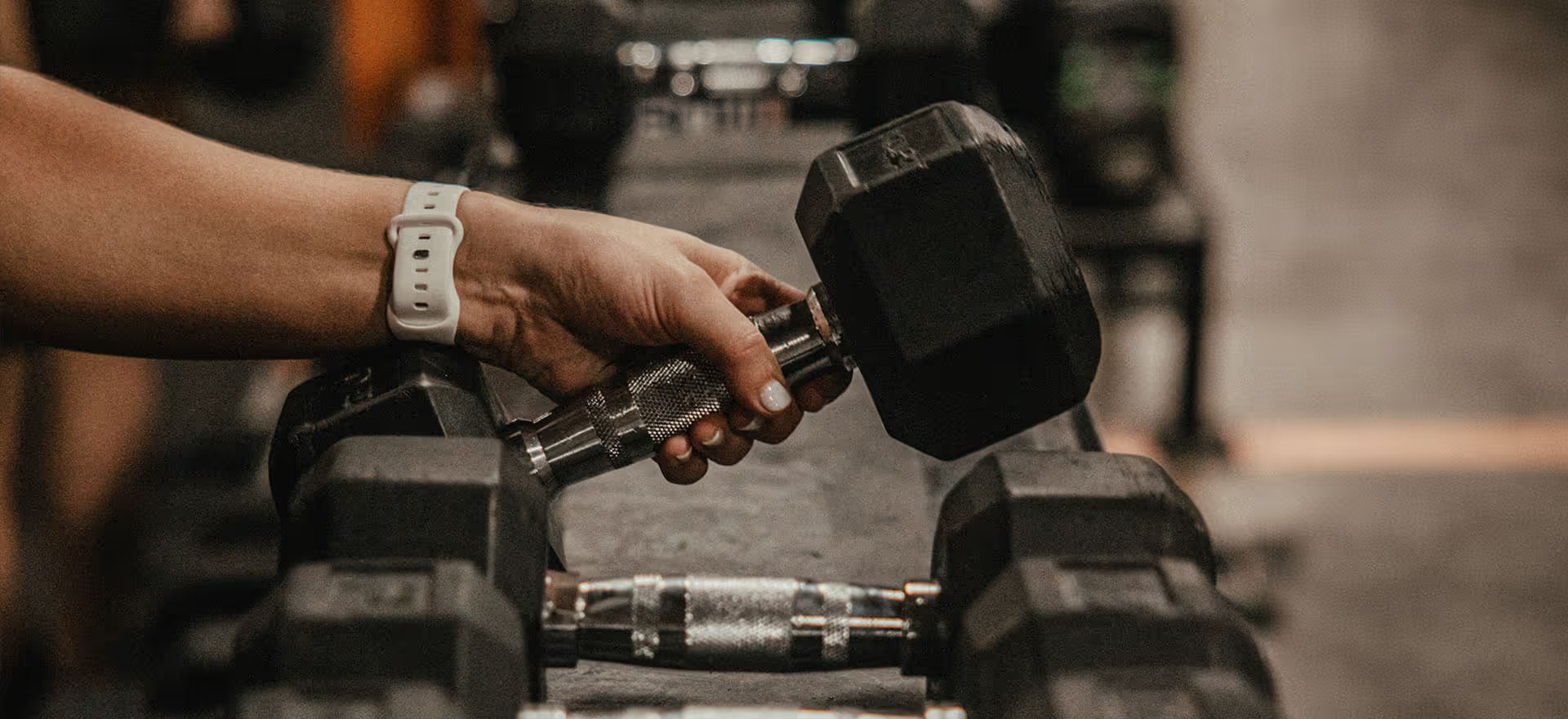
In CrossFit®, we are constantly asked to lift heavy weights and move for long periods.
As a result, many athletes fall into the trap of training everything at once or doing the same thing repeatedly.
But that’s not how this works.
Strength athletes and endurance athletes don’t just perform differently; they should train differently, too.
Understanding where you fall on that spectrum can completely change how you approach your training and how you improve your overall fitness and performance.
Two different engines
At a high level, strength and endurance athletes are built differently.
A strength-biased athlete tends to:
- Excel at heavy lifts
- Produce high power output quickly
- Perform well in shorter, more explosive efforts
- Struggle when workouts get longer and more aerobic
An endurance-biased athlete tends to:
- Sustain effort over longer periods
- Recover quickly between movements
- Maintain consistent pacing
- Struggle with heavy loading or maximal strength
Where athletes get it wrong
Most athletes don’t have a training problem.
They have a bias problem.
Strength athletes:
- Chase heavy lifts
- Avoid longer aerobic work
- Turn everything into a sprint
- Overtax their CNS
Endurance athletes:
- Stay in controlled and comfortable efforts
- Avoid heavy loading / fearful of heavy loads
- Struggle to push intensity when it matters
- Stress about “lack” of engine work
The result? They just get better at what they’re already good at.
Training should be biased, not equal
CrossFit requires both strength and endurance.
But your training doesn’t need to be 50/50.
It should be biased toward your weakness while maintaining your strengths.
For example:
A strength athlete will need:
- More aerobic work (Zone 2, longer intervals)
- Practice pacing and controlling effort
- More time under fatigue
- Breathing practice and control
An endurance athlete will need:
- More structured strength work
- Exposure to heavier loads
- Intentional power development
- More anaerobic Sport exposure
The goal isn’t to become average at everything. It is to level your fitness and turn those 35th-place finishes into 15ths.
Effort feels different for each athlete
This is where things get interesting because effort doesn’t feel the same for everyone.
A strength athlete and an endurance athlete can be working just as hard… but it looks completely different.
A strength-biased athlete often struggles with:
- Slowing down and controlling pace
- Staying consistent when breathing gets uncomfortable
- Letting go of the need to “win” the first part of a workout
- Moving efficiently under longer durations of fatigue
An endurance-biased athlete often struggles with:
- Committing to heavy loads or low-rep strength work
- Producing high power output quickly
- Taking risks and pushing past controlled pacing
- Holding positions or tension under heavy fatigue
And usually, the thing you avoid the most… is exactly what you need.
How I approach this in coaching
This is something I pay close attention to when programming.
Training is biased on purpose.
And for me, it’s simple: we hit the weakness first.
For a strength athlete, that means:
- Longer sessions
- Breathing focused work
- More aerobic pieces
- Even strength work done under fatigue, higher reps, supersets, and less focus on pure max strength
I have a female athlete who would’ve taken first at the 2025 CrossFit Games in a 1RM back squat. Strength isn’t the issue.
So yes, we still squat heavy.
But it’s almost always paired with something fatiguing before or after. We’re not chasing a traditional strength cycle most of the year. We’re building strength that actually transfers under fatigue and to sport.
On the flip side, I coach a male athlete who is extremely fit, great at gymnastics and anything in that 10+ minute range, but struggles with heavy loads and needs to improve his 1RMs to be competitive.
For him, we do the opposite.
We have two dedicated strength days per week where we focus on low reps, heavy weight, and tempo is added to these days to work on explosive strength and control. Because for him, strength isn’t just helpful, it's the limiter.
Time of year matters more than you think
But here’s the part that often gets missed: timing matters.
Yes, we want to attack weaknesses.
But we also need to be smart about when we do that.
During the season, especially around qualifiers and competitions, the goal shifts a bit. We’re still working on weaknesses, but we can’t go all-in on them at the expense of performance.
You don’t run a full-strength cycle in the middle of competition season.
And you don’t suddenly add daily endurance work when the focus is sport-specific.
That’s where balance comes in.
A simple way to think about it:
- Early in the week, you can be more aggressive with bias training (Monday/Tuesday)
- Later in the week, you shift toward sport-specific execution and performance (Wed-Sat)
You’re still building, but you’re also preparing.
And then there’s the off-season.
This is where the real magic happens.
In the off-season, you can:
- Be more intentional
- Be more consistent
- Build real structure around weaknesses
- And actually spend time developing what’s holding you back
No pressure to perform. No competition around the corner. Just focused on patient development.
The big picture
Training isn’t just about what you do.
It’s about where you are, where you want to go, what you need, and whether you are willing to prioritize the things you are not good at and have some tough training days
Get these things right, and your training starts to actually move you forward, not just make you tired.
Final thought
You don’t need to completely change who you are as an athlete.
But you do need to understand it.
Once you know your bias strength or endurance, you can start making better decisions in training game plans on comp day and your performance.
And over time, those decisions are what turn good athletes into great, well-rounded ones.
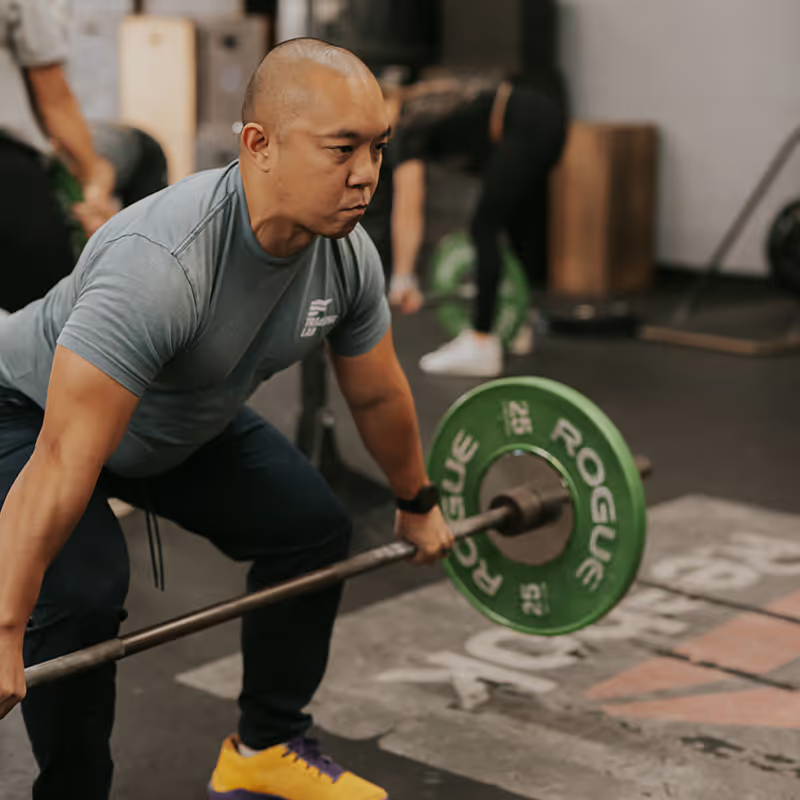
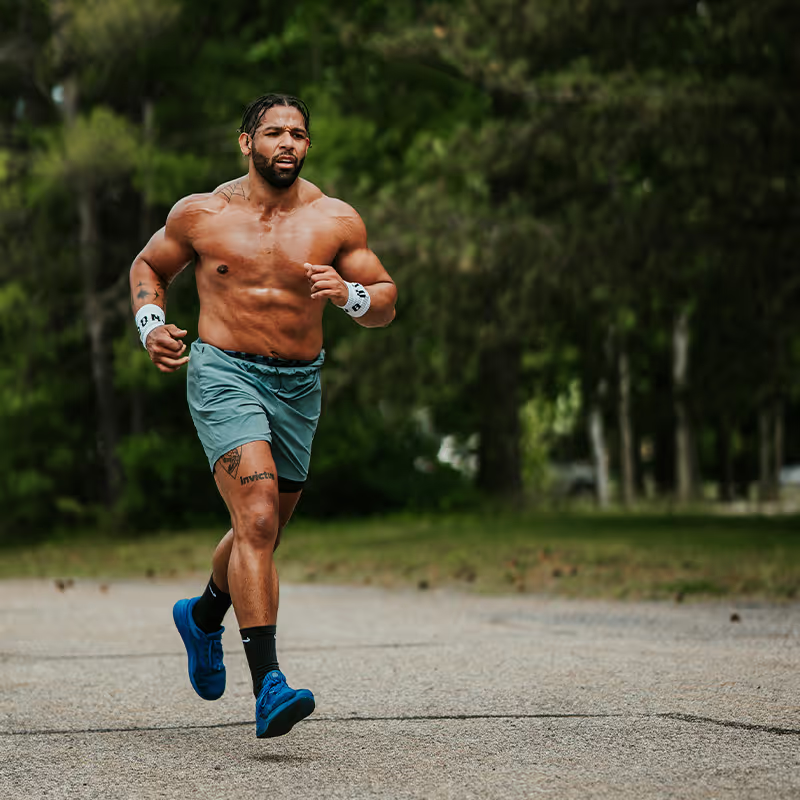
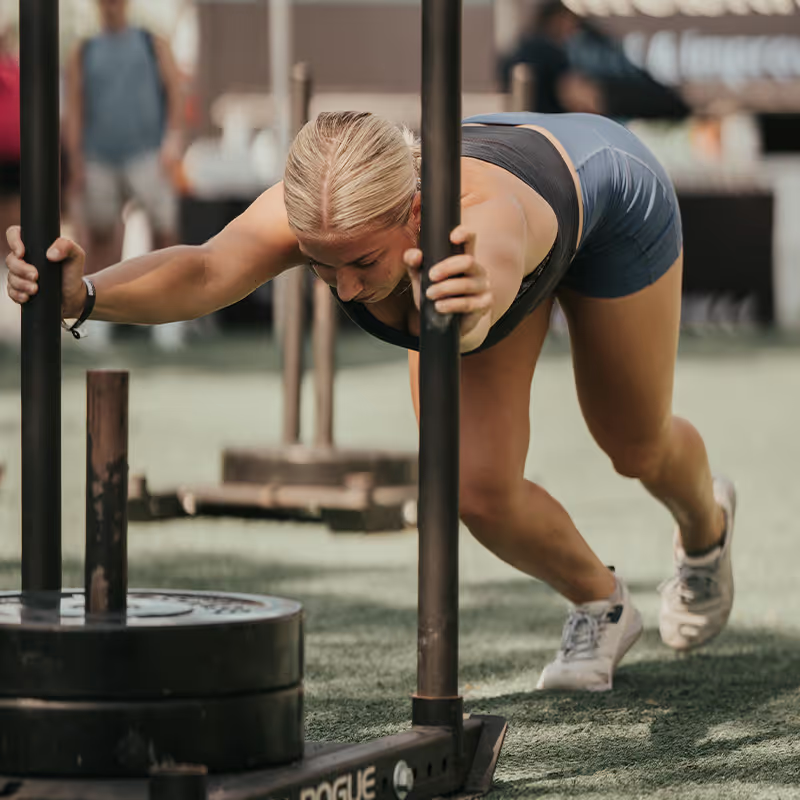
Train smarter with HWPO
Stop guessing and start progressing. Whether you’re strength- or endurance-biased, HWPO FLAGSHIP is designed to build complete athletes through structured, purposeful training. Follow a proven programme, train alongside a global community, and develop the areas that matter most to your performance.