30 Years Of Olympic Weightlifting
Thirty years ago, I picked up a barbell and found a home. To mark this milestone, I asked my colleagues to interview me, and what followed were some of the most honest conversations I've had about my journey in this sport. Here is my story, told through the questions that matter most.
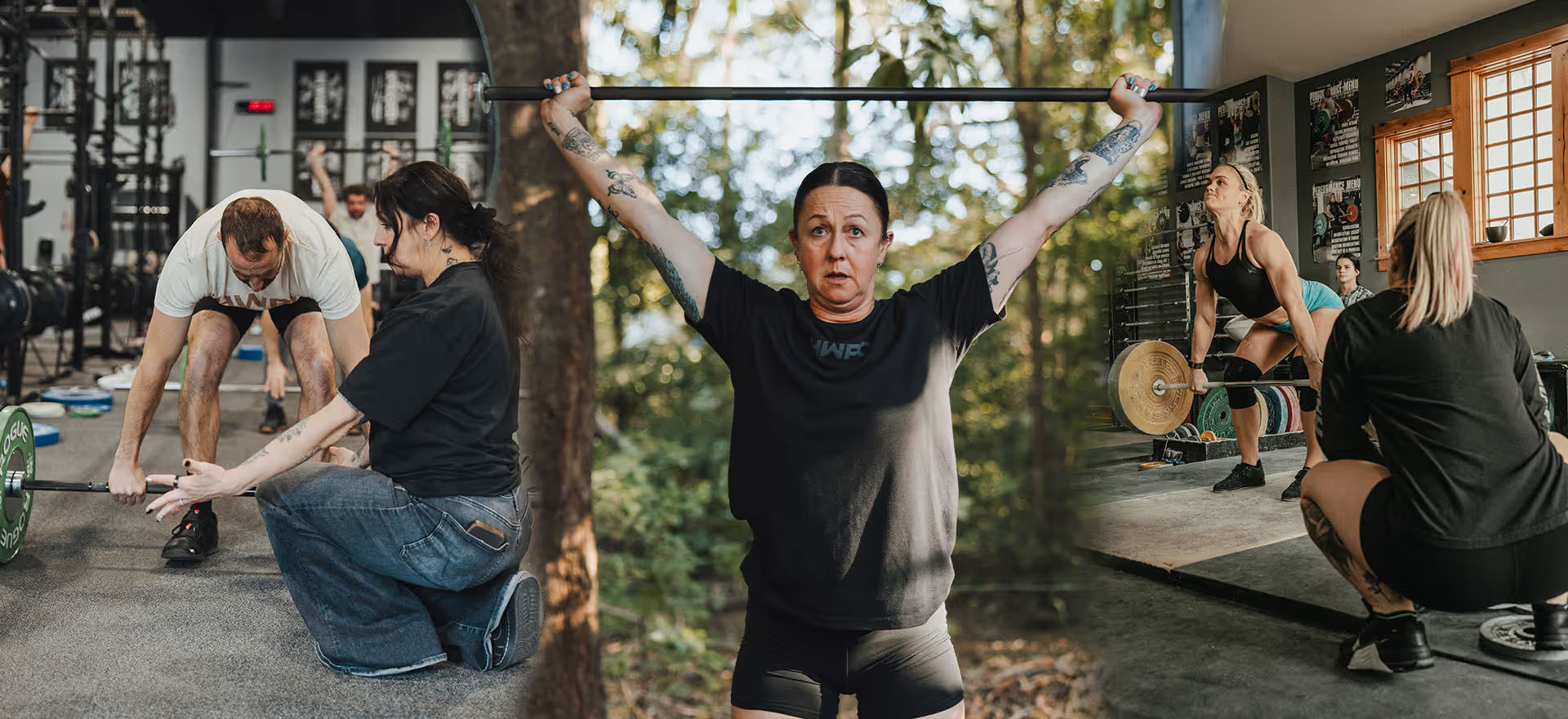
I recently reached the milestone of 30 years involved in Olympic Weightlifting. I wanted to talk about this, but in a way that reflects the questions or thoughts other people may have about me being in the sport for so long. So I asked my colleagues to ask me a question, and, turning it into an interview, they asked some great questions!
Michele Letendre asked: Why Olympic Weightlifting?
Honestly, this was a hard question to answer because I never thought about WHY; I've always just thought this is a major part of my life. I feel like Olympic Weightlifting is in my soul, such a part of me that I wouldn’t know life without it. For more than half my life, I have had a barbell in my hands and/or have been teaching someone to hold one.
I found Olympic Weightlifting when I was 18– I had just graduated high school and left my childhood home, which was not a good situation for me. My parents were heroin addicts, and I had an extremely traumatic childhood, so the moment I could get out, I did. Weightlifting was one of the first things I found after I was able to leave, and for the first time in my life, I felt like I was home. My Coach at the time, his family, the athletes in the garage, and the barbell. It all felt like home. And I felt safe, and I felt strong, for the first time in my life. I realized about 15 years ago that I had all the tools, and all of the passion, and all of the experience to help others feel the same as I had felt then and still feel today. And so that is my WHY.
Justin Sweeney asked: How do you stay engaged with and excited about the sport after 30 years? How has this changed throughout those years?
I think that it is easy for me to stay engaged and excited about the sport now because I actively coach in the space. The sport has evolved significantly over the past 30 years. At one of my first Nationals, we only had A sessions, and there were maybe 7-10 lifters in your session. Now there can be D, E, and even F sessions! Where there were once 7 people in your weight class competing nationally with you, there can now be 60! HUGE growth in the sport, and a lot of that has to do with CrossFit bringing exposure to the Olympic Lifts to more people and more gyms.
As the sport has grown, I have had to grow with the sport- and that is exciting for me. Always growing, learning and evolving has been both challenging and rewarding. I spent many years setting goals for myself as an athlete, and now I set goals for myself as a coach– and that is good for keeping me motivated.
Colette Casey asked: What habits, either mental or physical, have allowed you to have longevity in this sport?
I think the most important things that have allowed me to have longevity in the sport are my work ethic, my consistency, learning from my mistakes, always striving to be the best, and the confidence I have in myself. If I didn’t have these qualities, I don’t think I would still be in the sport.
Jan Kozak asked: What has been more fulfilling - your personal success in the sport, or coaching athletes to their successes?
100% coaching athletes to their successes. Helping them live out their dreams is so much more fulfilling and rewarding to me than anything I ever did for myself. I want for them more than I ever wanted for me– whether their goal is the Olympics or to be the best lifter their garage has ever seen, watching them take steps towards their goals, and them choosing to have me there with them– that is what it is all about.
Jake Marconi asked: How has your relationship with it changed over the years? As it went from something you loved and competed in, to fighting to make it your profession, to now having settled into a mature professional relationship with something you love.
I will say there have been times in 30 years when I have not been able to train myself or compete because I hated it for ME. For others, weightlifting is their outlet, their sport, their physical activity, their hobby. For me, it WAS my sport, and now it is my career. There are definitely times when it is hard for me to go into the gym and enjoy lifting because I have spent all day coaching, watching videos, or talking about lifting. During those times, I don’t see lifting as an outlet, but a chore– so I have to do something else that has NOTHING to do with Olympic Weightlifting, which is how I found BJJ, Muay Thai, and horseback riding.
Many years ago, I decided to retire from elite athletics because I struggled to do both well. I would always put my training aside in order to show up as a coach, and then I would come down hard on myself because my training suffered. I knew I had to choose one and put all my effort into that choice. So I chose coaching. Now that I am older and wiser, I can separate myself as the “athlete” from the “coach” and devote time to training and enjoy it again. Now that I am approaching 50, I see myself still being able to lift as a great gift, so I don’t take it for granted. I enjoy every day I am still able to be with the barbell. That being said, there are definitely times when I need to take a break from lifting– just like a teacher may want to take some time outside of the classroom on their days off. So I hop on my horse, or go kick some pads instead.
Wesley van Wijk asked: You've coached for decades and influenced countless athletes. When you think about the long-term impact of your coaching, what legacy do you hope lives on in the way your athletes train, lead, and carry themselves, even years after they leave your coaching?
This is such a great question and so important to me. I hope my legacy is that I have helped as many people as possible become better weightlifters and better people. I am so grateful every time I get to help someone on their weightlifting journey, whether it is for their entire career, a couple of months, or a weekend camp. I hope to make an impact on their lives and give them even one tool they can carry with them for the rest of their weightlifting career, or even their lives. I work hard to foster a coaching relationship with my athletes that is full of respect, care, and a realness that teaches them we are in this together, and that we do it in a way that is humble, gracious, grateful, kind, and that we give back. One day, I hope that my athletes will take over coaching for me, and will carry on those values that are important to me– we don’t only hold ourselves to the highest standards on the platform, but in real life as well.
Josh Godinez asked: If weightlifting did not exist, what do you think your life would look like?
I would definitely be working for the FBI as a Forensic Profiler, developing psychological, behavioral, and demographic profiles of serial killers, using the two master's degrees I earned before I realized that coaching was where I was meant to be.
Patch asked: Women have been excelling at every level in this sport, so closely associated with being male-oriented. Can you share or reflect on your thoughts on this visibility and the future of the sport when it comes to gender biases?
When I first started coaching, I was one of the only female coaches in the space. Trying to start coaching in a sport dominated by male coaches was never easy. Not for one moment. I got told NO more times than I can count. I was told I wasn’t good enough, I didn’t know what I was doing, and that I would NEVER compare to the men who coached in our sport. That women just didn’t have what it took. I wasn’t tough enough. I was too emotional. I should just be a cheerleader.
When I got my first athlete onto a Senior World Team in 2015, it was unheard of to have a female (gasp!) coach there. That was the start of many years in which I was ridiculed, left out, talked about, told I would ruin athletes’ careers, and that I just had to work so much harder to earn respect. You would think I was marked by a Scarlet Letter!
I like to think I broke down many walls and paved the way for other women to dream of becoming coaches. It makes me incredibly proud to see the number of women excelling in a male-dominated sport, and I hope to see that continue to grow.
The more female coaches make an impact, the more women will believe they, too, can be coaches. It is an extraordinary honor to be a leader in this space, and I will never stop encouraging women to dream of being the best.
Andrew Perodeau asked: How do you define your relationship with the sport? How did that relationship evolve? What sort of relationship with the sport do you try to instil in others?
My relationship with the sport is defined by my ability and desire to help as many people as I can to feel strong– mentally and physically. I WANT to help people. I want people to feel the barbell in their hands and how empowered they can be, and how becoming physically strong can help them be more mentally strong. I want to show people how lifting can help with their mental health, their confidence, and how they see themselves.
That is how my relationship with the sport has evolved– it is no longer just about making someone be able to snatch better, it is helping the person find whatever they need from the sport. I will always strive to be the best, and I will always want to make a lifter be the best mover, the best lifter, the strongest… but I also want to instil that it can be so much more than how much you lift.


Ready to Start Your Own Weightlifting Journey?
Featuring thoughtfully designed progressions in the Snatch and Clean and Jerk, paired with an optional daily metcon, HWPO LIFT keeps its focus where it matters most, increasing your max lifts while developing the strength and technique to back them up. Download LIFT today and start lifting with purpose.