Masters Mantra
Getting older in sport is unavoidable. How you respond to it is not. For Masters athletes, progress no longer comes from doing more, but from doing what matters most. This blog explores practical ways to adapt your training, recovery, and mindset so you can continue to thrive, not just survive, as both you and the sport evolve.
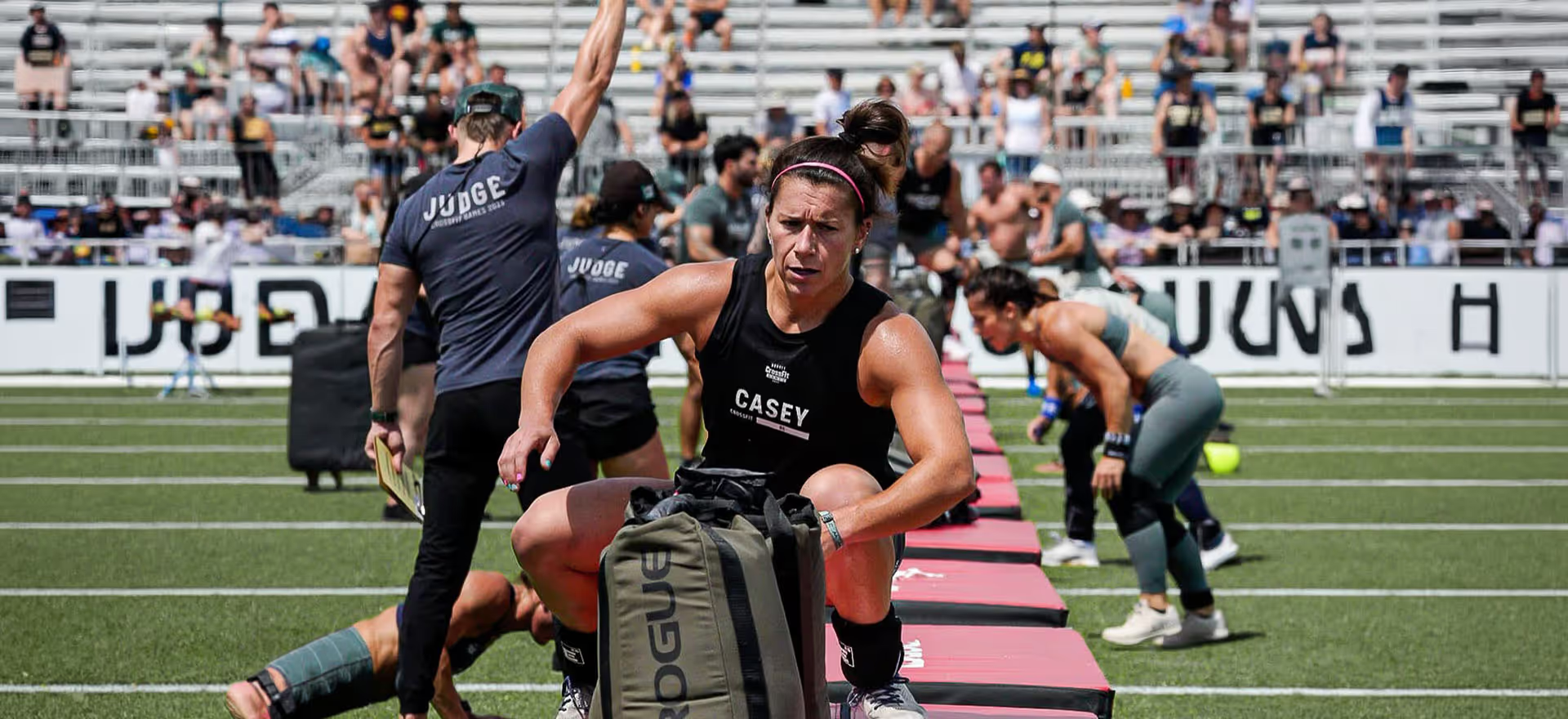
How to thrive in an ever-evolving sport as you age.
There is no truth other than this… every day, you are getting older. For those of you who have met Father Time in your joints, listen up. If you are chasing yesterday, you will be left behind. Over the course of competing and coaching, I have heard too many times that infamous line of “when I was 25 I was ________ (insert previous accomplishments, previous physique, previous maxes)...and I immediately shudder. Far too often, we tend to look back in order to go forward instead of seeking the present moment in time.
Here are the five things I recommend you check as a Masters athlete to fully thrive!
1. Prioritizing Intention Over Volume
Doing everything becomes irrelevant as you age. Doing the RIGHT things that will fill the biggest gaps is where the gold is. Think about your training like painting a canvas. You go from splatter painting with all the colors everywhere, to the main thing with only primary colors.
“More isn’t better, it’s just more.”
Evolution is the hierarchy - more is more, but quality and intensity are king/queen of progression as an athlete. As we age, we can’t have FOMO of accumulation. You need laser focus on the specific things that will help you get where you want to go, and base your training session on them. For example, when I set the goal of competing again after having kids, I identified three weaknesses I could start working on immediately.
- Lower body strength
- Fatigued gymnastics
- Rowing (mid-range to longer time domains)
I built my week around these items, prioritizing beefier legs that allowed me to be stronger and lift heavier, which meant eating a little more and making sure I got my strength work in for the week and prioritized that over zone 2 work (I am a runner and soccer player, so that was hard for me).
Reconnecting gymnastics first with targeted pulling & pressing sessions and then implementing them within intervals or skill density pieces. Lastly, building a relationship with the rower on early mornings to get the conditioning in that was sometimes missed due to a busy schedule.
Target your weaknesses, keep them to a maximum of three aspects, no more, otherwise the bucket takes way longer to fill.
2. Running Your Own Race With Forward Motion.
If we spend time looking back at what we used to be able to do, we miss out on the opportunity of creating the person we are meant to become. (me) Start today with what you have, with where you are at, knowing that if you stay consistent, you will grow.
Sometimes it is as simple as that, and we overcomplicate things. If we look right and left or scroll on socials, we immediately have a sense of inadequacy because we see someone who is 10 years younger training full-time doing this gross workout, and you want to feel alive and think you can do it too, or think, “maybe that's what I should be doing as well.”
FALSE. RUN YOUR OWN RACE. What did you note as your 1-3 biggest items holding you back in training from #1, that is, the lane you live in. Don’t get distracted by socials, other people who don’t know what you are working on, or the new “fad” for the quarter. Embrace your uniqueness, your journey, your wisdom.
Two things attached to this thought are:
- Adding common thoughts or phrases to the language you use. “I am not there yet.” Adding the “yet” to your statements is like adding the most exciting cliffhanger to your life. It means hang tight…. I’m coming for you ____________ (insert leg strength, insert engine, insert whatever you are chasing).
- Thinking, man, I can’t wait to see where I will be 6 weeks from now. Sometimes when we are building certain things, and we don’t see immediate progress, we fall off the ledge. Give yourself 6 weeks of consistency to see some small improvements, and mentally you will stay in the game.
3. Recover Like A World-Class Athlete
Long gone are the days of staying up late, rolling out of bed and being able to perform all while running on a Monster drink and Pop-Tarts (for the record, I never was into either of those). Prioritize sleep, food, time off your feet, hot/cold baths, certain supplements, and stress management. There is nothing normal about being a masters athlete; otherwise, everyone would be doing it.
So, in theory, you can’t do the things that all the “normal” people are doing. This means learning the power of NO in certain situations. My most common no’s when I was training were: NO to late night TV, my goal was bed when I put my kids to bed, and I would choose 1-2 nights to stay up with my husband to talk or watch something when I knew I didn’t have big training the next day.
No pointless drinking or eating out. Prioritizing food meant packing all the meals and snacks I needed because I was on my feet all day coaching, running a gym, and chasing around three kids. Pointless drinking, even casual drinking, held me back from quality sleep (I would still wake up 2-3 times a night with my babies) and from the best recovery and muscle gains I could get. WORK HARD, recover harder!
4. Getting Outside
Use certain points in the season to reprioritize different quadrants of your life.
Get OUT of the gym. Find time during the season to step outside the gym and use your fitness, whether on recovery days or deload weeks. It keeps it fresh and fun versus a chore.
Hike a mountain, go for a swim, meet up with a friend for a run or ruck and plan to end at your favorite coffee shop. Work out with your spouse, spend quality time together, and find out what they are doing. Plan a physical activity with your kids outdoors, and make it count toward your daily fitness or recovery. You will not lose anything by remembering this, and you will gain much more!
5. Create An Order Of Operations
Just like a math problem, your life is meant to create an “order of operations.” If this is in place, then the choices you make are easy, and your time flows to match these decisions.
Start by listing out the quadrants of your life example:
Self/wife/mom/coach/athlete/everything else.
Now ask how much time I allocate to each of these places. Some days, certain quadrants need a little bit more, but making sure that the order is intact is very important. If I don't prioritize my faith, sleep, and health, everything else below suffers.
If “everything else” takes over coach and athlete, my job and my training suffer.
There are some days when MOM takes the top of the list, but if I don't shift it back behind self and wife, I suffer and become a worse mom and wife because our relationship isn't getting the share it needs.
Create your order of operations that match you and allocate a percentage of every day to that quadrant. If you are someone who wants to accomplish some things as an athlete, really hone in on this part.
There is nothing worse than saying the excuse “I don’t have time,” … you do, we all do, but during different seasons, that time may shift and be reprioritized into different places. There is nothing wrong with saying, "Hey, competing isn’t for me right now. All I have is 60 minutes a day." AMAZING, you are living fully aware of what that quadrant has to offer.
The alignment will set you free!
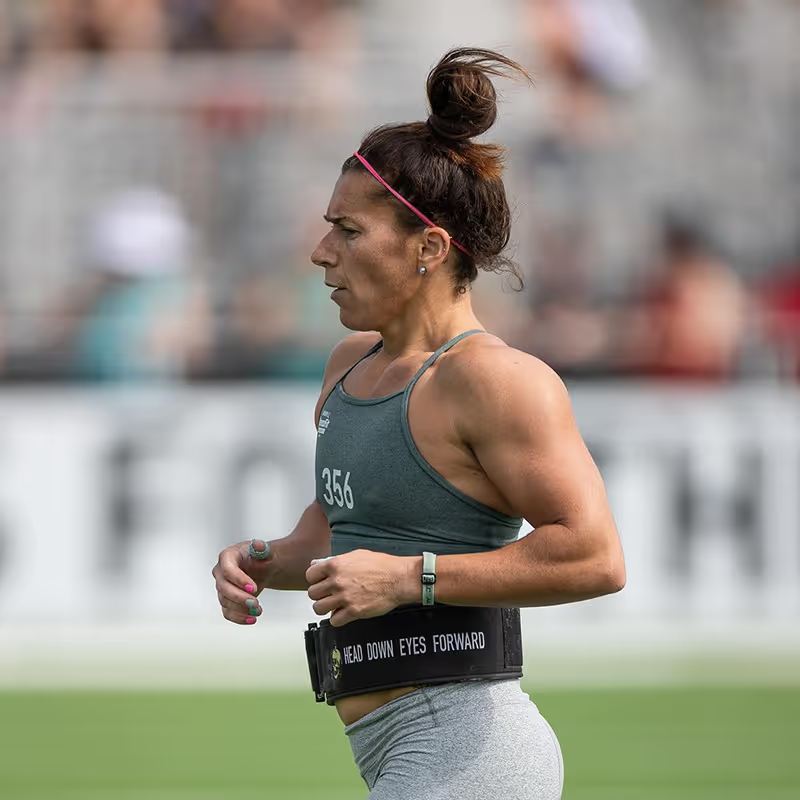
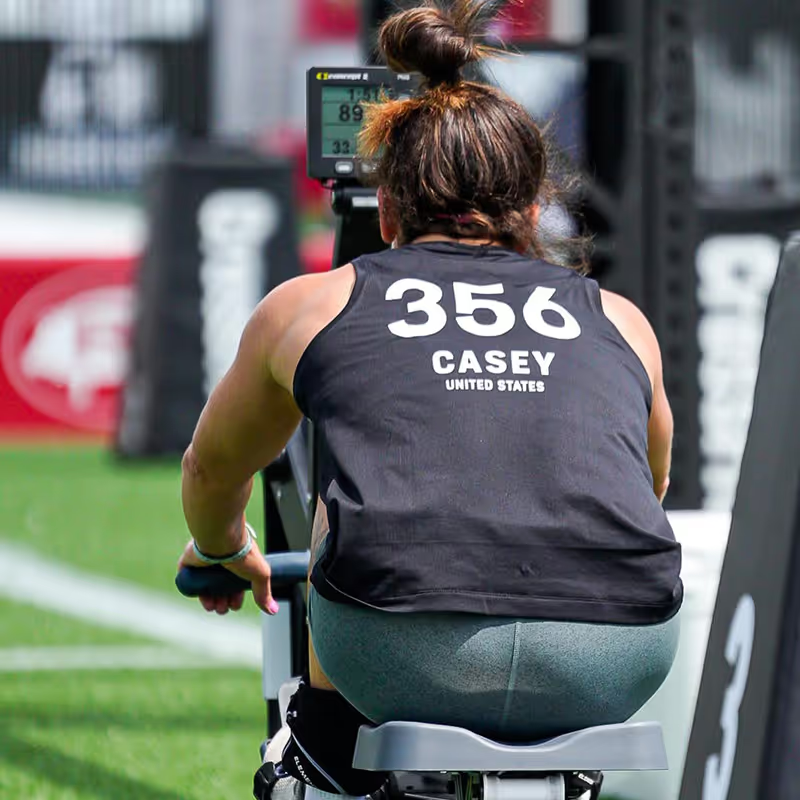
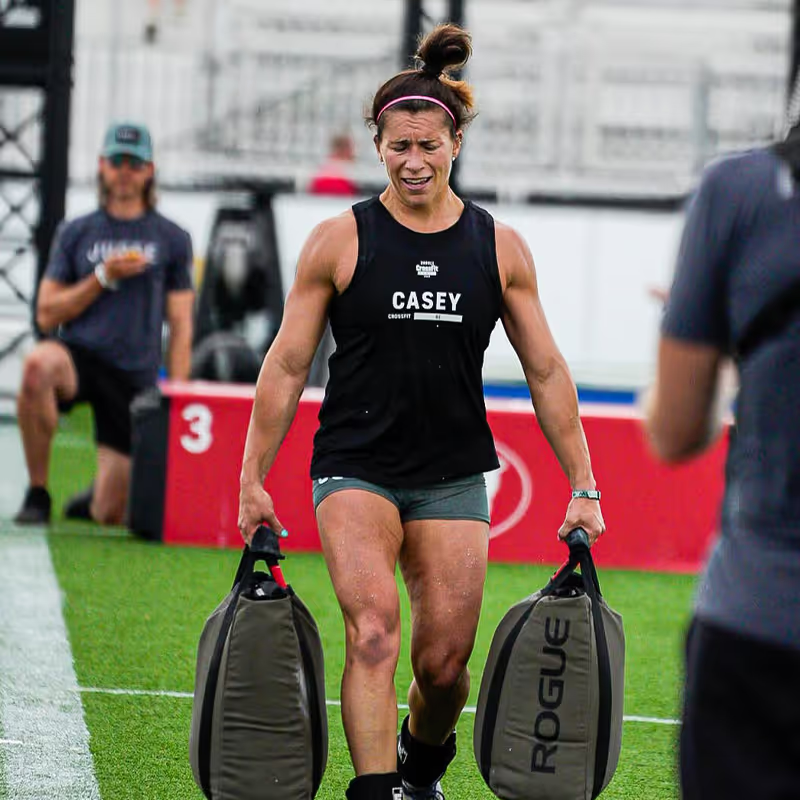
Train with intention at every stage
HWPO MASTER’S is built to support athletes through every season of life. With structured training, clear priorities, and an emphasis on quality over volume, you can continue progressing without chasing who you used to be. Train with intention, recover with purpose, and build a fitness routine that lasts.