Why Lower Volume Matters in Olympic Weightlifting
Olympic weightlifting rewards precision, consistency, and the ability to repeat high-quality lifts over time. Yet many lifters fall into the trap of believing that more volume always leads to better results. Here, Coach Aimee explains why more volume isn’t always best.
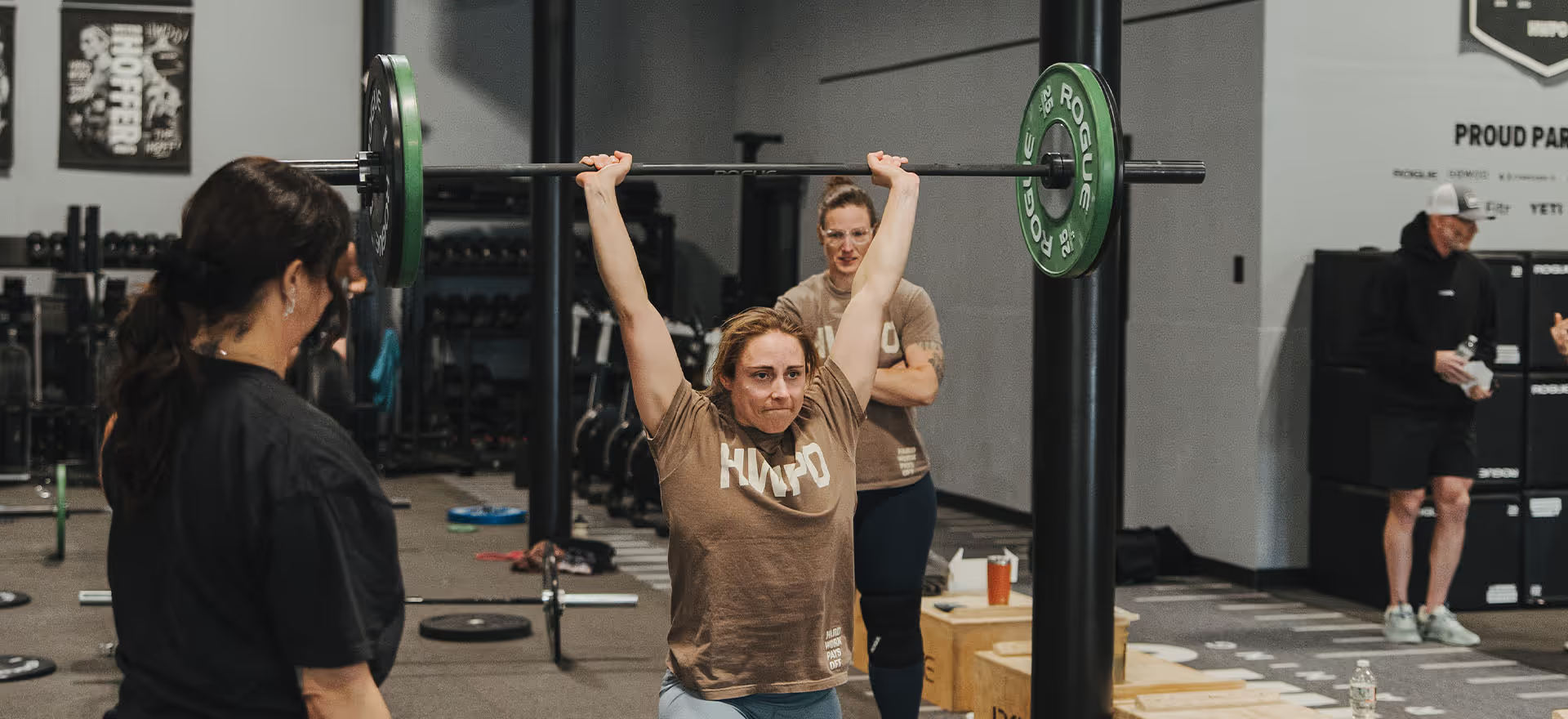
Olympic weightlifting is a sport built on precision, power, and consistency. We train to move heavy loads fast, with good technique and the ability to hit exact positions, and repeat quality lifts over time. But somewhere along the way, many lifters absorb the idea that more is always better—more sets, more reps, more days, more grind. MUST DO MORE!
That mindset can quickly become what holds you back.
This is especially true if you’re a Master's lifter (35-40+), managing life stress, or finding it harder to recover than you used to. In these cases, intentionally lowering training volume isn’t quitting, slacking, or failing—it’s smart training.
Volume is a tool, not the ONLY TOOL
Training volume—how many total reps and sets you perform—is just one variable. It’s not a measure of toughness, commitment, or worth as an athlete. Olympic weightlifting often rewards quality over quantity.
High-volume phases absolutely have a place. They can build work capacity, reinforce technique, develop mental toughness, and drive strength increases. But they are not meant to be permanent. When volume stays high for too long, recovery debt builds. Joints ache. Bar speed slows. Motivation drops. Injuries creep in.
If you feel like you’re always sore, always tired, or constantly “pushing through,” your body is giving you feedback. Ignoring that feedback doesn’t make you tougher—it can lead to overtraining, burnout, injuries, or quite simply—sidelines you.
Recovery changes as we age (and that’s normal!!)
Master lifters are not broken or too old, it doesn’t mean they need to be put out to pasture, and it doesn’t mean they aren’t capable of improving, getting stronger, or enjoying the sport of Olympic Weightlifting!
But physiology does change with age. Recovery capacity, connective tissue resilience, and hormonal responses aren’t the same at 45 or 55 as they were at 25 (or even 35!!). Add in careers, families, sleep disruptions, and life stress, and the margin for error gets smaller.
Lower volume training allows masters lifters to:
- Maintain technique without excessive joint stress
- Preserve strength while reducing inflammation
- Train consistently instead of cycling through burnout and injury
- SHOW UP fresher, both physically and mentally
Consistency over months and years will always outperform short bursts of high-volume heroics.
Less is more when quality goes up
Lower volume doesn’t mean lower intensity or lower standards. It means each rep matters more. At times when you need to take lower volume options, even if that means training 3 days instead of 5, you can:
- Move with better focus and intention
- Maintain bar speed and crisp positions
- Recover fully between sessions
- Make technical gains without accumulating fatigue
- Be mentally and physically recovered to be present and intentional in your training.
Time spent doing high-quality lifts WELL, and with PURPOSE will drive progress far more effectively than dozens of sloppy, fatigued reps. Olympic weightlifting is so dependent on your mental state and skill/movement. These things improve when you’re fresh enough to practice them correctly.
Lower volume is not failing
This is the part many lifters struggle with mentally. It is really hard to choose lower volume options, or admit that you need lower volume, or even accept you have to train 3 days instead of 5. But I want to reassure you again—there are times when less is more!
Choosing lower volume is not:
- “Taking the easy way out”
- “Losing your edge”
- “Not working hard enough”
- “Being lazy”
- “Failing”
- “A sign you should quit”
It is:
- Listening to your body
- Training with longevity in mind
- Protecting your ability to keep lifting long-term
- Making a strategic decision, not an emotional one
- Being smart
Some of the strongest, most technically sound lifters train with surprisingly low volume. They understand that adaptation happens during recovery, not during exhaustion. Even the most elite athletes find that every year they get older, they may need to train a bit less.
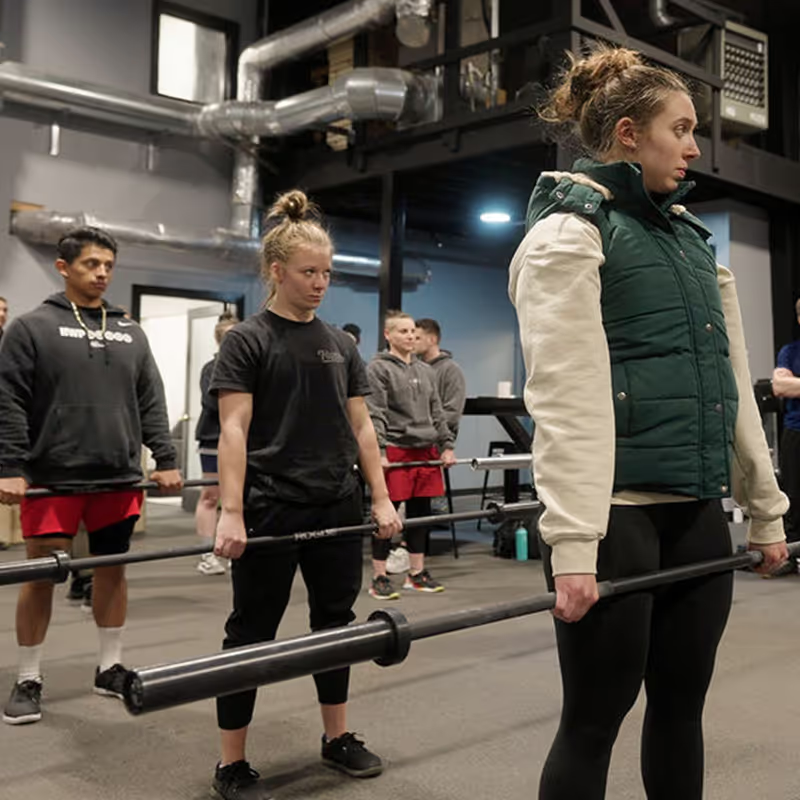
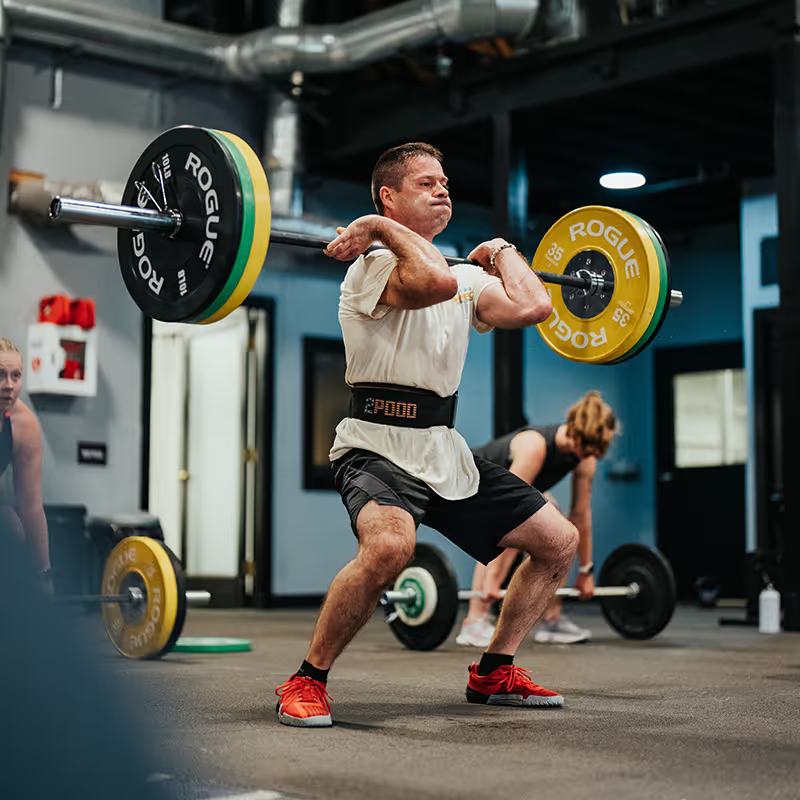
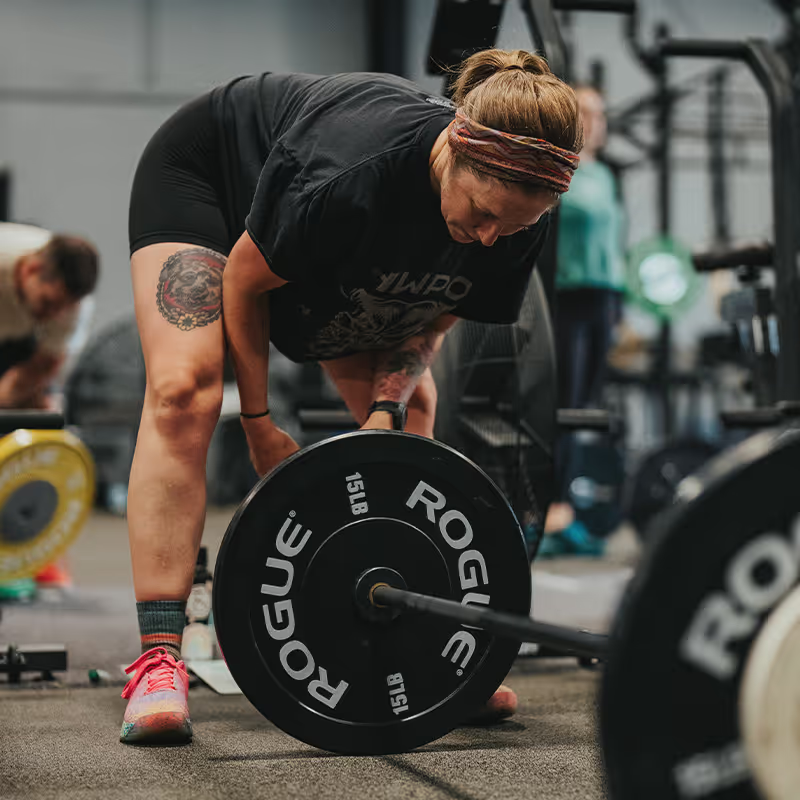
Avoiding overtraining and injury = longevity
Overtraining doesn’t always look dramatic. Sometimes it shows up as:
- Persistent nagging pain
- Declining performance despite “working harder”
- Irritability or lack of motivation
- Poor sleep or constant soreness
- Missing lifts that are normally routine
- Feeling weak, slow, and/or like you can’t find your movement
- Everything feeling heavier than it should
Doing lower volume when your body needs it, or even being proactive with lower volume such as during a deload/back-off week act as a RESET—almost like you are just taking a moment to release some pressure mentally and physically. This time will give your nervous system, joints, and connective tissue time to adapt instead of break down, and can help to prevent injuries from sneaking up on you. Staying healthy is not a detour from progress—it’s the foundation of it.
Train for longevity
Olympic weightlifting is not a sprint. For many, it is many many years, if not a lifetime of practice.
If you want to lift well into your 30s, 40s, 50s, and beyond, you must train with respect for recovery. That means embracing lower volume when needed, even if your ego resists it.
Remember:
- You don’t get stronger by doing more—you get stronger by doing what you can recover from
- Smart training beats training that breaks you down when the goal is injury prevention, longevity, and being as successful as you can be
- Sometimes the smartest thing a lifter can do is pull back, not push harder
Lower volume isn’t taking 10 steps backwards. For many lifters, it’s exactly what allows them to take 5 steps forward.
When lower volume (and fewer training days) is the right choice
Lower volume isn’t only for Master lifters or athletes recovering from injuries or aches and pains. There are many seasons of life where reducing volume—or even cutting training to 3 or 4 days per week—is the smartest move you can make.
Training stress does not exist in a vacuum—it doesn’t just occur within the walls of your gym. Your body does not separate barbell stress from life stress. It all pulls from the same recovery bank!
Here are common, completely valid situations where lower volume is appropriate—and often necessary:
High-stress or demanding jobs
If you work a high-pressure job, for example, things like healthcare, first responders, educators, executives, or anyone making constant high-stakes decisions, your nervous system is already taxed before you touch a barbell.
Likewise, jobs that require long hours on your feet or physical labor, such as construction, nursing, warehouse work, and the service industry, add significant physical fatigue that weightlifting programs don’t always account for.
Lower volume lets you train without piling on stress.
Frequent travel or irregular schedules
Travel disrupts sleep, nutrition, hydration, and routine. Time zones, long flights, hotel beds, and missed meals all affect recovery.
When all or some of these are in play, shorter sessions, fewer training days and reduced total volume help you stay consistent without running yourself into the ground.
Postpartum women
Postpartum recovery is not linear, and it is not just physical.
Hormonal shifts, sleep deprivation, healing tissues, and the mental load of caring for a newborn all impact recovery. Lower volume—and often fewer training days—allows postpartum athletes to rebuild strength safely without overwhelming an already taxed system.
Progress here is measured in sustainability, not speed.
Major life stressors
Breakups. Divorce. Job loss. Financial strain. Grief. Big emotional changes.
These stressors take a real physiological toll. Cortisol rises. Sleep quality drops. Motivation fluctuates. Recovery suffers.
Lower volume during emotionally difficult seasons isn’t giving up—it’s self-respect. Training should support your life, not compete with it.
Recovering from illness or injury
Coming back from being sick—especially respiratory illnesses, viral infections, or long-lasting fatigue—requires patience.
Lower volume gives your immune system and nervous system the space they need to fully recover while still keeping you moving and connected to the barbell.
Parenting, caregiving, and limited sleep
Caring for children or family members often means:
- Interrupted sleep
- Constant low-level stress
- Little time for yourself
Sleep is one of the biggest drivers of recovery. When sleep is compromised, volume must adjust. This is not optional—it’s reality. If you are not sleeping, your training will suffer.
Mental health and emotional load
Mental health matters in training.
Anxiety, depression, burnout, and emotional fatigue all affect:
- Focus
- Motivation
- Recovery capacity
- Movement
- Confidence
- Consistency
Lower volume and fewer training days can make training feel more supportive than overwhelming. Sometimes the win is simply SHOWING UP, moving well, and leaving feeling better than when you arrived.
Training is seasonal
Olympic weightlifting does not require you to train at maximum capacity all the time.
There are seasons for pushing and seasons for maintaining. Seasons for building and seasons for protecting. Seasons where 5–6 days a week make sense—and seasons where 3–4 quality sessions are exactly what your body needs.
Lower volume is not a step backwards.
It’s not a lack of discipline.
It’s not failing.
It is strategic, intelligent training that respects the reality of being a human with a life outside the gym.
If your life is loud, demanding, or heavy right now, your training should be simpler—not harder.
Sometimes less truly is more.
And staying healthy, consistent, and injury-free will always beat doing “more” until your body forces you to rest and you can’t train at all.
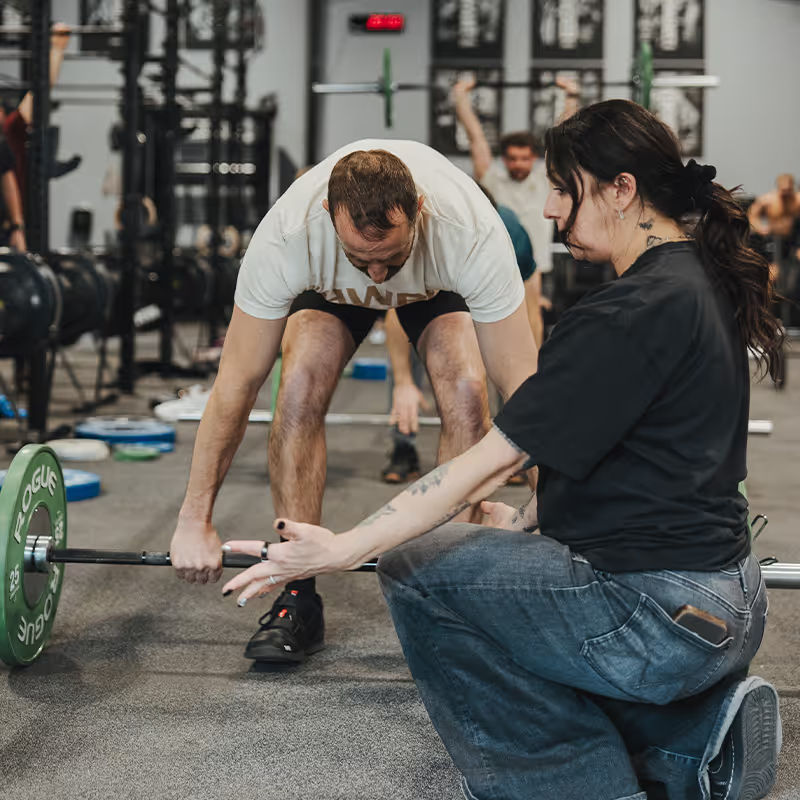
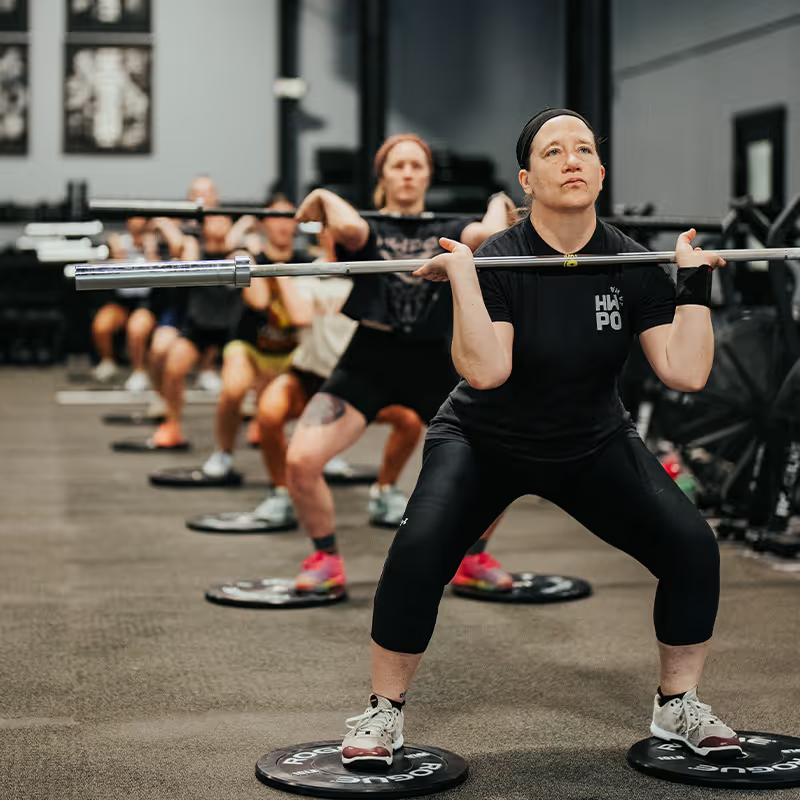

Train smart. Lift for the long term.
HWPO LIFT is built around quality, consistency, and long-term progress in Olympic weightlifting. The program balances intensity and volume so you can train hard, recover well, and keep SHOWING UP to the bar week after week.