What I've Learned From Coaching The Same Athlete For 9 Years
Coaching an athlete over the long term is often seen as a reflection of great programming. But the reality is far more complex. Coach Jake D. takes a look at what nine years with the same athlete really teaches you. Not just about training, but about trust, growth, and what it takes to build a relationship that lasts and continues to evolve at a high level.
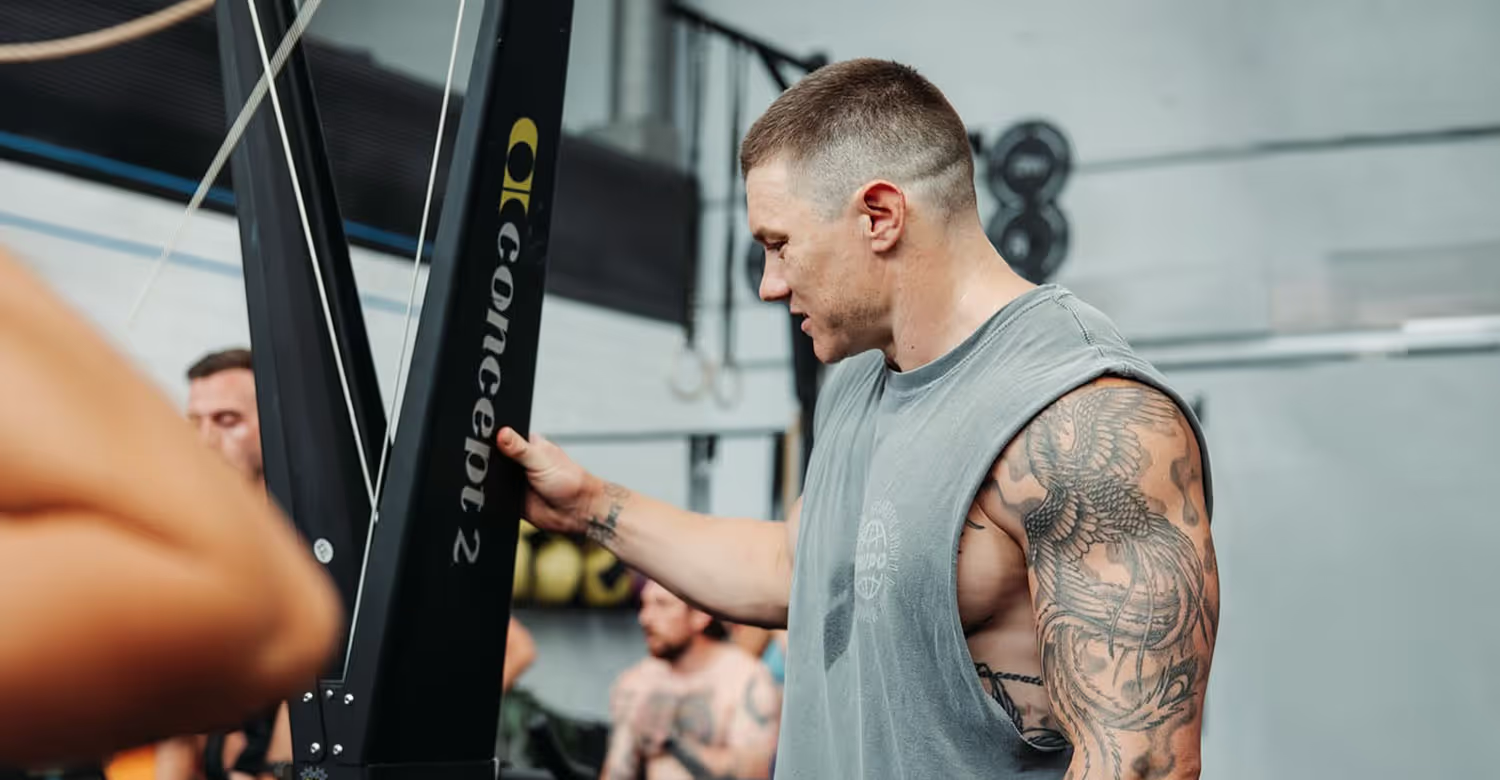
I’ve spent the last nine years working with the same athlete.
From a 17-year-old walking into the gym with a gymnastics background to the CrossFit® Games. Same coach. Same athlete.
People often ask what the secret was. Programming? Structure? Long-term planning?
The truth is, those nine years taught me far more about myself as a coach than they did about sets and reps on a spreadsheet.
Development takes longer than you think
When she started, absolute strength was her biggest weakness. Confidence wasn’t far behind. We built both the same way. Repetition. Exposure. SHOWING UP. The boring work. Over time, strength came. Confidence followed.
What I learned was that development is slower than you think, and doubt lasts longer than you expect. Not just for the athlete, but for the coach as well.
There were seasons I genuinely questioned whether I was the right person to take her where she wanted to go. She was a very different athlete from me. Different strengths. Different mindset. Different needs. I had to confront the possibility that what got her here might not be enough to get her there.
That was uncomfortable. But it forced me to grow.
Coaching is built on honesty, not certainty
I learned that confidence in coaching does not mean certainty. It means responsibility. There were times I said, “I don’t know. But I’ll find out.” And every time I chose honesty over ego, the relationship strengthened.
I learned that leadership is not control. It is direction with dialogue. There were moments I held firm when I believed something mattered long-term. There were moments I adapted because her feedback was right. The balance between those two is something you refine over years, not weeks.
Great coaching is a two-way relationship
I trained alongside her almost every day. Not because it is a universal rule, but because it kept me accountable. If I wanted her standards high, mine had to be higher. If I wanted resilience, I had to model it. That proximity sharpened me as much as it developed her.
I learned that athletes do not stay because you have the perfect program. They stay because they feel safe to fail. Because they feel heard. Because they see you evolving, too.
Most coach-athlete relationships break down when one person stops growing.
If the athlete improves and the coach stays static, frustration builds. If the coach protects their ego instead of the athlete’s future, trust fades. Longevity requires mutual evolution.
You have to earn the right to keep leading
Looking back, the biggest lesson is this.
Long-term development is not about holding onto an athlete. It is about earning the right to continue leading them.
And you earn that right by developing yourself at the same rate you expect them to develop physically.
Nine years taught me that coaching at a high level is less about writing better programs and more about becoming a better human under pressure. More patient. More adaptable. More honest. More secure.
That is what allowed the relationship to last.
And that, more than any training cycle, is what created progress.
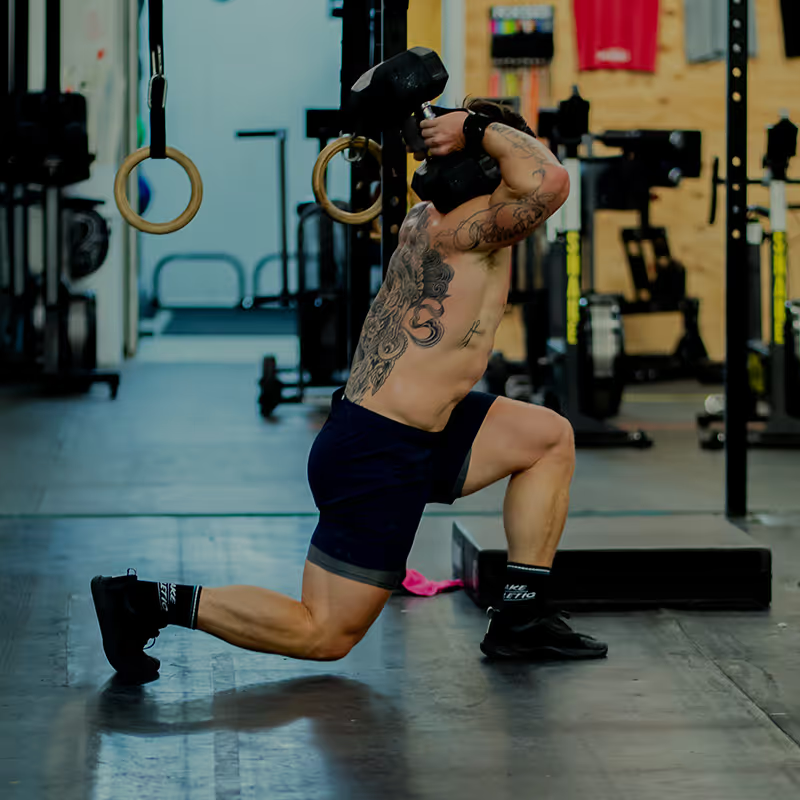
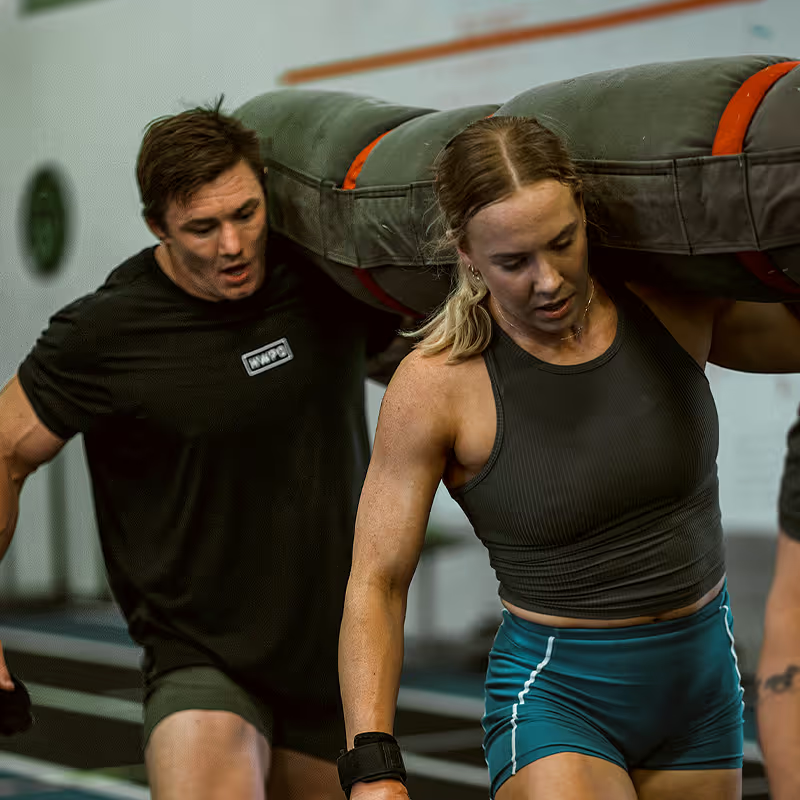
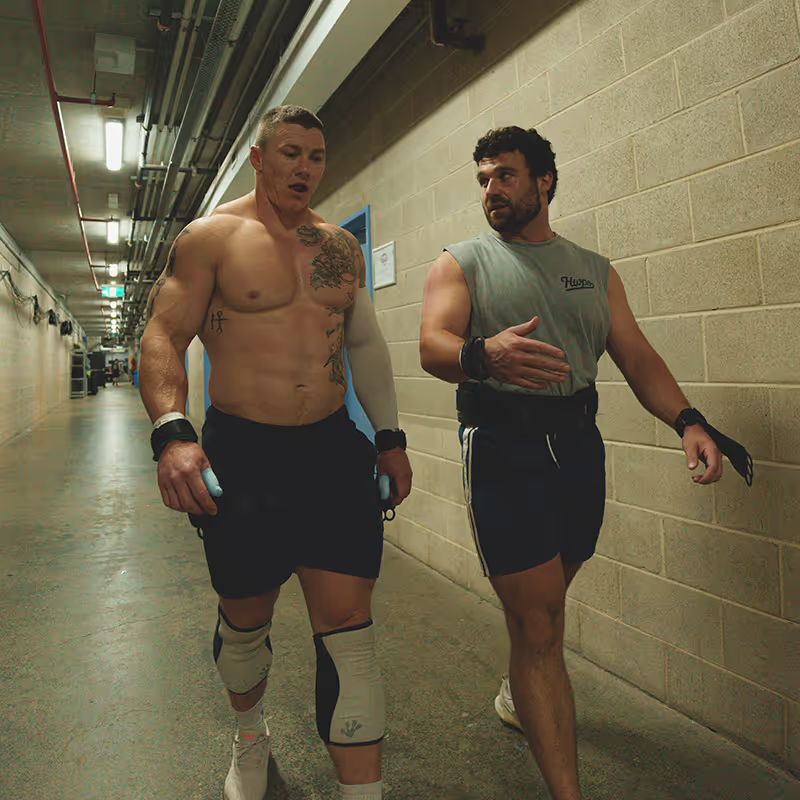
Coaching you can rely on
Long-term progress comes from more than just following a plan. It comes from structure, consistency, and guidance you can trust. HWPO gives you access to proven programming across all levels, designed to help you improve over time. Train with purpose, stay consistent, and follow a system built to support your progress wherever you are.