Efficiency Under Fatigue: Why Good Movers Still Fall Apart
Most athletes can perform high-skill movements when they are fresh. The real challenge is maintaining those same mechanics once fatigue sets in. In this blog, Coach Casey explains why movement quality often breaks down during workouts and how athletes can train skills progressively under fatigue to improve efficiency, consistency, and competition performance.
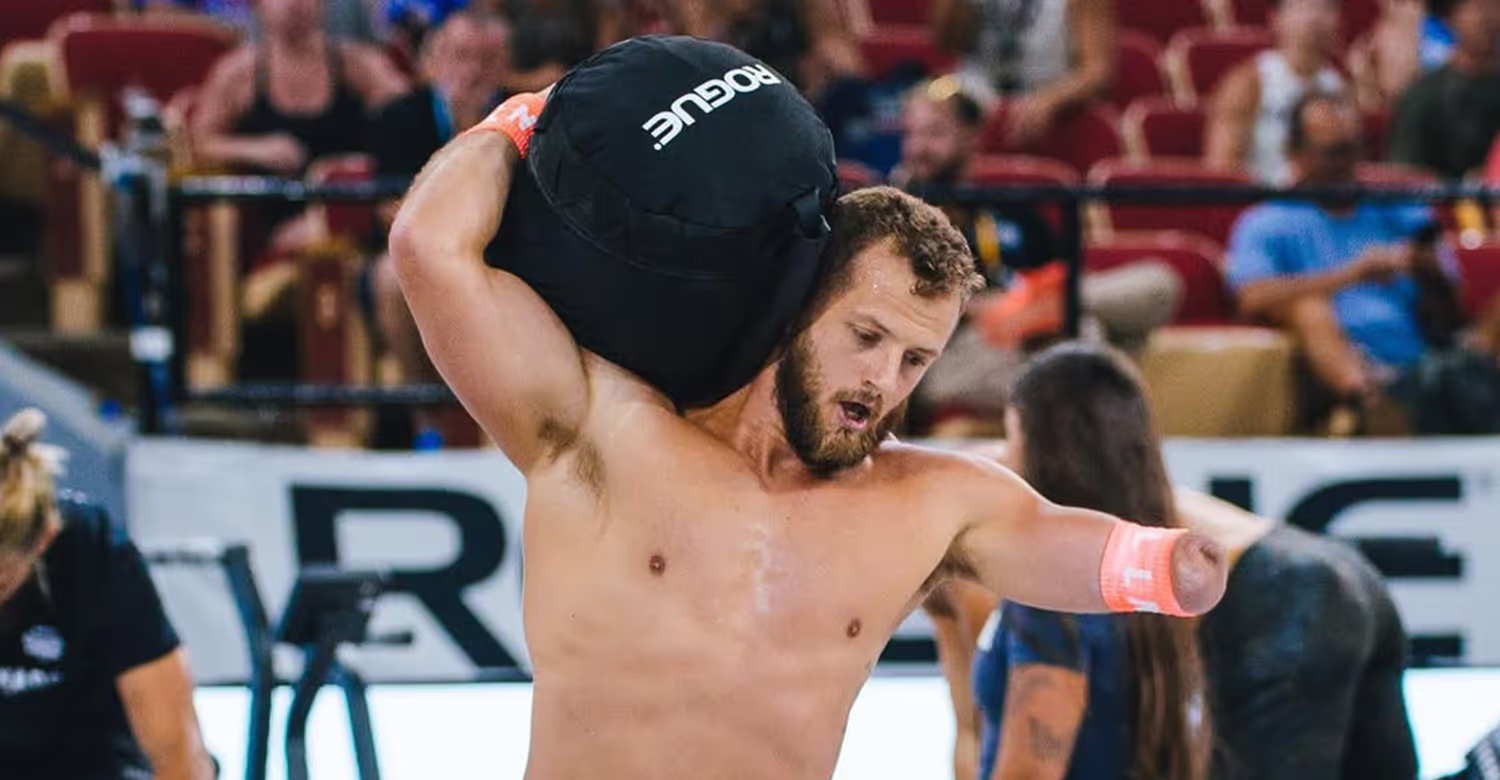
One of the most frustrating experiences for a competitive CrossFit® athlete is reviewing a workout and thinking, “I know how to do that movement. Why did it fall apart?”
The answer is simple, but often ignored: movement quality under fatigue is a different skill than movement quality when fresh.
At the Quarterfinals and Semifinals level, most athletes have the technical capacity to perform high-skill movements. They can hit smooth butterfly pull-ups, cycle bar muscle-ups efficiently, and maintain strong barbell positions in isolation. But competition does not test movements in isolation. It tests them under respiratory distress, rising heart rate, and neurological fatigue.
Skill under fatigue is not the same as skill fresh.
When breathing is elevated and carbon dioxide tolerance drops, timing changes. Rhythm disappears. Positions shorten. Athletes rush transitions. The nervous system, already taxed from heavy lifting or cyclical output, struggles to maintain precision. What felt automatic in warm-ups suddenly requires conscious effort.
This is why movements like butterfly pull-ups often disappear late in workouts. Early on, the kip is fluid. The swing is long. The turnover is clean. Then fatigue sets in. The swing shortens. The hips stop driving. The athlete begins pulling earlier with the arms. Contact points drift. Soon, the once-efficient butterfly becomes a frantic series of singles or an unplanned switch to strict reps or a slower kip.
The issue is rarely strength. It is the inability to preserve mechanics when breathing and neurological stress rise.
High-level athletes must train technique in compromised states, not just in controlled environments. This does not mean practicing sloppy reps. It means intentionally building exposure to skill work after intervals, under elevated heart rate, or late in sessions when concentration is harder to maintain. It means learning what positions deteriorate first and addressing them directly.
Go back to square one
If you only practice skills when you're fresh, you are preparing for a scenario that doesn't exist in competition. On the flip side, if you only practice movements under specific fatigued conditions, it may also degrade when a novel interference is presented. If you have certain movements that tend to fatigue in workouts, a smart method may be to go back to square one and work through the following progression to ensure that you are providing a balance of interference to the movement:
- Isolated Accumulation
- Complementary Cyclical Fatigue
- Aerobic Interference
- Complementary Gymnastic Fatigue
- Gymnastic Interference
- Complementary Weightlifting Fatigue
- Weightlifting Interference
- Complementary Mixed Fatigue
- Mixed Interference
Example training progression for Bar Muscle-up
- Isolated Accumulation: EMOM build of Bar Muscle-ups
- Complementary Cyclical Fatigue: EMOM of C2 Bike + Bar Muscle-up
- Aerobic Interference: EMOM of Ski/Row + Bar Muscle-up
- Complementary Gymnastic Fatigue: Short AMRAP Repeats of Pistol Squats + Bar Muscle-ups
- Gymnastic Interference: Short AMRAP Repeats of GHDSU/TTB + Bar Muscle-ups
- Complementary Weightlifting Fatigue: Descending Rep Couplets of Thruster/WBS + Bar Muscle-ups
- Weightlifting Interference: Descending Rep Couplets of PC&Jerk/Snatch + Bar Muscle-ups
- Complementary Mixed Fatigue: For Time workouts of C2 Bike + Thruster/WBS + Bar Muscle-ups
- Mixed Interference: For Time workouts of Ski/Row + PC&Jerk/Snatch + Bar Muscle-ups
By following the above progression and spending a few weeks at each stage, you are ensuring a balanced build of fatigue resistance to the movement you are focusing on. The gradual increased interference progressively challenges the movement pattern and muscle endurance, forcing a sharper focus on maintaining movement quality.
Efficiency is not proven at rest. It is proven when tired.
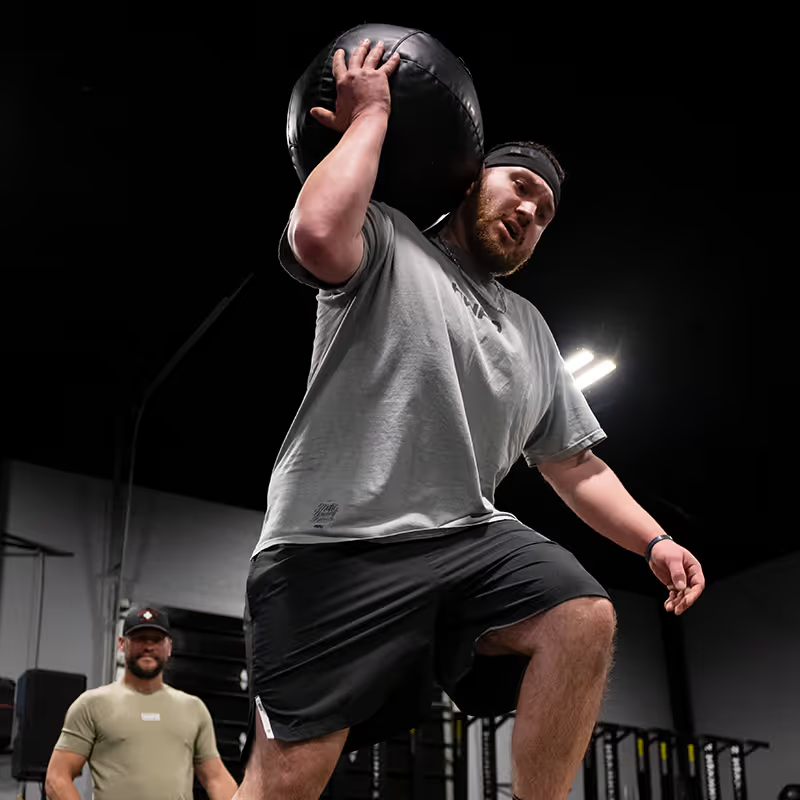
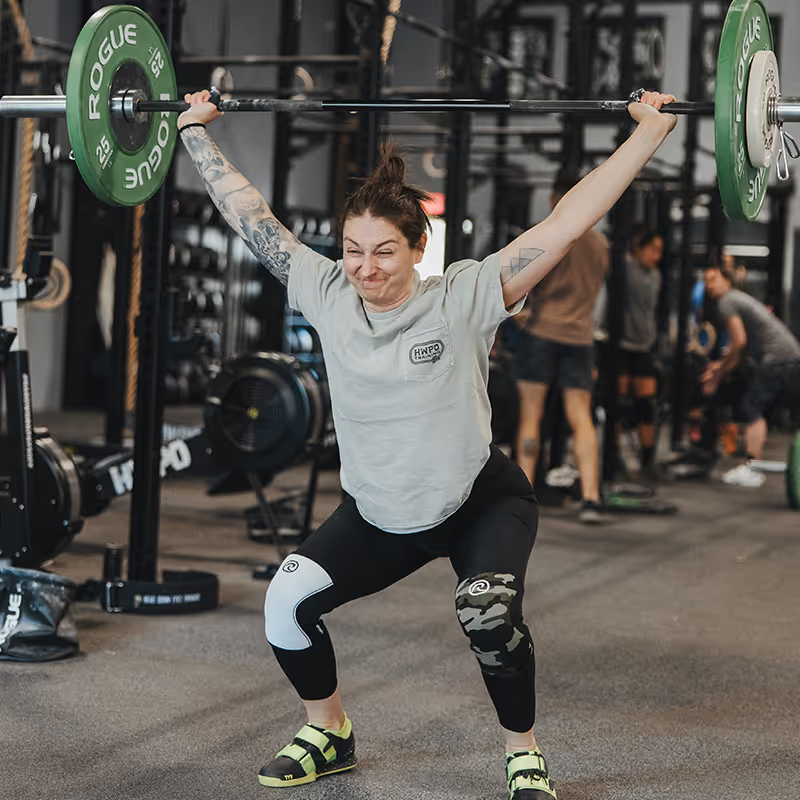
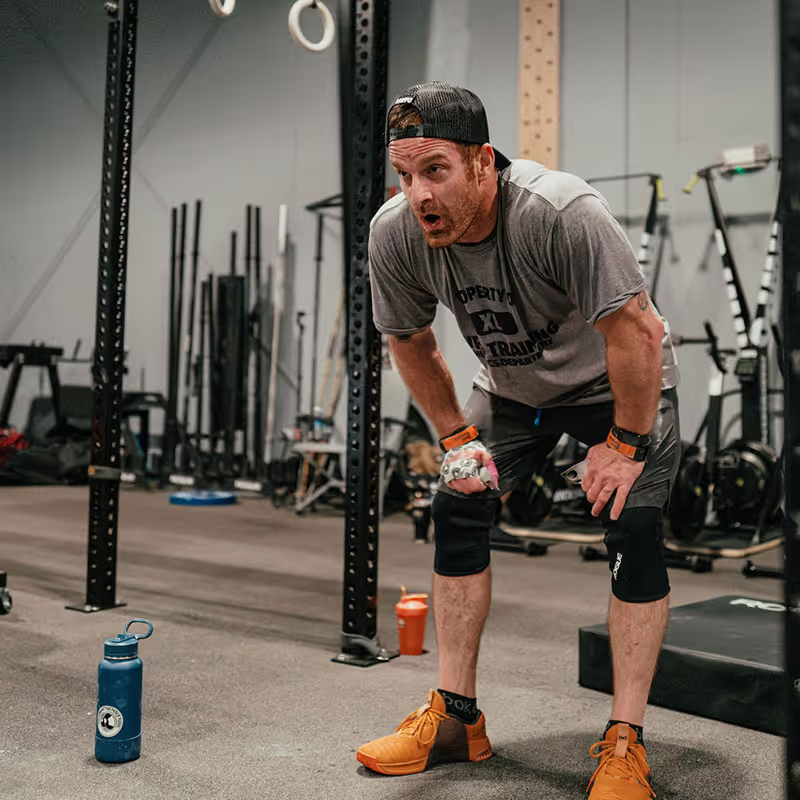
Train with purpose through every phase of fitness
Improving in CrossFit is not just about learning skills. It is about learning how to hold onto them when fatigue sets in. HWPO FLAGSHIP follows the original training structure Mat Fraser used throughout his CrossFit Games career, adapted for athletes who want to train with intent, improve consistently, and build well-rounded fitness over time.