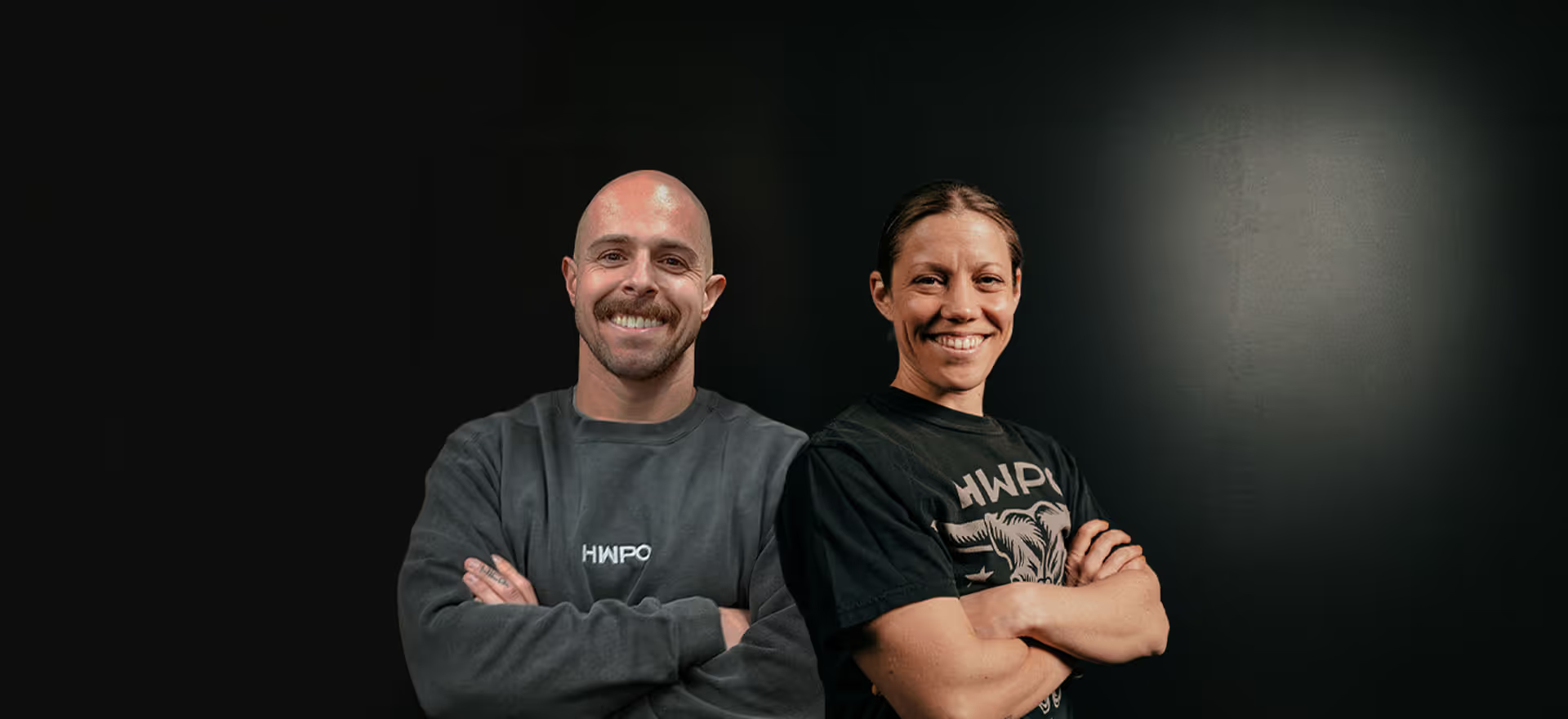
Meet The HWPO AFFILIATE Coaches: Frankie & Michele
Behind every great training program is great coaching. In this conversation, HWPO AFFILIATE coaches Frankie and Michele share how they got into coaching, the philosophies that guide their work, and the lessons they’ve learned from years on the gym floor.
Great coaching goes far beyond running a class or writing a workout. It’s about building relationships, developing athletes over the long term, and creating an environment where people can show up, work hard, and grow.
To give you a closer look at the people behind the coaching, we sat down with HWPO AFFILIATE coaches Frankie and Michele to talk about how they got started, the lessons that shaped them, and how they think about helping athletes improve over time.
How did you get into coaching, and what was the moment you knew it was what you wanted to do?
FRANKIE
While in graduate school at FSU, I interned at the Florida Department of Law Enforcement (FDLE) during my first summer. I also started coaching the first two and last two morning classes at CrossFit Tallahassee. The days were long, but I LIVED to start my day and end my day coaching. One of my mentors at the FDLE asked me what I enjoyed most about my days, and I honestly told him that coaching was my favourite, so he encouraged me to pursue it! A year later, I finished graduate school and started coaching full-time at CF Tallahassee. A year after that, I applied and was offered a coaching position at Norcal CrossFit, and the rest is history!
MICHELE:
When I graduated from university, I got a job as a front desk clerk at a CrossFit® gym. Some members would sometimes come to me with questions, but I didn’t have answers. Getting more and more into CrossFit® and wanting to be on the coaching side, I got my Level 1 about 6 months after starting at that gym and have been coaching ever since. Turns out, what I loved the most about CrossFit® was the constant learning, and I learned best by teaching!
What's your coaching philosophy — how do you think about programming and developing athletes over the long term?
FRANKIE
My coaching philosophy is to help form consistency. For some athletes, that is challenging them to push harder and learn new skills. For others, it is encouraging to return to the gym even when they are sore. Consistency is king for creating a long-term athlete… someone who can CrossFit® or exercise for as long as they want without injury or burnout. That long-term athlete is confident, resilient, and takes ownership of their health. Getting to be part of that change is pretty badass.
MICHELE:
My coaching philosophy is to peak curiosity. I feel that when athletes are curious about what they’re doing, it changes their perspective on working out. It helps people think like athletes who want to improve specific skills and parts of their fitness, making the goals tangible. When people find goals tied to processes rather than results, I find it turns something they HAVE to do into something they NEED to do.
What does a great day of training look like for you personally, and are you still competing?
FRANKIE:
A great day of training is getting to take class with my athletes. I used to train for hours a day because I enjoyed it and had the time, but now I give myself 1 hour and enjoy the crap out of it! Ideally, I’m hitting class at 5 am (which is sleeping in for me) with some of the OG members that I have coached for 10+ years. I’m not currently competing for anything, but I make a decent Hyrox or weekend comp partner if anyone is looking!
MICHELE:
I still compete, but not in CrossFit®. Competition and events are something I want to keep, as they allow me to still have a process and a plan. I do triathlons, running races and for the first time in my life, I’ll be doing an endurance cycling event this summer. Training now looks very different from 10 years ago; however, the training I did 10-15 years ago still benefits me to this day.
What's the hardest lesson you've learned as a coach, and how has it shaped the way you work with athletes today?
FRANKIE
“Be curious, not judgemental” - Ted Lasso
I’ll never forget my second year as a coach. I was coaching a 7:30 am class, and I gave an athlete a cue during a Deadlift. He stopped what he was doing, looked me in the eyes, and said “no thanks”. He went back to his less-than-perfect deadlifts, and I turned to coach the other athletes in the class. It was the first time someone had blatantly said no to coaching, and it frustrated me so much that I stopped coaching that athlete during class. Months later, he came up to me after class and asked me why I had stopped coaching him. I recounted the “no thanks” incident and explained that I wouldn’t let him be unsafe, but I assumed he didn’t want me to coach him, so I left him alone. He remembered the interaction and told me that he had been dealing with some pretty heavy family stuff that day. It wasn’t that he didn’t want to be coached; he just wanted to move and unplug for an hour. We talked for a while and reached an understanding of how we could communicate more effectively in class.
That interaction taught me something I carry with me every time I step on the coaching floor: never write anyone off, and never assume you understand someone without first being curious about them. It reminded me that behavior always has a backstory. When an athlete seems disengaged, overly confident, frustrated, or even difficult, there’s usually something deeper driving that response. Instead of reacting to the surface, I learned to lean into curiosity.
MICHELE:
As a young coach, I felt I needed to impose my values on my athletes regarding training. I believed that learning high-skill movements was crucial for one's development and self-confidence, and didn’t give much thought to people's realities or their processes. I still feel learning skills is important, but today, I have a much better understanding of how VALUABLE everyone's time is and how people want to dedicate their single hour of fitness. An example of this is when a member named Johanne didn’t want to do muscle-up drills and asked me if she could do something else while the class was working on muscle-up drills. I told her that ring muscle-up drills are important to learn because they can help develop confidence in other areas. She soon stopped coming to the gym once higher-level skills were part of the training. So I’ve learned that if people WANT to learn and develop skills, they will, since we offer that opportunity with little friction. But if some members prefer to exercise more and focus on other aspects of their fitness, they should be able to, and I should be offering them the opportunity to do that.
Coaching is about guiding, challenging and knowing when to step back. Experience is the best teacher here, and I’ve learned that when we work with people, our job is to provide security and comfort so that when people want or are ready to take risks or push themselves, we’re there.
Outside of the gym, what are you passionate about, and what do people who only know you from CrossFit® would be surprised to learn about you?
FRANKIE
I'm a huge nerd. I have read and watched The Lord of the Rings books/ movies more times than I can count, and I have a group of friends that get together every Sunday to play Magic: The Gathering for hours. I’m also trying to improve my cooking skills…Matty Matheson and Bob Belcher are my chef spirit guides.
MICHELE:
I love art, and I take a painting class every week. It’s the one time in the week that everything stops, and I lose track of time and get lost in what I’m doing.

Become an HWPO AFFILIATE gym today
HWPO AFFILIATE brings structured programming, coaching insight, and a supportive community to gyms around the world. Learn more about the program and how it helps coaches and athletes build consistency, progress, and long-term success.