Coffee Chat With Mattie Rogers
Olympic weightlifting is a sport built on patience, precision, and long-term progression. In this conversation, Olympian and six-time World medalist Mattie Rogers shares practical advice for beginners and athletes transitioning from CrossFit® or other sports into structured weightlifting training. From trusting the program to setting small session goals, this interview offers insight into how to build strength, confidence, and consistency in the sport.
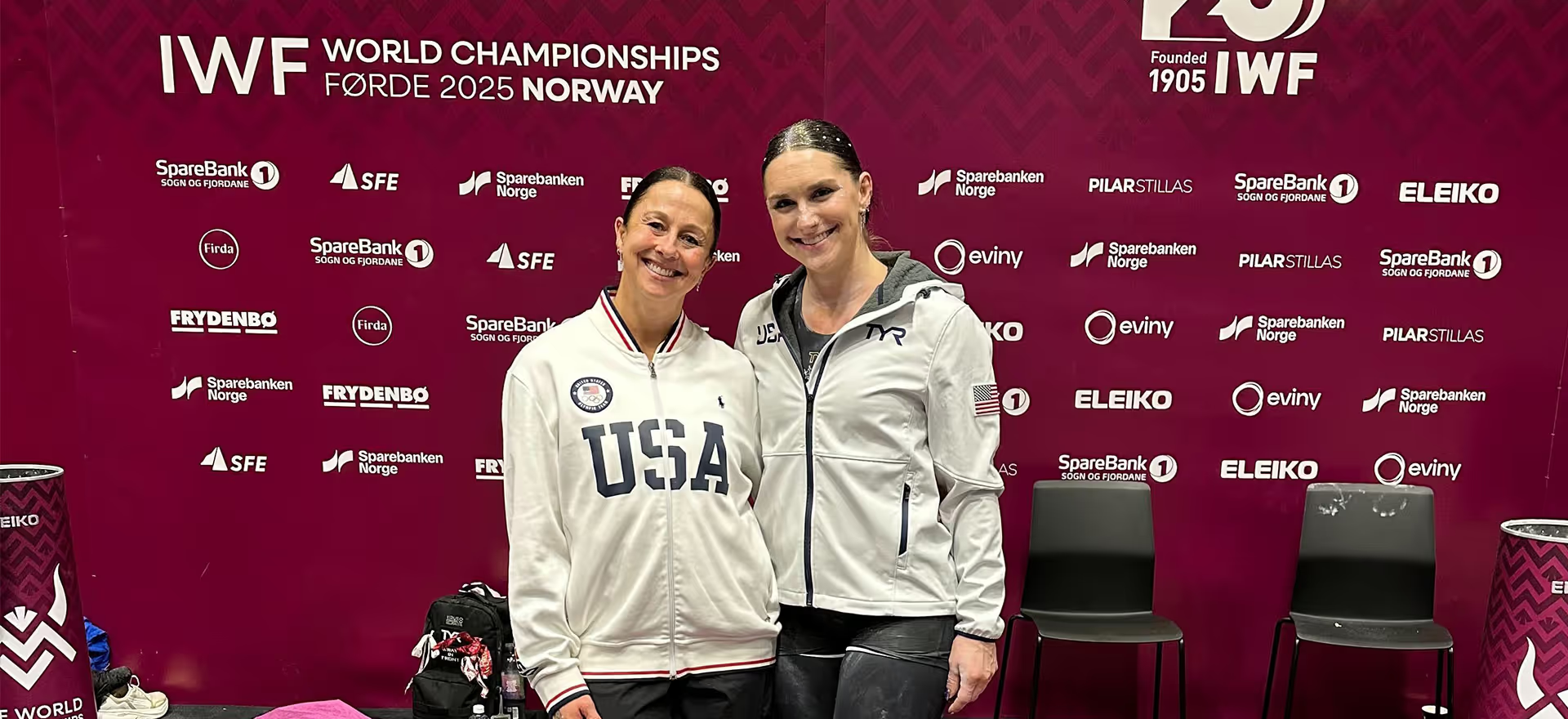
I’m incredibly excited to share this chat I had with Mattie Rogers, Olympian and six-time World medalist in Olympic weightlifting. Mattie’s journey in the sport reflects not only elite performance on the world stage but years of learning, adapting, and growing through every phase of training.
My goal with this conversation is simple and intentional: to gain real insight and practical advice for beginners and athletes transitioning into an Olympic weightlifting program. Whether you’re just learning how to snatch and clean & jerk, or coming from a CrossFit® or another athletic background, and trying to understand how to train, recover, and think like a weightlifter, this interview is meant to bridge the gap between where you are now and where you want to go. Mattie offers an honest, grounded perspective on the process—what matters early on, what to focus on long-term, and how to stay patient while building a strong foundation in the sport.
Coach Aimee (AAE): What made you decide to make the switch from CrossFit to Olympic Weightlifting only?
Mattie Rogers (MR): I liked the technical aspect of lifting and found myself enjoying any lifting portions of CrossFit® more than the rest. Being a gymnast for the majority of my life prior, it felt natural to really focus on very specific skill work. I wasn't necessarily the strongest in CrossFit® (at all), but the satisfaction that came from learning to lift properly far outweighed any strength I was lacking at the time.
AAE: Some people tend to get bored or find it difficult to do a progression-based program, compared to CrossFit®, where there is typically so much change and variation day-to-day. Was it an adjustment for you to go from the constantly varied workouts daily in CrossFit® to a structured lifting program? If so, how did you adjust to the monotony?
MR: For me it was not, as it felt like other training for sports I had done in the past. If anything, CrossFit® training was harder for me to feel comfortable with because there WAS so much change day-to-day. I like having the routine of knowing what I will be working on week-to-week in a program, and being able to measure progress across a program by building on the same things I have been doing. It's a fun game to try to beat myself on the same things I've been doing for 13 years, whether in number PRs or technical PRs.
AAE: What advice do you have for someone new to Olympic lifting about showing up to training each day when there is little change to the program week to week?
MR: Make small goals for yourself each session. Try to think about how you are going to move the bar that day compared to the last, or try to 1 kilo yourself on a rep scheme or a complex you had done the week before. The beauty of the program staying more or less the same week-to-week is that you can easily track your progress. You know what the week prior felt like at your top weights, maybe it feels better this week. Maybe this week you do 1kg more than you did last week. Maybe this week your movement felt more consistent across all your sets, whereas last week every set felt different. There are lots of markers you can use to keep pushing yourself and to keep pushing progress.
AAE: What is your favorite thing about training?
MR: I love finishing a really hard session that I may have been nervous about. The sessions where you look at the program and think "uhhhhh no way", but then get in the gym and get moving and just take one set at a time until you're finished and think, "wow, I did that!"
AAE: How do you set goals for yourself within a Weightlifting cycle to keep you motivated?
MR: I like to try to beat myself from the week before in ANY way, shape or form. Not every day will be a PR day where you can try to beat the weight you did the previous week, but you CAN always move better, have a better mental approach, be more consistent, etc. There are so many ways to set yourself up for a session that may seem boring with little goals that make you push a little harder in one aspect or another.
AAE: Remember when you first started with me (as your coach, 6.5-years ago), and you never had done back-off weeks, and you thought it was the wildest idea you have ever heard? Tell me how you adjusted to the idea of back-off weeks and why you now look forward to back-off weeks?
MR: I thought back off weeks would make me fall behind. I had never done them before and I thought "why are we wasting a week that I should be using to train hard!!" But the more I got used to them, the fewer "bad" training days I had, where I was just falling apart and not able to hit any of my programmed weights (something that happened pretty dang frequently prior!). I was able to push REALLY hard during my "on" weeks, harder than I could before, then take a back-off week to recover and get right back to it without feeling burnt out or so fatigued that I needed to constantly adjust my program to give my body time to catch up. Now, I look forward to my back-off weeks and can push myself to points I couldn't before, knowing I have a back-off coming up and will get the rest I need.
AAE: Why should you TRUST THE PROGRAM, and not go off the program daily?
MR: It's easy to want to go off the program when you are feeling great, but that will always catch up to you. Then you have to deal with going off program in THE OTHER DIRECTION because you wanted to push when it wasn't time to push. Good programs will have days where you finish your top set and feel like you have so much more in the tank. That is BY DESIGN. That doesn't mean you should max out. Those days build confidence for the coming days that WILL be heavier. But those days won't come if you have constantly beat your body into the ground every time it felt good enough to go heavier. It is easy to get excited and lose sight of those things, but that is why you have a coach to listen to and rein you back in.
AAE: Final question- if you could be a beginner all over again, what, if anything, would you do differently and why?
MR: I'm not sure there is much I would change. When I started, it was a totally different time, and I do think I did everything I could early on. VERY early on I skipped squats and pulls a good bit because I didn't think they were "important". The today ME, who squats and pulls for her life almost every session, wishes she could bonk that kid on the head.
AAE: Never skip squats or pulls! Strong legs equal a strong mind! And make you better at snatching and clean & jerking!
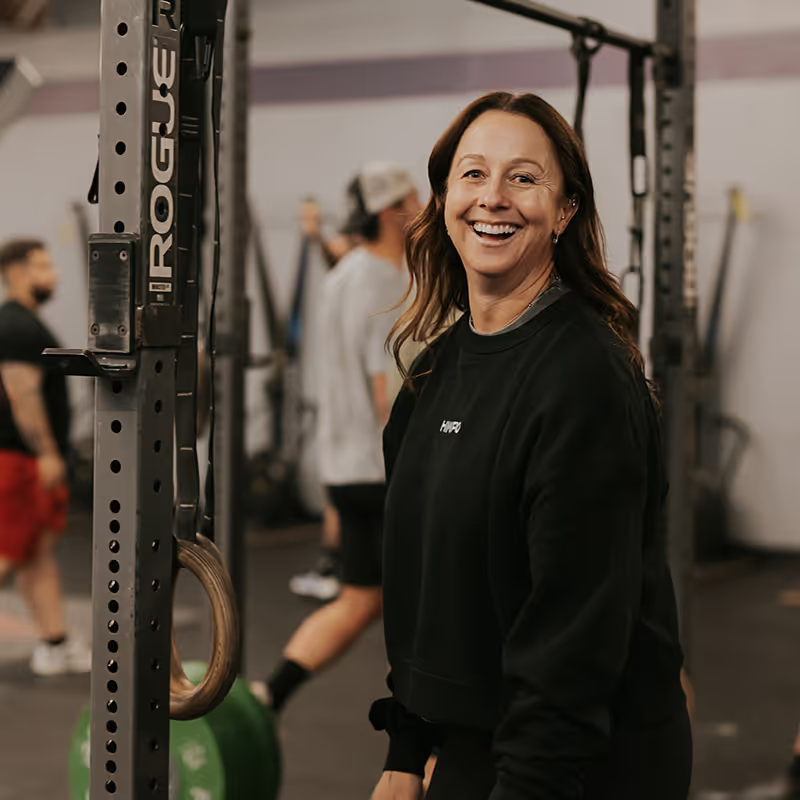
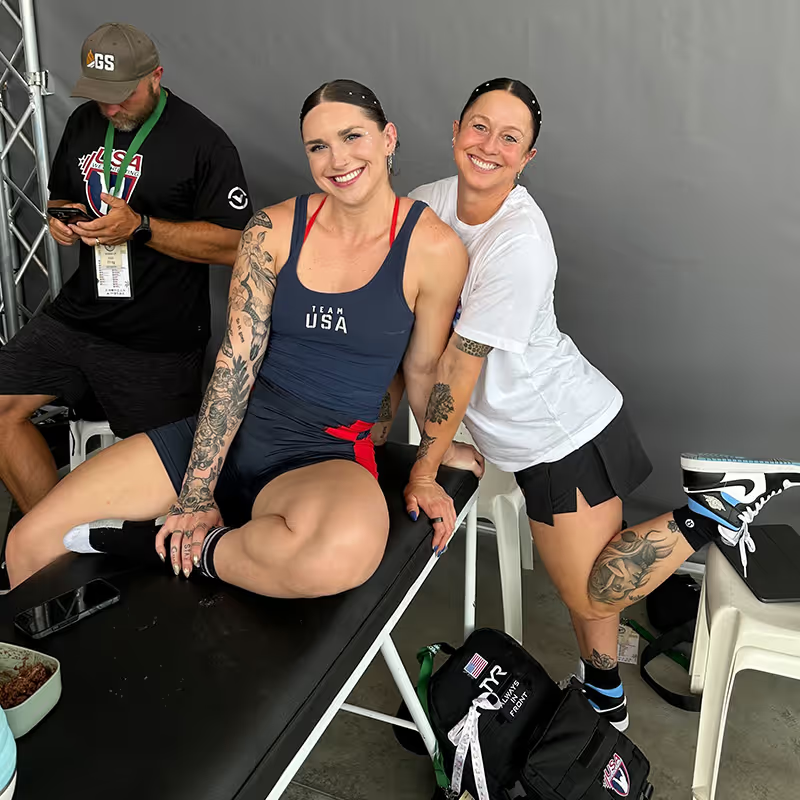
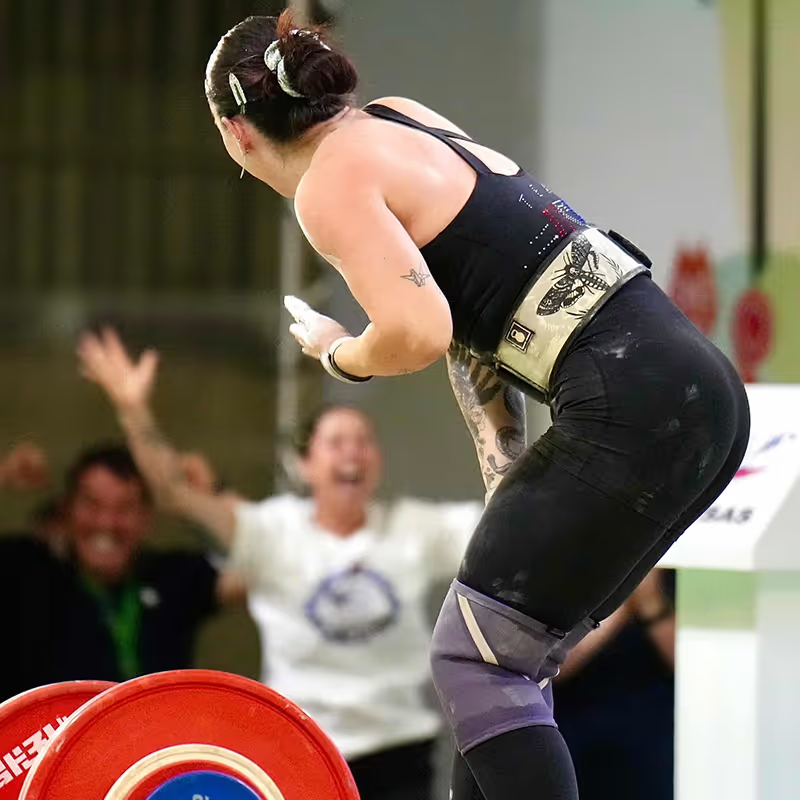
Trust The Process With HWPO LIFT
If you’re ready to apply what you’ve learned and follow a structured Olympic weightlifting program, HWPO LIFT gives you the framework to do exactly that. Designed for athletes who want to improve their snatch and clean & jerk through consistent, progression-based training, HWPO LIFT focuses on building technical skill, strength, and confidence over time.