Pacing Workouts For Your Own Abilities
The fittest athlete in the room does not always win. Often it is the one who knows how to distribute their effort across a workout without blowing up in the first few minutes. In this blog, Coach Josh breaks down what good pacing actually looks like, why it is relative to your own capacity and how to start making smarter decisions before the clock starts.
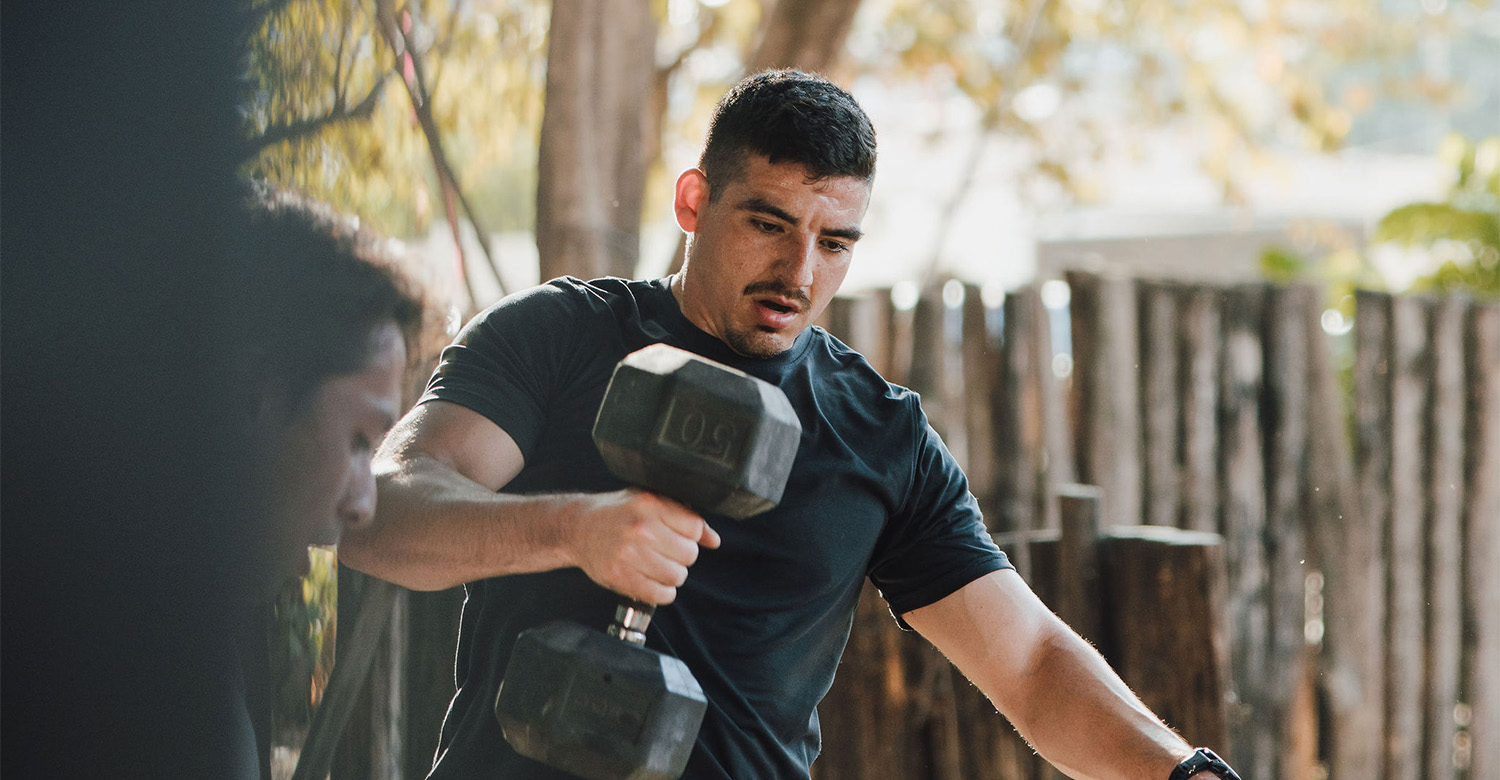
Having worked with athletes at nearly every level of CrossFit, from beginners and amateur competitors to CrossFit Games athletes, and having spent many years as an athlete myself, I have seen a wide range of approaches to pacing workouts.
I have watched athletes with tremendous fitness destroy themselves in the first few minutes of workouts they seemingly could have performed incredibly well on. I have also watched athletes with seemingly lesser physical capacity outperform fitter athletes simply because they understood how to distribute their effort more evenly throughout the test.
Athletes who pace well tend to be rewarded for it.
What pacing actually means
At its core, pacing is the distribution of your available effort across the expected duration and demands of a workout. This sounds relatively simple, but the proper application becomes much more complicated when we account for the dozens of variables that can exist within any given metcon. Movements, loading, rep schemes, workout duration, transitions, muscular fatigue, cardiovascular demand, and an athlete's individual strengths and weaknesses all interact to determine what an appropriate pace actually looks like.
Because of this, good pacing is relative to your own capacity, not simply the workout written on the whiteboard.
Good pacing is relative to you, not the whiteboard
Imagine a workout contains multiple rounds of 12 strict handstand push-ups. One athlete has a max set of 15 strict handstand push-ups, while another athlete can perform 35. Prescribing the same strategy to both athletes simply because they are looking at the same workout would ignore a massive difference in their individual capacities.
More importantly, though, the athlete who can perform 35 strict handstand push-ups does not necessarily need to perform every set of 12 unbroken simply because they can. Maybe that athlete goes 7-5 from the start, taking an incredibly short, intentional break between sets. They never approach failure, their shoulders stay fresher, and they immediately move into whatever comes next. Another athlete with less capacity might fight to perform the same 12 reps unbroken, spend significantly more of their available energy doing so, and then stagger away from the wall with their shoulders blown up and their heart rate significantly higher. One athlete technically performed the movement “better” by going unbroken, but that does not necessarily mean they are performing the workout better.
This distinction is important. There are no “style points” in a task-priority workout for going unbroken. There are no bonus reps awarded in an AMRAP because you refused to put the barbell down. Ultimately, the clock or your total work completed will determine the result.
Sometimes, going unbroken is absolutely the fastest strategy. Other times, intentionally breaking work that you are fully capable of doing unbroken can produce a faster overall performance. The goal is not to perform each component of a workout as impressively as possible, but rather to find the strategy that allows you to produce the best possible performance across the workout as a whole.
Doing this well starts with understanding yourself as an athlete. Over time, every athlete should begin developing a mental list of movements, modalities, loads, and combinations that tend to give them trouble. Maybe high-rep toes-to-bar cause your grip to disappear quickly. Perhaps rowing immediately into burpees spikes your heart rate more than you expect. For others, moderate-load thrusters are fine until they are paired with another movement that demands heavily from their shoulders. There are a million examples such as these, but all are useful pieces of information to take inventory of.
Rather than being repeatedly surprised when these weaknesses arise, athletes can begin anticipating them and developing strategies to achieve more consistent performance when they inevitably show up.
This also requires being honest about your own capacity. Watching another athlete go unbroken or sprint an opening does not mean you should automatically do the same. Their strategy is based on their fitness, whether intentionally or otherwise. Your perfect strategy needs to be based on yours.
The halfway check-in
Outside of workouts that are clearly designed to be absolute sprints, I generally do not believe an athlete should feel as though they have completely redlined or “hit the wall” before even reaching halfway through the expected work. If you are three minutes into what should be a twelve-minute workout and already wondering how you are possibly going to survive the remaining nine minutes, there is a good chance you made a poor pacing choice.
Ideally, you should feel like there is still something available to you as you enter the back half of most metcons. That does not mean the first half needs to feel easy, nor does it mean good pacing should always feel conservative. A short workout may require an extremely aggressive pace from the beginning. The demands of the workout still dictate the approach. But for many metcons, there is tremendous value in maintaining the ability to increase your output later rather than being forced to decrease it because of decisions you made early.
Task-priority (i.e. “Rounds For Time”) workouts can provide a very simple way to evaluate this. Look at your individual round splits. If your first round took 2:00, followed by 2:15, 2:35, 3:05, and 3:30, the workout tells a pretty clear story. Compare this to an athlete whose rounds were 2:30, 2:30, 2:28, 2:25, and 2:20. The first athlete may have looked much more impressive for a few minutes, but the second athlete may very well be standing at the finish line waiting for them.
AMRAPs require a slightly different way of thinking, but I generally like the same principle. Especially for athletes still learning how to pace themselves, erring slightly on the side of caution through the first half can be incredibly useful. Once you cross the halfway point, check in with yourself. If you have more available, begin to increase the pace. Shorten transitions. Hold onto the barbell longer. Increase the machine pace. Break the gymnastics less. You can always spend more of what you have left in terms of energy, but most of the time, you cannot get back what you spent recklessly in the first few minutes.
What underpacing teaches you that overpacing cannot
When learning how to pace, I would much rather finish a workout believing I slightly underpaced it than know with certainty that I dramatically overpaced it. An underpaced effort gives you useful information. Maybe you finished with far too much left, but now you have a much clearer idea of where you can push harder the next time.
Overpacing and completely blowing up often creates a much messier problem. Now you have to reverse-engineer the workout and determine where things actually went wrong, while considering a large portion of the effort was performed in an already compromised state.
This is one reason repeating workouts from previous training periods can be incredibly useful. With the requisite time to recover and improve between efforts, you can apply what you learned the first time and test a different approach. The interval training regularly seen on programs like FLAGSHIP 2.0, HYROX, or PRO helps create opportunities to work on this exact concept. Depending on the workout, perfectly consistent splits or even slight negative splits can be a great indication that effort was distributed appropriately. Repeated rounds with known work and rest periods allow athletes to experiment with output, observe how different opening paces affect later rounds, and begin developing a better understanding of what sustainable effort actually feels like.
Pacing is a skill worth developing
Over time, this becomes a skill in its own right.
You learn which movements you can afford to push and which ones demand more respect. You learn that sometimes five seconds of rest now can save thirty seconds later. You learn when breaking a set is actually faster than holding on. You learn what an appropriate opening pace feels like for five, fifteen, or thirty minutes of work. Most importantly, you begin making these decisions based on your abilities rather than what you believe a workout is supposed to look like.
Perfect pacing is difficult, and in many cases, we will only know whether a strategy was appropriate once the workout is already over. As with coaching and programming, there is some trial and error involved.
Make a plan based on the information you have, execute it, review what happened, and refine your approach next time. Sometimes you will finish knowing you had too much left. Sometimes you will still go out too hot and spend the back half of a workout paying for it. Both provide information.
The goal is to keep learning until the gap between the pace you could hold and the pace you should hold becomes increasingly small.
Being capable of going faster at any individual moment does not always mean that you should. Sometimes, the fastest way to finish a workout is having the discipline to move a little slower before everyone else is forced to.

Train Smarter With HWPO
Every HWPO program is built around structured training that helps you develop the skills, awareness and fitness to perform at your best when it matters.