How to approach training when training is no longer the priority in life
Most athletes reach a point where the life they built around training no longer fits the life they actually have. More responsibility, less time, and performance that starts to move in the wrong direction. In this blog, Coach Ste reflects on what has to change when training can no longer come first, and why accepting that might be the best thing you do for your long-term relationship with fitness.
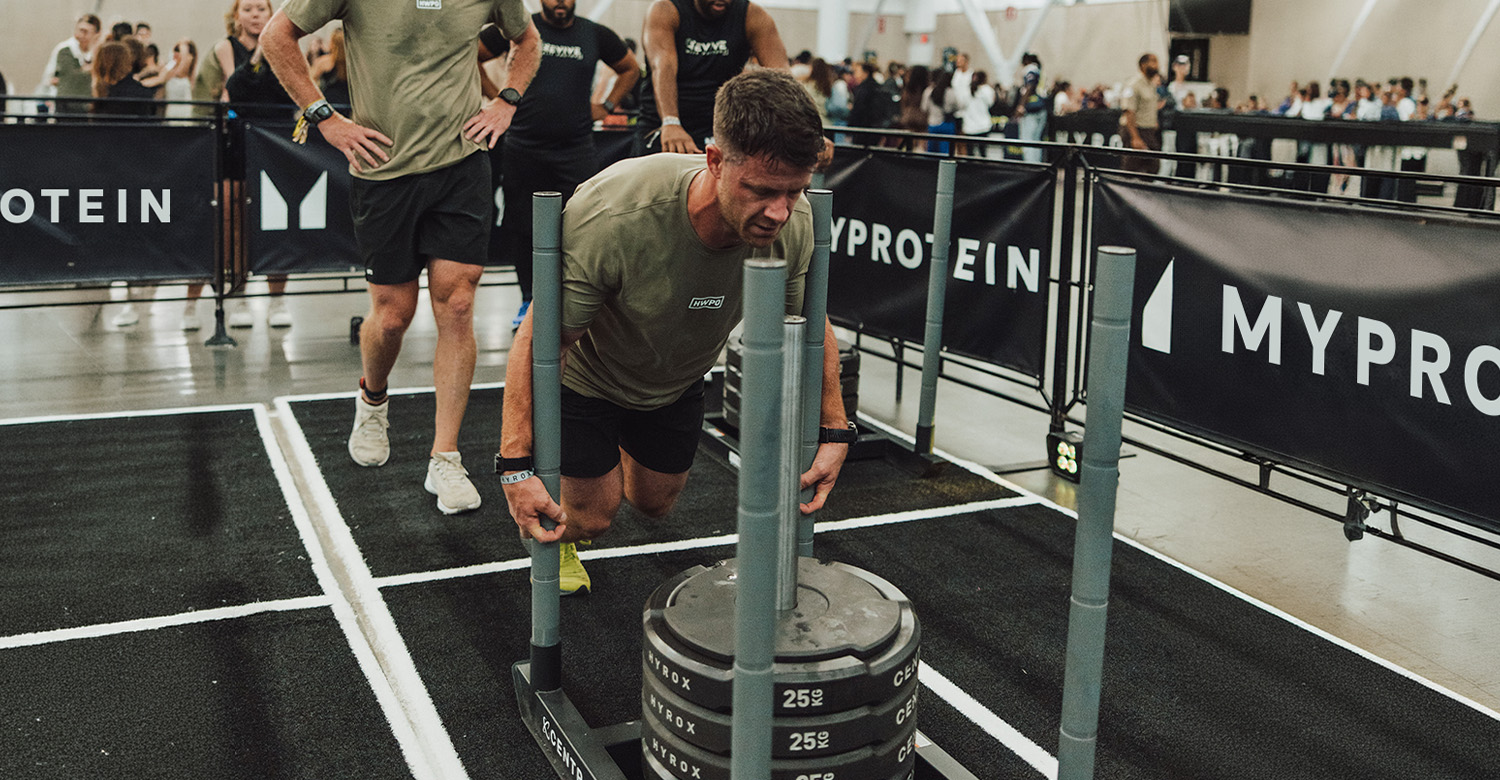
Anyone who has come from a sporting background will probably reach a point where their relationship with training has to change. I’m talking about anyone who has trained for elite, club, amateur, or really anything to a decent level, and by decent level I don’t necessarily mean being a professional athlete. I mean, training took up a good amount of your mental space each day and each week. You trained a lot, you thoroughly enjoyed it, you cared about how you performed, and your approach to training was a significant part of your lifestyle.
When training used to come first
When you live like that for long enough, the rest of your life naturally starts to work around training. You think about what you eat because of how it affects training; you think about your sleep and recovery; weekends and social events have to be considered; and there are plenty of decisions you make without even really thinking about them because training and performing well are high on your list of priorities. When being an athlete is one of the main things in your life, it makes complete sense that a lot of the rest of your lifestyle is there to support it.
There comes a time for most people when that is no longer possible, or, more accurately, it is no longer what you actually want your priorities to be. You build a family, your family grows, you take on more responsibility at work, you go deeper into your career, or there are simply more things in your life that require your time, energy and attention. Naturally, as that happens, training and your commitment to sport take a hit, but the difficult part is that your expectations of yourself don’t necessarily change at the same pace as your circumstances.
You have less physical time available to train, but you also have less mental capacity to give to it. Your recovery might not be as good, training gets interrupted more often, and you might go into a session after a shit night’s sleep, a long day at work, sorting the kids out or with your head still thinking about something completely unrelated to what you’re about to do. Unsurprisingly, performance starts to drop, and for someone who has spent years trying to improve, that can be really difficult to deal with.
You’ve spent a huge part of your life trying to find those extra inches, whether that was lifting a little bit heavier, running a little bit faster, improving a skill, increasing your power output, beating a time or beating someone else. Most of your relationship with training has been built on the idea that if you keep putting in the work, you'll eventually get better at what you’re doing. Then you reach this point where you’re still putting time and effort into training, just understandably less of it, but you’re watching some of those numbers move in the opposite direction.
That can have a pretty significant effect on motivation and ultimately your enjoyment of training, because it’s very difficult not to compare yourself to the athlete you once were when being that athlete was such a big part of your life.
Your old standards might not work anymore
I think one of the biggest mistakes you can make during this period is continuing to fight to maintain the standards you had in your old life, because those standards might simply no longer be reasonable or achievable within the life you have now. If you refuse to accept that, you end up constantly fighting against the other things that you now deem more important, and eventually that can even start to create resentment towards your job, your family or the other responsibilities you have because they become the reason in your head that you can’t train in the way you want to train.
If those things are genuinely more important to you now, your standards around training have to reflect that. There needs to be some acceptance that the athlete you were existed within a completely different set of circumstances, in which you might have been able to train twice a day, sleep eight or nine hours every night, and organise your food, work and social life around performing well. Expecting the same output when you’re no longer able or willing to provide the same input doesn’t make sense, even though it can be difficult to let those expectations go.
For me, part of that acceptance is understanding that you probably won’t immediately know what your new standards should be. There has to be a bit of trial and error where you work out what is actually achievable and sustainable within this period of your life, and once you find that, you can start building some momentum again because you’re finally giving yourself standards that you can succeed against rather than constantly falling short of standards that belong to a completely different version of your life.
Effort before outcome
I think this is where the way you measure training has to change as well. As an athlete, most of the feedback you’re looking for is performance-based. How much did I lift? How fast did I go? What was my time? What was my power output? How did that compare to last week, last year or my best ever?
Those things don’t suddenly become irrelevant, and I still care about them myself, but they can’t be the only things determining whether you’ve had a successful training session. The emphasis has to move more towards effort before outcome, where you’re asking whether you actually trained, whether you gave a good effort based on what you had available that day, whether you moved well, whether you enjoyed it and ultimately how the training made you feel afterwards.
The reason for continuing to train has changed at this point as well. A huge part of the value now comes from how training makes you feel during the session and afterwards, having that time to yourself, challenging yourself physically, feeling fit and capable and hopefully walking away in a better mood than when you walked in. You can still care about your numbers, still want to perform well, and absolutely still have goals, but those numbers can’t have the same control over whether you believe your training is going well.
Training needs to supplement your life
This is probably the biggest change in how I think about training now. Training needs to supplement your life rather than your life supplementing your training, which is almost the complete opposite of how you approach things when you’re seriously competing in sport.
There are times as an athlete when training needs to take something from you. You might finish completely exhausted, knowing that the rest of the day will be spent recovering from what you’ve just done, and that’s fine when maximizing your performance is one of your biggest priorities. That approach doesn’t work particularly well when you’ve got a full working day, kids, a partner and a list of other responsibilities waiting for you afterwards.
A good training session, in my opinion, is one you can hit with good quality and intensity but still leave with more to give, because that “more to give” is needed in other areas of your life. I don’t want to walk out of every session completely fucked because I’ve decided that having less time means I need to cram as much as physically possible into the 45 minutes I have available. I want to leave feeling like I’ve trained properly, energised, and, ideally, in a better mood than when I started.
That’s why three really good sessions in a week can now be far more valuable than forcing yourself through six compromised ones simply because six sessions used to be your standard. The number itself doesn’t really matter if trying to achieve it is negatively affecting everything else.
Train more of the things you enjoy
This has been another important change for me because when you’re trying to become the best athlete you can be, you can’t just train the things you enjoy. You have weaknesses, and you need to address them. If you’re terrible at something that matters for your sport, avoiding it because you don’t particularly enjoy it isn’t really an option.
I’m far less interested in doing that now. The things that stay in my training are generally the ones I enjoy because training needs to give me some excitement and energy, and I need to actually look forward to it. I’m less concerned with becoming the most well-rounded athlete I can be and improving every weakness I have, so if there are areas of training I don’t particularly enjoy anymore, I’m happy for them to feature less.
I actually think there is a lot of freedom in that. You might have spent years doing certain things because they were necessary for performance, but once performance is no longer the overriding goal, you get to make more decisions based on what you actually want to do. If the overall purpose of training now is to keep you fit, healthy, capable and happy, enjoying what you’re doing is a pretty important part of making sure you continue doing it for a long time.
Missing a session doesn’t matter as much as you think
This is another area where the athlete mindset can be difficult to shake because when training has been a priority for a long time, missing something you’ve planned can still feel like you’ve failed. You planned to train Thursday, Thursday turns into a nightmare at work, something happens with the family, you don’t sleep, or life simply gets in the way, and suddenly that training session isn’t happening.
The best thing you can do in that situation is probably just zoom out a little bit. One missed training session is an incredibly small amount of time compared to the rest of your life, and even a week where training goes completely to shit because something more important needs your attention isn’t particularly significant when you look at the months and years ahead of you.
You’re no longer trying to squeeze every possible percentage out of your physical performance. You’re trying to be consistent, fit, healthy, capable and happy, and sometimes being consistent with that over the next 20 or 30 years means being completely fine with the fact that today didn’t happen. You pick the ball back up tomorrow, next week, or whenever the things you’ve decided are more important have been figured out.
Stop constantly competing with your former self
“Comparison is the thief of joy” gets thrown around a lot, but I think it’s particularly relevant when your relationship with training changes, because the person you’re comparing yourself to is often yourself. It’s you five years ago or ten years ago, when you had a completely different life and could organise a much bigger percentage of it around training and performance.
If every training session becomes a comparison against that person, you’re setting yourself up for a pretty miserable relationship with training, but I also don’t think you need to completely ignore what you used to be capable of. There can still be something really positive about looking at what you’re doing now in the context of where you’ve previously been.
If I’m lifting a weight that’s 10% below my lifetime best, I can be pissed off that I’m 10% weaker than I used to be and frustrated that I can’t seem to get back there, or I can recognise that I’m still within 10% of something I achieved when training was one of the biggest priorities in my life, despite having a completely different set of priorities and responsibilities now. I know which of those perspectives will make me enjoy training more.
You don’t have to completely lose your identity as an athlete either. There will probably always be parts of training where you can tap back into that person, and there will be things you can still do to a really high standard and moments where that competitive side comes back out. That’s part of the enjoyment, and I don’t think you should try to get rid of it.
You just need to set some new lines in the sand. Your standards can become consistency, effort and quality of movement, while still leaving room to push yourself, chase numbers, set goals and find out what you’re capable of. You just don’t need every training session to prove that you’re still the athlete you once were.
At some point, training has to find its new place within your life, and I think once you accept where that place is, set standards that actually reflect the life you have now and stop constantly fighting to put training back where it used to be, you give yourself a much better chance of enjoying it for a very long time.
Training Looks Different for Everyone
Whatever stage of life you are in, HWPO has a program built around your goals, your schedule and what you actually want from training.